AI Sales Assistant: Conversion Power Over Chatbots in 2026
Uncover the distinct advantages of AI sales assistants over chatbots. Learn how to enhance lead qualification and drive conversions effectively.

AI Sales Assistant vs AI Chatbot: Which Converts Better?
If your chat tool keeps conversations flowing but pipeline still looks flat, the problem is usually not the chat window. It is the job you assigned to it. If the goal is revenue, an AI sales assistant usually converts better than an AI chatbot. It is built to qualify intent, personalize responses, and move buyers toward demos, quotes, or purchases, while an AI chatbot is often the better fit for support-heavy interactions.
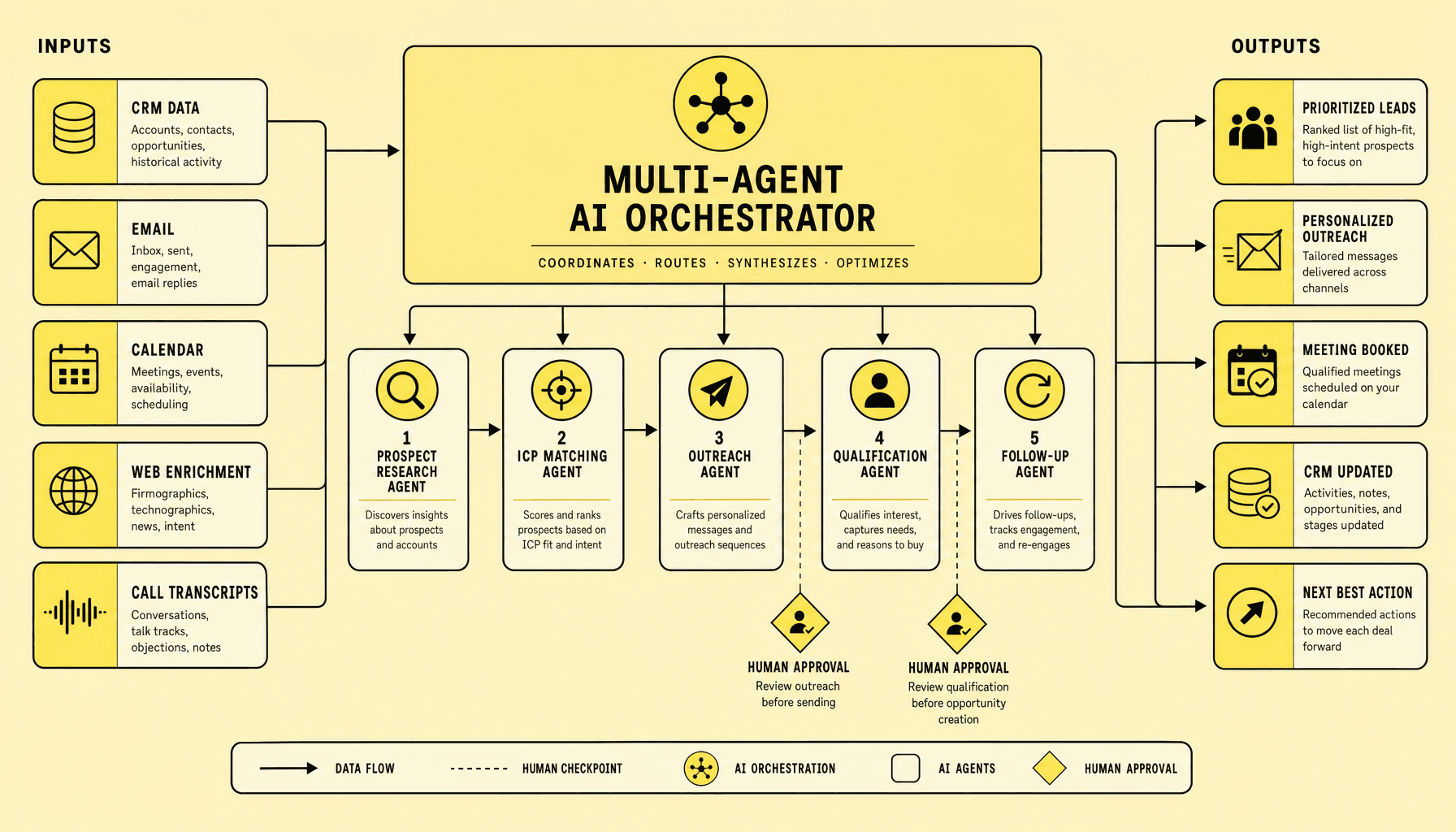
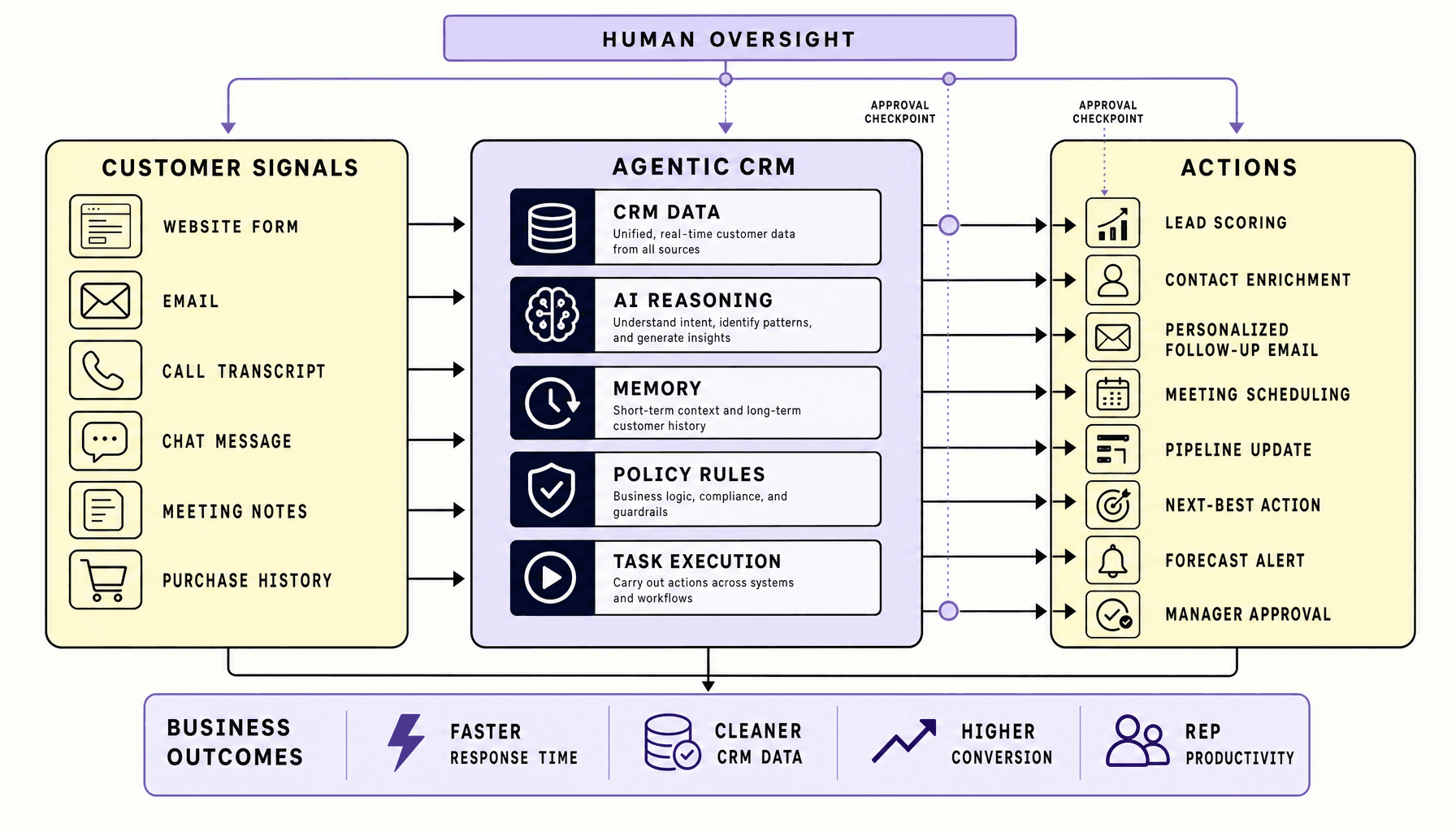
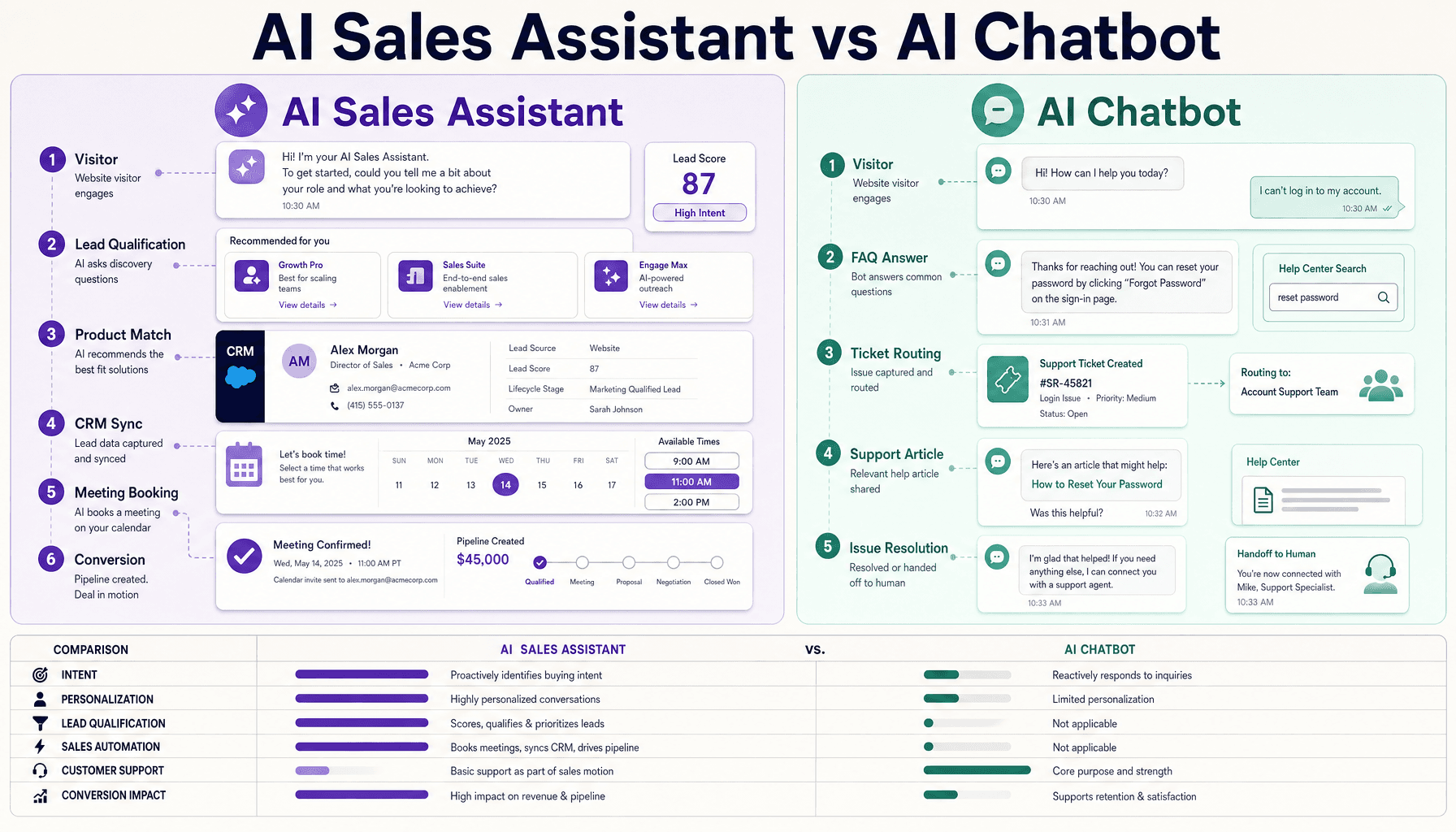
The confusion starts because both use conversational AI. But they do different jobs. An AI chatbot mainly answers questions, resolves simple issues, and supports AI customer support workflows. An AI sales assistant is tied to AI sales automation -- think lead scoring, CRM sync, follow-up sequences, and routing high-intent prospects to reps.
In practice, teams lose conversions when they deploy a support-first bot and expect it to sell.
Our recommendation is simple: choose an AI sales assistant for pipeline growth, choose an AI chatbot for service efficiency, and use both when you need coverage across the full funnel. User experience is as important as functionality -- a bot that replies fast but never advances the buying journey will not convert well.
Key Takeaways
- If conversion is the goal, an AI sales assistant usually outperforms an AI chatbot because it qualifies intent, personalizes replies, and pushes buyers toward demos, quotes, or checkout.
- Use an AI chatbot for AI customer support -- FAQs, order status, booking, and simple troubleshooting. Fast service matters. But support flow alone rarely drives pipeline.
- Strong AI sales automation depends on lead qualification, CRM sync, follow-up logic, and funnel-aware messaging. User experience is as important as functionality, especially in high-intent flows.
- Use both when you need sales and support: conversational AI can route service questions to the chatbot and buying signals to the sales assistant.
- Common mistake: deploying one generic bot for every job. Measure ROI by qualified leads, booked meetings, resolution speed, and handoff quality.
What an AI Sales Assistant Does Differently From an AI Chatbot
Two bots can look almost identical on the page and still produce very different business outcomes. If teams want more conversions, they should not judge these tools by the chat window. They should judge them by the workflow behind it.
Many buyers -- and plenty of internal teams -- confuse interface similarity with functional similarity. Both an AI chatbot and an AI sales assistant use conversational AI. Both can answer questions in natural language. But the business intent is different from the start: one is usually built for AI customer support, while the other is built to move a buyer through the sales funnel.
A standard AI chatbot is mostly reactive. It handles support-style requests such as shipping questions, password resets, return policies, appointment changes, or basic product FAQs. It responds well, routes tickets, and reduces repetitive workload. Useful. Efficient. But it often stops after the answer.
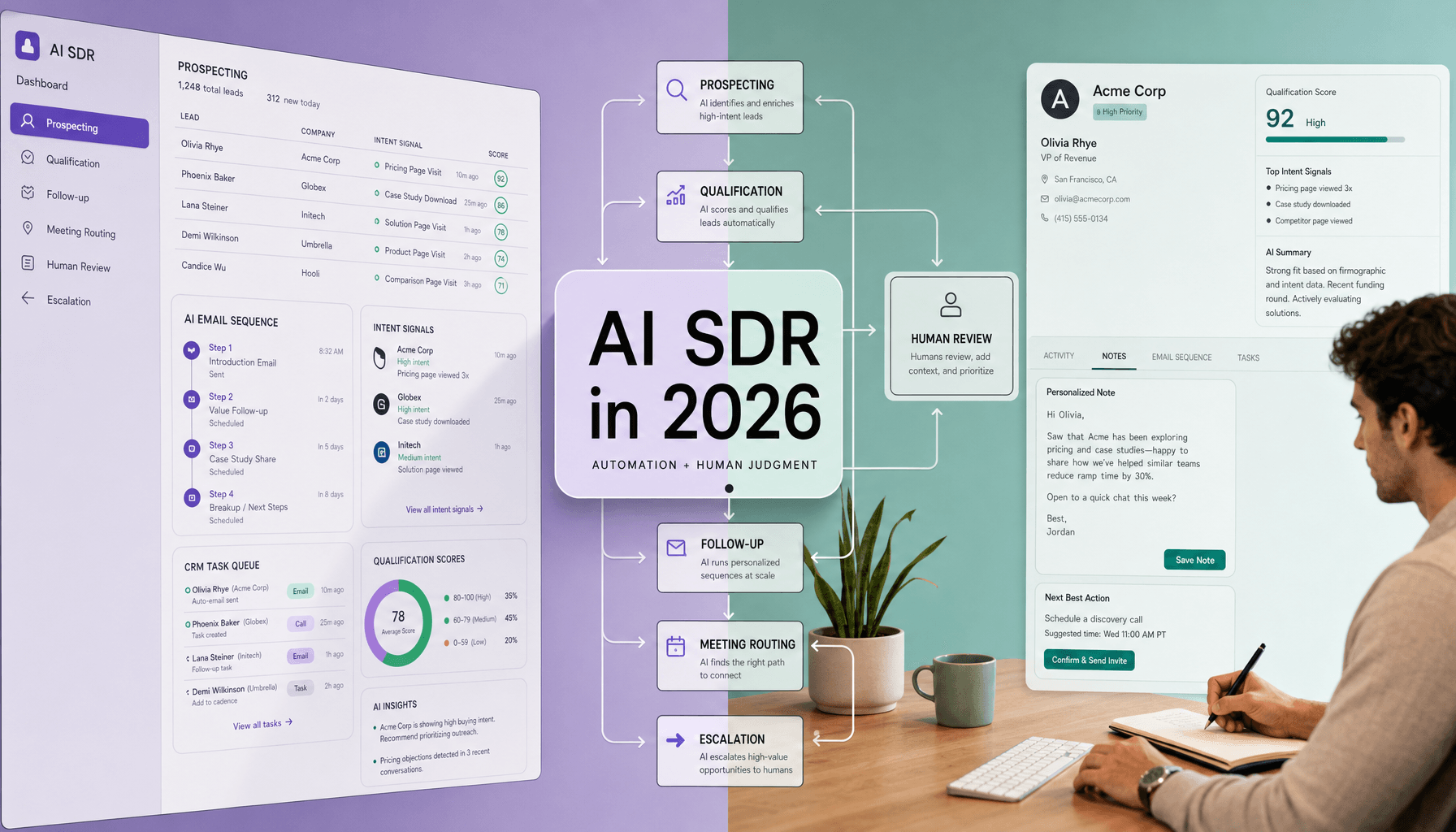
An AI sales assistant is proactive. It does not just respond; it advances the conversation toward a commercial next step. That can include lead qualification, product matching, pricing guidance, demo scheduling, CRM updates, and follow-up sequences through AI sales automation. In practice, it asks discovery questions like company size, use case, timeline, or budget range, then uses that context to decide whether to nurture, route, or escalate.
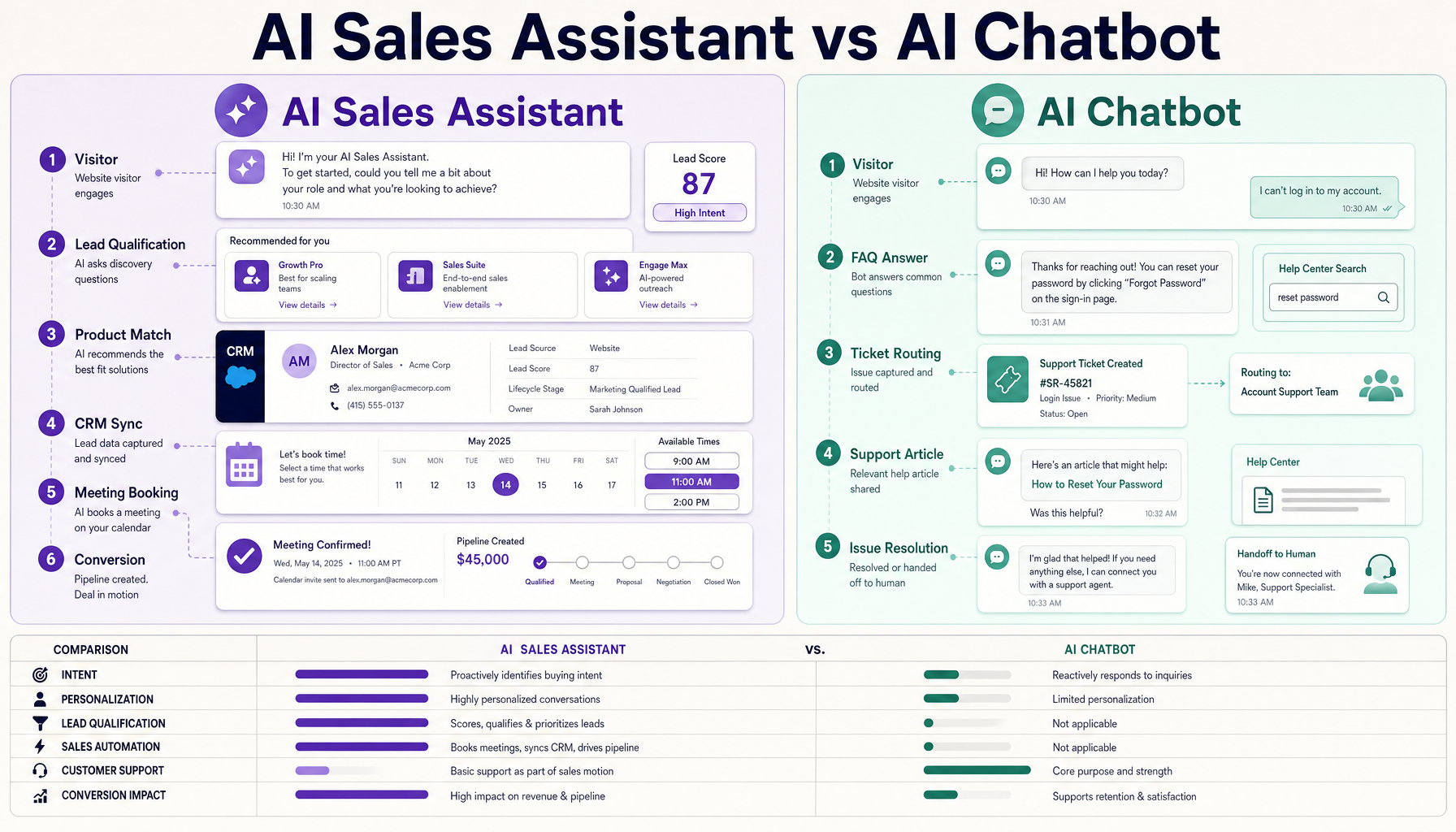
Here is the practical split:
- AI chatbot: resolves requests, deflects tickets, supports service operations
- AI sales assistant: qualifies intent, personalizes outreach, and drives progression
Shared conversational AI does not mean equal conversion performance. Conversion depends on sales logic, not just language quality. If the system cannot score intent, remember buyer context, trigger workflow automation, and sync with a CRM, it may create pleasant conversations that go nowhere.
At Imversion Technologies Pvt Ltd, we see this as a design problem as much as a tooling problem. User experience is as important as functionality -- a sales flow must feel helpful, not pushy, or buyers disengage fast.
Choose an AI chatbot for service efficiency. Choose an AI sales assistant for pipeline growth. Use both when support and selling happen in the same journey.
AI Sales Assistant vs AI Chatbot Features, Lead Qualification, and Use Cases
Once the goal is conversion, the comparison gets more practical. The real question is not which system chats better. It is which one can trigger the next action: qualify, book, buy, or resolve. That is where an AI sales assistant usually pulls ahead of a standard AI chatbot.
| Capability | AI sales assistant | AI chatbot |
|---|---|---|
| Lead qualification | Asks discovery questions, scores intent, routes hot leads | Captures basic details, limited qualification depth |
| Personalization | Uses page behavior, source, and CRM integration for tailored replies | Usually session-level context and generic response flows |
| CRM sync | Writes lead data to CRM integration workflows and updates records | Often limited to transcripts or manual export |
| Demo scheduling | Handles demo scheduling and rep routing inside the chat flow | May link out to a calendar, but not optimize routing |
| FAQ handling | Can answer FAQs, but sales intent stays primary | Strong fit for repetitive FAQ and policy questions |
| Multilingual support | Useful for global sales coverage, varies by setup | Common in AI customer support deployments |
| Follow-up automation | Sends reminders, nurture messages, and re-engagement prompts | Usually weak unless paired with broader AI sales automation |
| Handoff to human teams | Passes qualified context to sales reps | Escalates unresolved issues to support or ticketing |
Which features matter most
If pipeline is the concern, lead qualification matters most. A sales chatbot that asks about company size, use case, budget range, or timeline can separate casual visitors from active buyers. That gives sales teams better context for follow-up.
Personalization comes next. If the system knows a visitor came from a pricing page, ad campaign, or product page, it can steer the conversation toward objections, fit, and demo scheduling instead of serving a generic script. In conversational AI, relevance often determines whether users continue or leave.
Sales use cases vs support use cases
The split is usually clearer in operation than it is in product marketing.
For sales, use an AI sales assistant for inbound qualification, product recommendations, demo booking, and follow-up tied to CRM workflows.
For support, use an AI chatbot for order status, password reset guidance, policy questions, account help, and ticketing.
Many teams need both. A common setup is to use an AI chatbot for customer support and an AI sales assistant on high-intent pages like pricing, comparison, or demo requests.
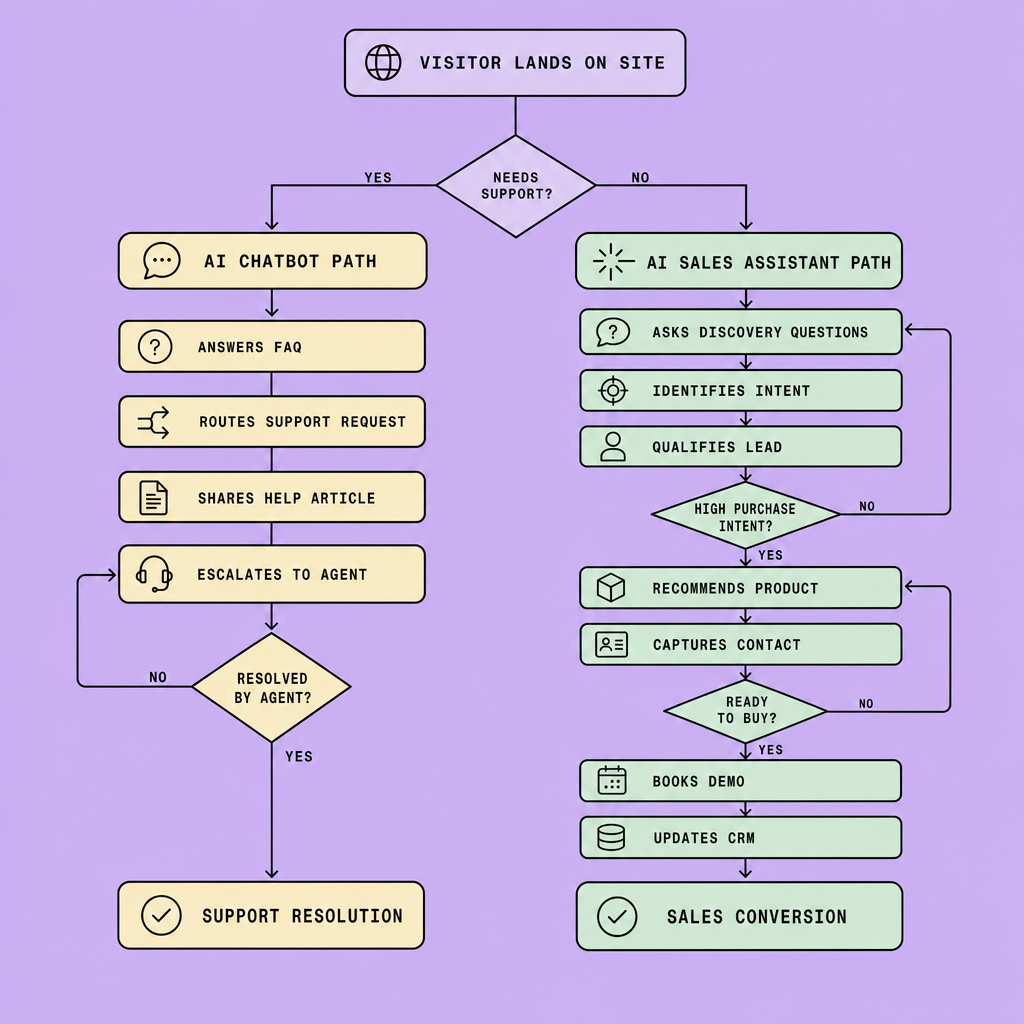
The main mistake is expecting one support-first bot to drive revenue without qualification logic, routing rules, or post-chat automation.
Why AI Sales Assistant Personalization Usually Lifts Conversion
A generic reply can keep a conversation alive. It rarely moves a buyer forward. An AI sales assistant usually converts better because it does more than answer. It adapts.
That distinction matters. Many AI chatbot deployments in AI customer support are built to reduce friction: answer pricing questions, explain return policies, surface documentation, or route tickets. Useful, yes. But service efficiency and sales conversion are not the same outcome. A helpful conversation may increase engagement without increasing booked demos, qualified leads, or completed checkouts.
An AI sales assistant is tuned for buyer movement. It uses conversational AI to react to signals such as page views, repeat visits, abandoned carts, pricing-page dwell time, and form starts. Then it changes the conversation. If a visitor compares enterprise plans twice in one session, the assistant can ask discovery questions like team size, use case, timeline, and integration needs. Those answers feed lead scoring, CRM sync, and the next step -- not just a generic reply.
Here is where personalization affects conversion:
- behavior-based prompts match timing to intent
- discovery questions filter curiosity from buying intent
- product recommendations reduce choice overload
- automated follow-up keeps warm leads from going cold
For example, a support-oriented AI chatbot might answer, “Does this integrate with Salesforce?” An AI sales assistant can go further: confirm the integration, ask whether the buyer needs bidirectional sync, recommend the right plan, and offer a demo or trial based on the answer. Same chat interface. Different conversion logic.
Still, teams should stay precise about metrics. Better personalization often lifts micro-conversions first -- chat engagement, email capture, meeting bookings, add-to-cart actions. Revenue conversions come later and depend on pricing, sales follow-up, product fit, and checkout friction.
Higher engagement is useful, but it is not proof of sales impact unless it moves buyers to a measurable next step.
Our view is simple: user experience is as important as functionality. Personalization works best when it feels relevant, fast, and low-friction -- not intrusive, repetitive, or over-automated. If the workflow pushes too early or asks too much too soon, conversion can drop instead of rise.
When to Choose an AI Chatbot, an AI Sales Assistant, or Both
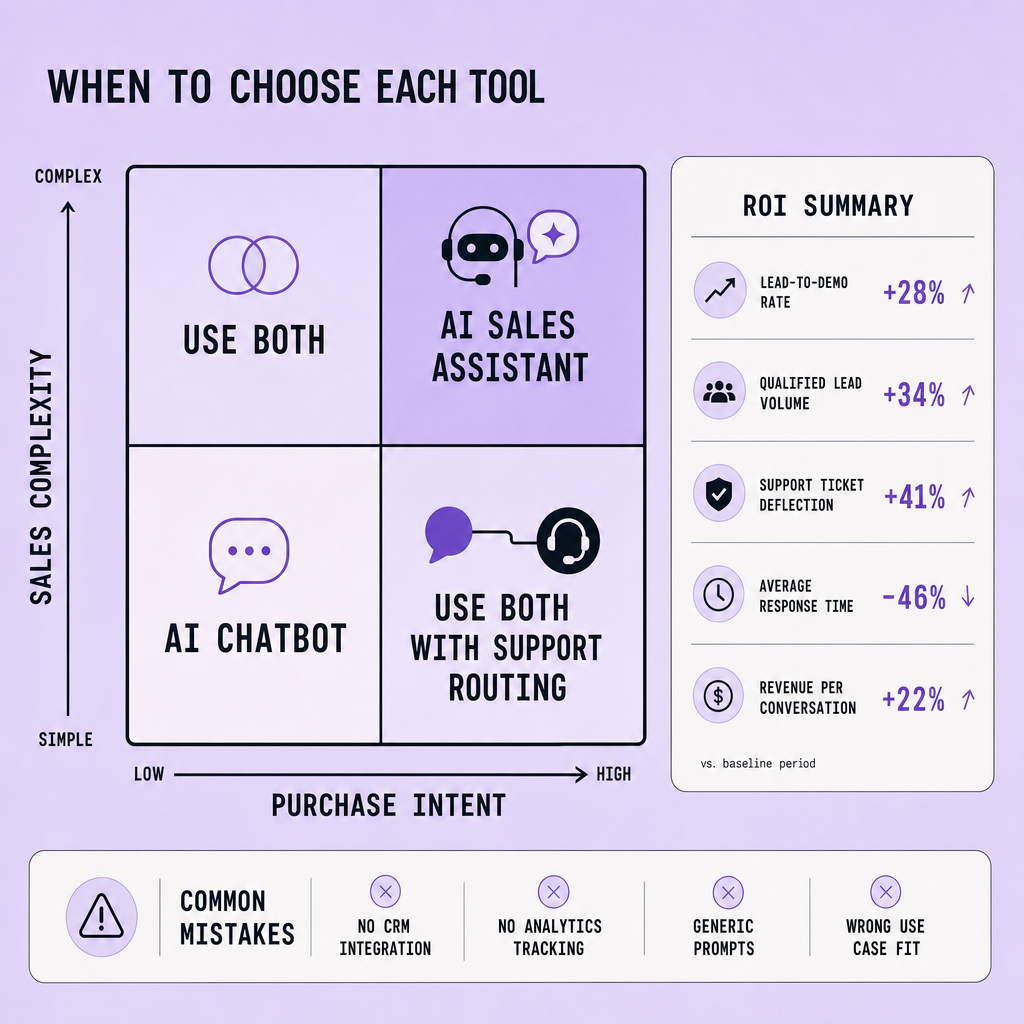
This choice gets easier once you identify the bottleneck. Use an AI chatbot when the main need is service and repetitive answers, an AI sales assistant when the main need is qualification and follow-up, and both when support and selling happen in different parts of the customer journey.
Teams often deploy an AI chatbot expecting more pipeline, then find it handles answers better than buying momentum. If the problem is support load, repetitive questions, or after-hours coverage, a support-first AI chatbot is usually enough. This fits ecommerce, local service businesses, and SaaS products with high support volume, such as order status, return policies, appointment changes, password resets, and basic onboarding.
Choose an AI sales assistant when the bigger issue is lead quality or response speed. In B2B sales, longer cycles often require qualification, demo booking, CRM updates, and clean handoffs. A sales-focused assistant can ask discovery questions, route by account fit, and move serious buyers toward the next step instead of stopping at polite answers.
Use both when the lifecycle clearly splits between support and selling. For example, an ecommerce brand may need product guidance before purchase and order help after purchase. A B2B site may need an AI sales assistant on pricing, demo, and solution pages, but an AI chatbot in the help center or customer portal.
Here is the practical framework:
- Choose an AI chatbot if intent is mostly service, the journey is short, and the team needs simpler deployment.
- Choose an AI sales assistant if traffic has buying intent, the sales cycle is longer, and reps lose opportunities through slow response or weak qualification.
- Choose both if you need coverage across acquisition, conversion, and retention.
The choice usually depends less on company size and more on whether the main bottleneck is support volume, lead quality, or follow-up speed.
Common Mistakes, ROI Expectations, and the Best Final Choice for an AI Sales Assistant
A lot of disappointment with AI chat tools starts the same way: the team buys software first and designs the workflow later. The biggest mistake is buying on hype. Teams install an AI chatbot or AI sales assistant, turn on conversations, and expect conversion or cost savings to rise on their own. In practice, results depend more on workflow design, routing, measurement, and handoff than on the chat interface itself.
Common failures are predictable: no CRM attribution, weak analytics, vague qualification logic, no lead-routing rules, and no human escalation when intent becomes serious or a question turns complex. Another frequent mistake is judging success by chat volume alone. More conversations can signal interest, confusion, or poor self-service. By itself, volume is not ROI.
Judge outcomes instead:
- qualified pipeline created
- booked meetings
- support deflection
- response speed
- influenced revenue or reduced service cost
If the goal is growth, measure an AI sales assistant by qualification rate, demo bookings, follow-up completion, and pipeline movement inside the CRM. If the goal is efficiency, judge an AI chatbot by resolution rate, ticket reduction, containment, and whether it frees agents for higher-value work.
If a tool cannot connect to CRM, analytics, and handoff workflows, its reported ROI will be blurry at best.
Best final choice: pick the system that matches the bottleneck. Choose an AI sales assistant when missed follow-up, weak qualification, or slow sales response is the main problem. Choose an AI chatbot when repetitive support demand is the constraint. Use both when support and selling overlap. The tradeoff is complexity: a combined setup can perform better, but only if ownership, routing, and reporting are clearly defined.
Frequently Asked Questions
What is the difference between an AI sales assistant and an AI chatbot in omnichannel marketing?
An AI sales assistant is built to maintain buyer context across channels like website chat, email, and CRM workflows so it can push prospects toward revenue actions. An AI chatbot is usually designed to answer questions consistently across channels, making it better for service continuity than for multi-step sales progression.
How does an AI sales assistant improve lead handoff to human reps?
An AI sales assistant improves handoff by collecting structured qualification data before a rep joins the conversation. That means sales teams receive intent signals, budget clues, product interest, and urgency in a usable format, which reduces repeated questions and shortens the time between first contact and a productive sales call.
Why should a business use both conversational AI for sales and AI customer support?
A business should use both when pre-sale and post-sale needs are equally important. Separating sales and support workflows prevents mixed intent, gives buyers faster answers, and lets each system optimize for a different outcome: one for conversion and pipeline quality, the other for resolution speed and service efficiency.
When does an AI chatbot convert better than an AI sales assistant?
An AI chatbot can convert better when the purchase is simple, low-risk, and driven by quick answers rather than consultative selling. In those cases, removing friction around shipping, returns, availability, or basic product details can matter more than deep qualification, especially for high-volume ecommerce or straightforward service bookings.
How should teams calculate ROI for an AI sales assistant?
Teams should calculate ROI for an AI sales assistant by comparing incremental pipeline and closed revenue against total deployment cost, including software, setup, maintenance, and rep time. The cleanest model tracks lift in qualified meetings, conversion rate by source, average deal velocity, and whether automation reduces manual work without hurting win rates.
Make Imversion a preferred source on Google
Like this kind of AI and software analysis? Add Imversion as a preferred source so Google can highlight our articles for you in Search, AI Overviews, and AI Mode.