API-First Architecture Guide: Transform Your Development Process
Explore our comprehensive guide on API-first architecture, covering design principles, scalability, and development pitfalls. Dive in for expert insights!

Introduction to API-first Architecture
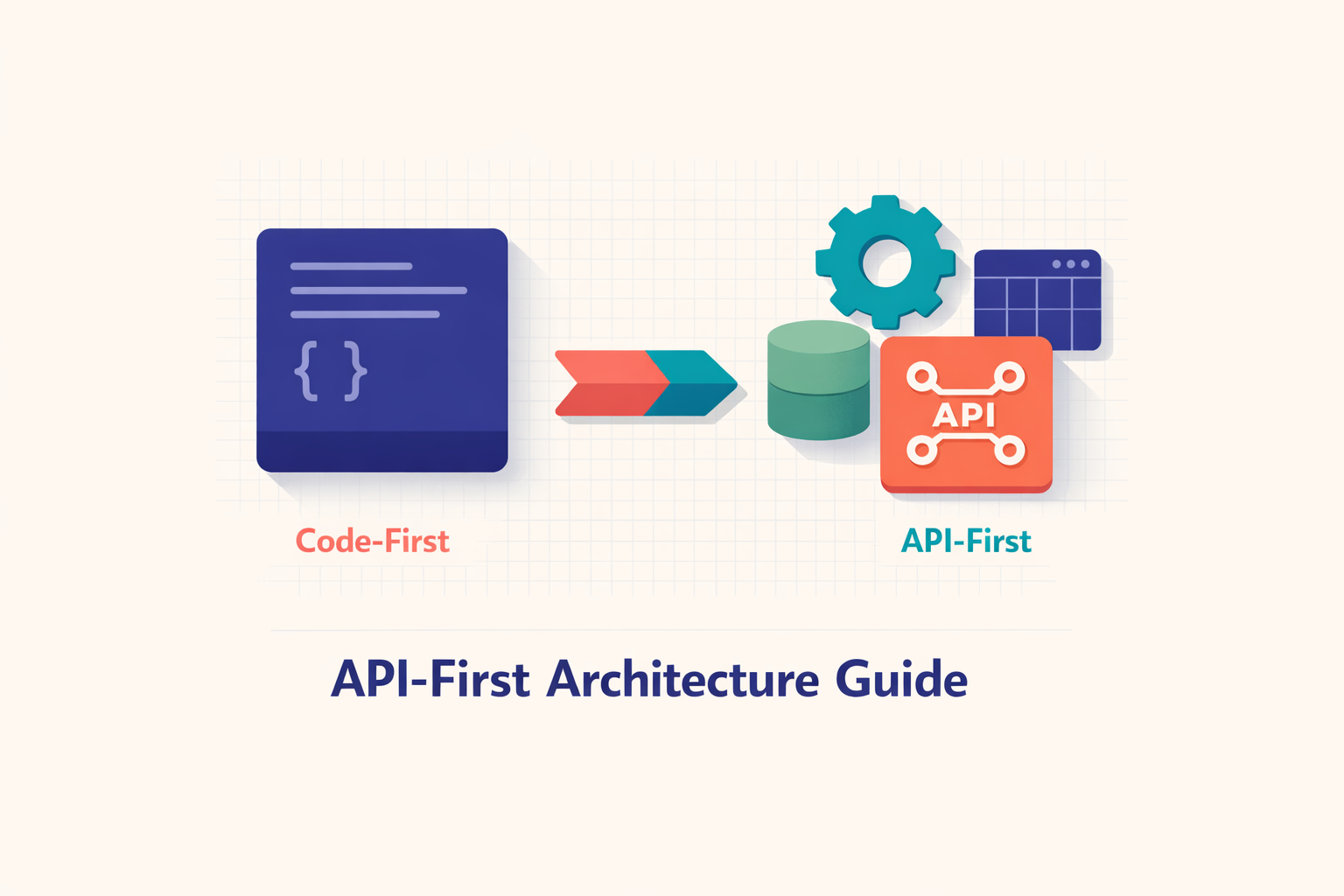
API-first architecture is a foundational element of modern software development, significantly enhancing the efficiency and scalability of contemporary applications. Before exploring its nuances, it is important to define this approach clearly. API-first architecture refers to a development methodology focused on creating APIs prior to developing any other system components. Essentially, this perspective emphasizes treating APIs as first-class elements in software design.
In terms of its utility, API-first architecture effectively addresses numerous challenges associated with traditional development workflows. It represents a departure from the long-established 'code-first' methodology, instead prioritizing the design of APIs before the implementation of server-side code. This strategy enables both backend and frontend developers to collaborate simultaneously, which can result in reduced development times and enhanced efficiency.
Understanding the API-first Design
A fundamental principle of API-first design is adherence to design-first principles. Rather than rushing into the coding phase, these principles advocate for the creation of APIs using a standard specification language. This structured approach provides a comprehensive overview of the API's capabilities and constraints, empowering developers to conceptualize and build products that align with user needs.
Furthermore, APIs developed under the API-first approach benefit from auto-generated documentation. Tools such as Swagger or RAML can facilitate this process, significantly improving the clarity and comprehensibility of the API design.
Advantages of API-first Architecture
The API-first approach not only streamlines the development process but also offers several other tangible advantages. Chief among these is scalability. API-first architecture fosters modular applications that can adapt to varying demands.
Additionally, this approach promotes the progressive decoupling of systems, paving the way for agile development practices. It is also integral to advanced technology principles, including microservices and cloud-native applications.
Tip: It is important to recognize that, like any framework, API-first architecture presents its challenges and pitfalls, including governance issues, complex versioning, and the need for specialized tooling. A thorough understanding of these aspects, including appropriate use cases and strategies for effective issue mitigation, is essential to fully leverage the potential of API-first architecture.
In the upcoming sections, we will delve deeper into each of these topics and outline strategies to address potential challenges. Stay tuned for our comprehensive guide through the world of API-first development.
Understanding the API-first Approach
API-first design, also known as the API-first approach, is a methodology in software development where APIs (Application Programming Interfaces) are prioritized and constructed before other components of a software product. The objective is to enable multiple applications to share the same functions and services while ensuring optimal interoperability and robustness.
What is API-first Design?
The API-first design strategy transcends the notion of APIs as a secondary layer that operates on an established system. Instead, APIs are considered from the project's inception, serving to not only drive but also shape the application's functionality and behavior. This perspective transforms the organization of product creation processes, compelling developers to adopt the viewpoint of the end consumer from early stages, ultimately leading to software solutions that closely align with user needs.
Design-First Principles
Design-First Principles, which advocate for the use of a standard specification language to create APIs, significantly enhance the API-first approach. These principles stipulate that the development process should commence with a well-defined API contract, detailing what the API intends to deliver. This API blueprint provides a comprehensive and transparent understanding of the API's functionalities and limitations, thereby reducing misalignment due to unclear expectations.
Furthermore, technological tools such as Swagger and RAML have revolutionized the API design process. These utilities automate API documentation and clarify API designs, thus reducing ambiguity and the likelihood of errors or misinterpretations.
API-first Design vs. Code-first Approach
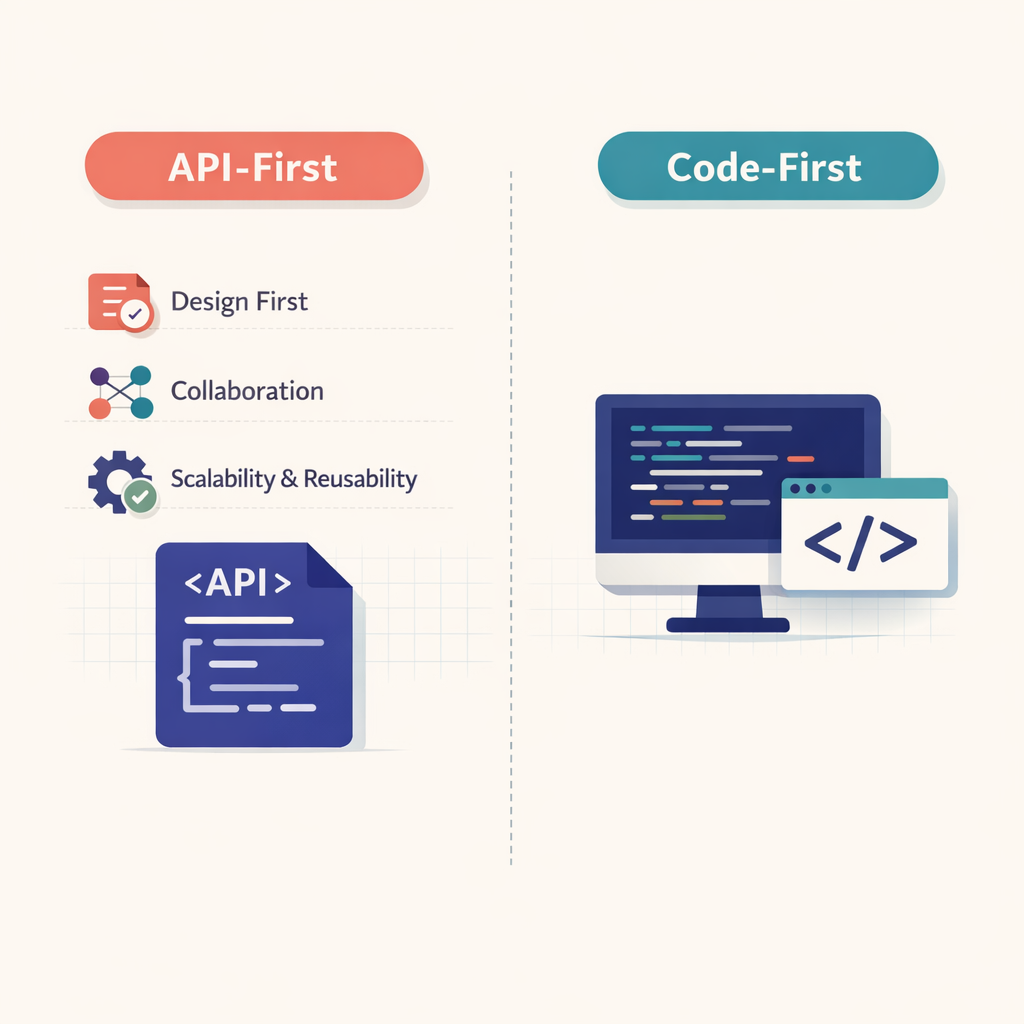
In the realm of API development, two dominant methodologies have emerged: the traditional Code-first approach and the progressive API-first design. The Code-first method involves developers writing the server-side application before defining the API, while API-first design reverses this process, advocating for the definition and design of APIs prior to writing any code.
Why is this superior?
By outlining the APIs first, both backend and frontend development can occur simultaneously, significantly reducing time to market and enhancing efficiency. Moreover, this approach empowers teams to effectively plan and design scalable systems before any code is written.
In conclusion, adopting the API-first approach and Design-First Principles unlocks considerable advantages in scalability, efficiency, and robustness for software products. This is not merely a trend; it is a driving force in cutting-edge, user-centric software development.
The Meaning of API-First Design
API-first design constitutes a pivotal strategy in software development, positioning APIs as priority elements even before other components are built. This methodology places the API at the core of the product development process, significantly advancing API-driven development.
API-first design embodies 'design-first' principles, including the use of a standard specification language for API creation. This insightful blueprint provides developers with a comprehensive understanding of the API, emphasizing its capabilities and limitations, which in turn fosters the creation of clear and automated API documentation.
API-first design fundamentally contrasts with the 'code-first' approach, which prioritizes writing the server-side application before defining the API. The API-first methodology encourages the reverse, allowing backend and frontend teams to work concurrently, thereby fostering efficient and improved development cycles.
Scalability is a core benefit of the API-first design, yielding substantial advantages. It facilitates the development of robust and flexible systems that can be easily scaled. This approach inherently promotes better versioning, governance, and tooling, highlighting the significant possibilities offered by this design methodology.
As with any approach, challenges may arise, making it essential to understand potential use cases and remain aware of possible obstacles.
Ultimately, the primary objective of API-first design is to simplify and streamline the development process while enhancing interoperability and robustness—contributing significantly to modern software architectures.
In the following sections, we will explore API-driven development, compare API-first with code-first approaches, and examine other critical aspects of the API-first methodology.
Design-First Principles within API-First
Emphasizing 'design-first' principles within an API-first approach lays the groundwork for a more efficient, customer-centric software development process. The essence of API-first design is that APIs are crafted using a standard specification language before any other application components are developed. This forward-thinking strategy shapes a detailed API blueprint that outlines its capabilities and constraints, facilitating a streamlined and transparent API-driven development.
Driving Detailed Documentation
API-first design significantly simplifies the documentation process, as it enables the use of tools like OpenAPI (formerly Swagger) or RAML. These tools provide both interactive and user-friendly interfaces, making it easier for developers and users to navigate the API, thereby eliminating guesswork and reducing errors.
Streamlining Governance and Versioning
Design-First Principles create a solid foundation for API governance, as APIs are developed from a universal blueprint, promoting consistency across various APIs within your application. Additionally, versioning can be systematized from the outset, ensuring smooth transitions as APIs evolve.
Supporting Scalability
The API-first approach inherently supports scalability, allowing teams to develop components independently. This leads to quicker product rollouts and updates, as frontend and backend teams are no longer required to wait for each other, consequently enhancing productivity.
Highlighting Use Cases
The combination of Design-First Principles and API-first development clarifies use cases for your API. By proactively considering how the API will be utilized in various scenarios, developers can better anticipate and address the needs of end-users.
In summary, integrating 'design-first' principles within your API-first approach can streamline the overall development process, foster improved collaboration, and ultimately yield a more effective, user-friendly API.
API-first vs Code-first: An In-Depth Comparison
Over the years, the approach to software development has evolved, with an increased emphasis on building flexible, scalable, and efficient systems. Two prominent strategies that have emerged in response to this evolution are the API-first and code-first approaches. But what are these approaches, and how do they compare?
API-first and code-first represent two distinct philosophies in software development, with the primary difference lying in the sequence of application design and development steps.
API-First Approach: A Sequence Shift
In the API-first design methodology, the API specification is developed prior to the commencement of application coding. This approach recognizes APIs as critical elements in the digital transformation journey, positioning them at the core of software design and development. It emphasizes thorough planning of the API's structure, use, and functionality before the implementation of code.
The API-first strategy aims to create a robust and well-structured API, which in turn facilitates simultaneous work by backend and frontend teams, thereby enhancing efficiency and reducing development timelines. With a clear API blueprint in hand, developers can simulate API responses and develop software features concurrently.
Furthermore, defining the API beforehand provides developers with a precise understanding of the API endpoints, simplifying the management of challenges such as versioning, documentation, and governance.
Code-First Approach: Conventional Techniques
In contrast, the code-first approach involves developing the server-side application before defining the API. This traditional method relies on the application's codebase to automatically generate the API. However, code-first can introduce complexities in managing APIs as the application scales, particularly with maintaining backward compatibility and managing breaking changes.
While code-first enables developers to begin coding immediately, it may result in a lack of clarity and consensus regarding the API design from the outset. This can lead to:
- A disconnect between development and consumer teams
- Prolonged timelines
- The potential compromise of application quality.
Conclusion
Both the code-first and API-first approaches have their respective advantages and drawbacks, making the choice largely dependent on your specific needs and circumstances. Nevertheless, due to its focus on early-stage planning, concurrent development, and a user-centric methodology, the API-first design has gained popularity, providing teams with a clear roadmap for API-driven development.
Tip: When weighing
API-first vs code-first, base your decision on your requirements for scalability, speed, and efficiency in your software development process.
The Scalability Benefits of an API-first Approach
In the realm of API-first architecture, scalability often emerges as a pivotal factor for success. By adhering to the principles of API-first design, this approach seamlessly integrates with microservices and cloud-native applications, thereby providing a robust platform for developing easily scalable, decoupled systems.
Enhanced Scalability with API-first Approach
Scalability is intrinsic to API-first design, enabling systems to effectively manage increasing workloads without compromising performance or user experience. The following aspects illustrate how API-first architecture facilitates enhanced scalability:
| Feature | Description |
|---|---|
| Microservices Compatibility | The API-first approach promotes the creation of small, loosely coupled microservices, each equipped with its own API. This architecture allows independent scaling of each service based on demand, simplifying resource management. |
| Cloud-native Suitability | With its decoupled structure and platform-agnostic nature, API-first design is ideally suited for cloud-native applications. It supports rapid and seamless scaling in response to varying demands, optimizing the use of cloud resources. |
| Seamless Component Integration | APIs function as connectors, enabling newly added components to interact effortlessly with existing services. This capability facilitates the uninterrupted expansion of an application’s features. |
The API-Driven Development Advantage
An integral component of API-first architecture, API-driven development empowers organizations to scale effectively. By fostering a modular development approach, each service can be independently created, deployed, and scaled. This strategy influences several key aspects:
-
Concurrency: By defining APIs prior to developing the server-side application, backend and frontend teams can work in parallel, significantly reducing overall development time.
-
Uniformity: APIs provide a standardized communication method for services, ensuring uniform and predictable interactions, independent of the underlying implementation details of each service.
-
Automation: APIs automate the interactions between systems, minimizing manual effort and the potential for errors. This boosts productivity and, consequently, scalability.
Embracing an API-first approach fosters a scalable architecture designed for future growth. In an era defined by digital disruption, harnessing the power of APIs offers businesses the flexible, scalable, and agile technology foundation that is essential today.
In conclusion, the scalability benefits of an API-first architecture extend beyond its inherent ability to handle increased workloads; they also support business growth by promoting flexibility, agility, and speed. However, it's essential to recognize that API-first design is not a one-size-fits-all solution. Successful implementation requires a well-considered strategy, skilled personnel, and a comprehensive understanding of your organization's unique needs and constraints.

Role of API Versioning and Governance in API-first Architecture
API-first architecture enhances scalability, efficiency, and robustness in application development by prioritizing API design before code implementation, a practice known as API-first design. Within this framework, API versioning and governance are essential for ensuring the longevity and maintainability of API-driven development.
API Versioning
API versioning is necessary to facilitate changes or upgrades to the API without impacting existing consumers. It serves as a best practice that enables developers to implement non-compatible changes while preserving the user experience.
| Versioning Strategy | Description | Benefits and Pitfalls |
|---|---|---|
| URI Versioning | A version number is included in the URI. | Easy to use and understand; however, it may violate the principle that a URI should reference a unique resource. |
| Parameter Versioning | Version number is provided as a query parameter. | Simple to implement but can lead to cluttered query strings. |
| Header Versioning | Versioning through a custom HTTP header. | Keeps URLs clean but may complicate client implementation. |
| Media Type Versioning | Version number embedded in the HTTP accept header. | Supports rich header configurations but can be less intuitive. |
API Governance
API governance enforces best practices, standards, and policies across the API ecosystem. In an API-first architecture, effective governance ensures that APIs maintain consistency, reliability, and quality—three pillars that underpin successful API-driven development.
Key areas of governance include:
- API Design: Enforcing standard design principles and naming conventions.
- Security: Implementing established security protocols and ensuring compliance.
- Performance: Conducting regular audits to identify potential performance issues.
- Documentation: Ensuring that all APIs are well-documented and kept up-to-date.
- Lifecycle Management: Overseeing APIs throughout their lifecycle, incorporating proper versioning and deprecation strategies.
Tip: Effective versioning prevents APIs from becoming unmanageable and mitigates the risk of users encountering unexpected behaviors. Conversely, the absence of governance can lead to inconsistencies and unreliability within the API ecosystem. Thus, API versioning and governance are integral components of an API-first architecture.
"Effective versioning and governance are crucial for maintaining the integrity, consistency, and reliability of an API-first design."
In conclusion, while API-first architecture emphasizes design and scalability to foster efficient and robust API-driven development, the disciplines of versioning and governance provide the necessary foundation for long-term success.
Understanding Pitfalls of API-first Architecture
API-first design and API-driven development, collectively referred to as the API-first approach, offer numerous advantages, including adaptability, enhanced user experience, and improved efficiency. However, like any development paradigm, it comes with its own set of challenges. Let's explore some of these pitfalls and propose actionable solutions.
Complexity Increase
Firstly, designing an API before implementation can introduce potential complexities early in the development process. This increased focus on the design phase is a double-edged sword: it can lead to better foresight and planning, but it can also prolong initial stages by requiring detailed handling of various aspects upfront.
Tip: To mitigate this complexity, consider utilizing tools like Swagger or RAML to automate API documentation. Investing time at the outset to understand your API's use cases and edge cases can make your detailed planning more effective.
Harder to Change Once Established
Secondly, the inherent nature of the API-first approach can complicate adjustments to APIs once they've been deployed and are in use. In the realm of software development, changes are inevitable, and maneuvering through them can be challenging if your API has already been adopted by clients.
Tip: Regularly update your API versioning strategy to ensure your APIs remain sustainable and can evolve along with user needs, all while preserving existing functionalities.
Need for Tight Governance
Another complicating factor is the necessity for a robust governance process. This includes establishing and adhering to standards, managing different API versions, and monitoring performance.
Tip: Implementing comprehensive API governance from the outset can significantly help in managing complexity and maintaining standards.
Subpar Toolkit can Affect Productivity
Lastly, the toolkit selected for implementing an API-first architecture can impact the productivity of development teams.
Tip: When choosing a toolkit, consider factors such as community support, capability to handle traffic loads, and the learning curve. Weighing the pros and cons of each option is crucial before making a decision.
In conclusion, while the API-first approach presents its challenges, the high degree of organization and transparency it offers is making it an increasingly popular choice in modern development. By focusing on structured and detailed design, managing versioning effectively, ensuring robust governance, and selecting the right toolkit, organizations can navigate common pitfalls and achieve successful API-driven development.
Frequently Asked Questions about API-first Architecture
API-first architecture is gaining traction across various domains, due to its emphasis on efficiency, scalability, and robustness. However, as its popularity increases, several questions and misconceptions arise. Let's address some of the most frequently asked questions regarding the API-first approach.
1. What's the difference between API-first and code-first?
API-first and code-first represent two contrasting approaches in software development. The traditional code-first approach involves developing the server-side application prior to defining the API. In contrast, API-first reverses this sequence; it prioritizes defining the API before writing any code, enabling concurrent work between backend and frontend teams.
Tip: Remember, the API-first approach isn't inherently superior or inferior to code-first; the choice between the two depends on your project's specific needs and your team's expertise.
2. How can I ensure that my APIs are properly versioned and governed in an API-first approach?
Effective API versioning and governance are crucial for ensuring the longevity and maintainability of your APIs. You can implement versioning by incrementally increasing the API version with each significant change. Learn from past experiences, establish clear guidelines for versioning, and communicate these effectively to your development team. Regarding governance, consider implementing an API management solution to oversee the API lifecycle appropriately.
3. How scalable is API-first design?
API-first design inherently fosters scalability, as it allows for the addition or removal of features with minimal disruption. It promotes the creation of small, reusable components that can be easily scaled to meet user demands.
4. What are the pitfalls of API-first architecture?
Like any development methodology, API-first architecture comes with its own set of challenges. Initial design decisions may introduce complexity, and there might be additional overhead due to the emphasis on comprehensive API documentation and standards. It is vital to cultivate a culture of continuous learning and adjustment to mitigate these challenges.
5. What is API-driven development?
API-driven development is a subset of the API-first approach that emphasizes building APIs as a foundation for new applications. This methodology can accelerate the development process, enhance collaboration, and facilitate better third-party integrations.
In conclusion, fully understanding the API-first approach is essential before implementation. While it offers significant benefits, it also presents certain challenges. With sufficient knowledge and practice, you can navigate the realm of API-first architecture and leverage its full potential. As always, the key lies in continuous learning and adaptation.
FAQ 1: Understanding the API in API-First
At the heart of the API-first approach lies the Application Programming Interface (API), a set of rules that facilitates communication between different software applications. This software-to-software interface enables diverse programs to interact without user intervention, making it a vital component of modern digital infrastructures.
API-first design posits that APIs should be designed and built before developing other components of a system. This process promotes API-driven development, wherein APIs become the focal point of the product development lifecycle. It encourages developers to consider end consumers from the outset, ultimately producing software that closely aligns with user needs.
To summarize, APIs in an API-first approach are prioritized, rather than treated as an afterthought. An API-first design leads to more seamless service integration, ensuring a smooth, efficient, and scalable development process.
FAQ 2: Role of Design in API-First Development
In the API-first approach, design serves as a blueprint that clarifies the API's capabilities and limitations before actual coding begins. This method contrasts sharply with traditional workflows, particularly in the context of API-driven development.
The API-first design emphasizes meticulous planning of the interface prior to its creation. This shift fosters collaboration between backend and frontend teams from the beginning, resulting in enhanced efficiency.
API specifications are thoroughly detailed, making the entire development process smoother and more predictable. Coupled with automated documentation and tooling, this approach lays a strong foundation for a more robust and scalable application.
Important: A well-conceived design-first strategy in API-first development surpasses the "code first, design later" mentality. It recognizes the API as a standalone product, rather than merely a backend service, which amplifies its value in today's digital ecosystems.
FAQ 3: Why API-First Over Code-First?
Historically, the code-first approach — which involves building the server-side application before defining the API — has been a prevalent practice. However, the emergence of modern IT paradigms necessitates a strategic shift, positioning the API-first approach at the forefront.
Emphasizing API-first design means placing APIs at the core of product development. This strategy not only facilitates a clear and detailed specification of the API's capabilities and constraints but also accelerates development times. The reason? Unlike the code-first approach, API-first promotes simultaneous and efficient collaboration between backend and frontend teams.
Furthermore, API-driven development aligns more effectively with contemporary technology principles, such as microservices and cloud-native applications. This focus fosters scalability and flexibility within business models, enabling the simultaneous release of various application versions and improved governance.
Additionally, API-first architecture encourages better documentation, which plays a crucial role in the effective use and overall health of any API. This documentation is not an afterthought but an integral component designed to ensure ease of integration and diminish downstream issues.
In summary, choosing an API-first approach over a code-first strategy is akin to laying a solid foundation before constructing a house. It guarantees that the API acts as a robust and reliable intermediary between diverse software applications, effectively and efficiently meeting user needs.

Conclusion: The Future of API-first Architecture
Having explored the concept and advantages of API-first architecture, it is evident that this approach is essential for modern product development. APIs have transcended their role as mere ancillary components; they are now central to business strategy, effectively bridging various services and digital operations.
Looking ahead, we anticipate that the principles of API-first design will gain even greater traction. This design discipline empowers teams to collaborate more efficiently, facilitating simultaneous backend and frontend development. As technology continues to evolve and systems grow increasingly complex, such efficient workflows will become invaluable, promoting innovation and adeptly addressing dynamic user needs.
As we move toward an increasingly API-driven development landscape, it is clear that an API-first approach will significantly influence the shaping of digital architectures. With its inherent potential for collaboration among different system elements and teams, an API-first strategy will likely be pivotal in delivering seamless user experiences, regardless of the platform or device.
In light of the anticipated rise in system interoperability, API-first architecture will also dictate how software systems communicate effectively as they scale. Its capability to enable components to interact and extend independently will be crucial for managing complex ecosystems.
However, as with any technological adoption, there will be challenges to navigate. Despite these potential pitfalls, developers and businesses must embrace and implement an API-first approach in their future initiatives to fully capitalize on the benefits of enhanced speed, agility, and efficiency.
In summary, the future appears to be API-driven, with an API-first strategy leading the way in architectural decision-making. The promise of improved scalability, more effective cross-team collaboration, and unprecedented opportunities for innovation makes a compelling case for investing in API-first architecture.
"The API-first approach is not just a methodology for development. It is a strategic move towards a more agile and scalable future."
This shift represents not just a technological advancement; it embodies a paradigm change that reflects the evolving digital landscape and the strategic importance of APIs in shaping our future.
Make Imversion a preferred source on Google
Like this kind of AI and software analysis? Add Imversion as a preferred source so Google can highlight our articles for you in Search, AI Overviews, and AI Mode.

