Mastering Technical Debt Management: Costs, Effects, and Solutions
Explore the crucial aspects of technical debt management, its costs, and effective strategies for refactoring and prevention to enhance software quality.

Introduction to Technical Debt Management
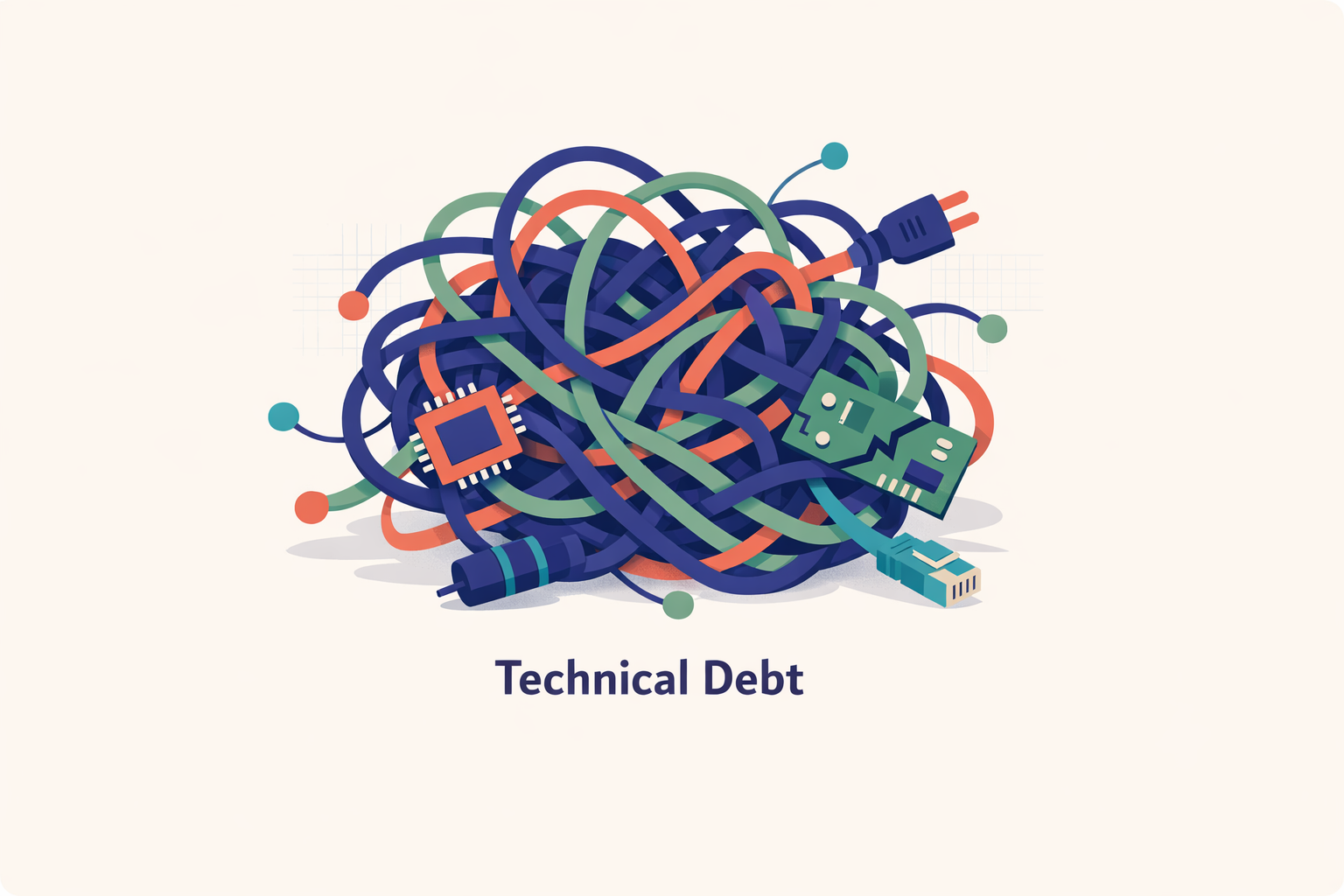
In the fast-paced realm of software engineering, there exists a constant tension between the urgency of rapid feature delivery and the necessity of maintaining high-quality code. This dynamic gives rise to the concept of technical debt, a metaphor that equates these compromises in development quality to financial obligations. Effectively managing technical debt is essential for sustaining an adaptive and efficient development lifecycle.
Similar to financial debt, technical debt represents the additional work that accumulates when development teams opt for quicker, less optimal solutions instead of more resilient, albeit time-consuming, alternatives. Such compromises can stem from a variety of unique circumstances, including rushed coding, reliance on outdated technologies, or deficiencies in system architecture. Therefore, managing technical debt is vital to ensuring the delivery of quality software.
The implications of technical debt extend beyond mere financial cost, affecting three primary areas:
- Velocity: The accumulation of bugs can bloat the codebase, resulting in significant slowdowns as resources are redirected towards addressing these issues rather than fostering innovation.
- Risk: An increase in complexity amplifies security vulnerabilities and the potential for system failures, which may grow exponentially as debt accumulates.
- Team Morale: The daunting task of addressing a growing number of issues within a convoluted codebase can diminish team productivity and enthusiasm.
A critical step in effectively managing technical debt is early identification. Employing tools such as code reviews and static analysis helps uncover less visible forms of debt, enabling teams to address them through various refactoring strategies.
Prioritizing which debts to address can be facilitated by frameworks like the Quadrant model, a method for classifying and prioritizing technical debt.
To successfully alleviate technical debt, it is imperative to synchronize with leadership. Aligning engineering priorities with business objectives fosters a more holistic approach, leading to sustainable reductions in technical debt.
In the upcoming sections, we will explore practical engineering strategies for managing technical debt, including refactoring techniques to mitigate existing debts and preventive measures to avert future accumulation.
Managing technical debt involves more than just coding; it encompasses strategic decision-making that significantly influences software quality, team dynamics, and future growth. By adopting a structured approach to identify, prioritize, and address these debts, organizations can enhance the robustness and efficiency of their development lifecycle.
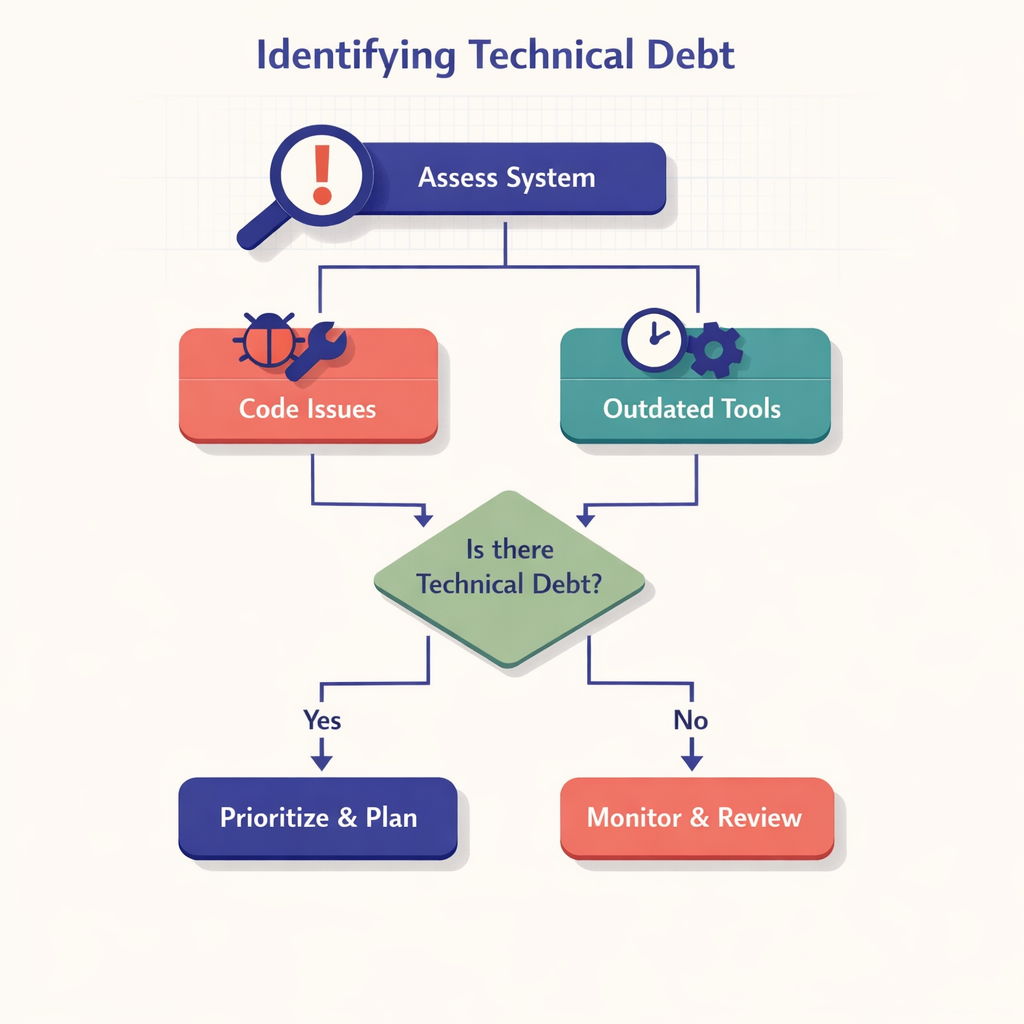
Understanding Technical Debt and its Impacts
Technical debt, a compelling metaphor in software development, highlights the intricate relationship between rapid execution and code quality. Similar to a financial obligation, technical debt refers to the accumulation of extra work that arises when a quick, yet suboptimal, solution is chosen over a more robust, time-consuming approach.
What factors contribute to this trade-off? The emergence of technical debt can be attributed to several causes. Teams often write code hastily to meet tight deadlines, bypassing established best practices. Additionally, sticking with outdated technology stacks to avoid the learning curve associated with newer tools contributes to this debt. Moreover, poor architectural decisions that neglect scalability can encumber a project with significant technical debt.
It is important to recognize that the cost of technical debt extends beyond mere budget implications. It impacts three critical areas: development speed (velocity), security (risk), and team morale.
| Impact Area | Description |
|---|---|
| Velocity | As debt accumulates, bugs become more frequent. The team shifts from a proactive stance focused on innovation to a reactive approach centered on damage control. This shift slows the development process due to increased debugging efforts, which can delay project timelines. |
| Risk | Technical debt introduces complexity, resulting in greater vulnerability and potential system failures. The higher the debt, the more likely a security breach or performance issue will occur. |
| Morale | A codebase plagued by technical debt can quickly deter developers. The overwhelming scale of problems can diminish team morale and productivity, turning technical debt into a source of stress and frustration. |
Effectively identifying and managing technical debt begins with recognizing warning signs early. Tools such as code reviews, static code analyzers, and automated testing can assist in uncovering hidden technical debt. To effectively monitor and control this overhead, organizations should prioritize debt-reduction initiatives alongside feature development. Implementing tech debt refactoring in manageable increments can serve as an effective remediation strategy.
Preventing the accumulation of technical debt requires a proactive approach. Leadership alignment on best practices and a commitment to continuous learning are essential. Training developers to write clean, maintainable code, evolving efficient CI/CD pipelines, and remaining up-to-date with the latest technologies are fundamental strategies to minimize technical debt.
Tip: Understanding technical debt and its impacts goes beyond mere conceptual clarity. It serves as a call to action for organizations—streamline processes, cultivate a culture of quality, and promote proactive strategies to mitigate technical debt.
Future-proof your code. Remember, short-term convenience should never compromise long-term growth.
Identifying and Prioritizing Technical Debt
A strategic approach to reducing technical debt begins with accurately identifying it within your codebase. Various tools and processes can facilitate this identification, including routine code reviews and updates to your technology stack. Key indicators of technical debt may encompass convoluted code, excessively large classes, insufficient testing, code smells, or reliance on outdated technologies.
As you identify technical debt, it's important to recognize that not all debt is inherently negative. Deliberately accepting a certain level of technical debt can allow for quicker product delivery. The crucial aspect is to manage this debt carefully to prevent it from becoming unmanageable.
Prioritizing Technical Debt
Once you have identified instances of technical debt, the next step is to prioritize them. Not all forms of technical debt hold the same level of impact on project delivery or pose equivalent risks. The following categorization can aid in effective management:
| Debt Category | Description |
|---|---|
| Critical Debt | This category encompasses instances where bugs or convoluted logic significantly impede functionality, security, or performance. Critical technical debt should be addressed immediately. |
| High-Impact, Low-Effort Debt | Certain instances of technical debt may cause considerable performance slowdowns but require minimal resources to address. Prioritizing this type can yield substantial productivity gains with relatively little effort. |
| Strategic Debt | Sometimes, you may intentionally accept specific instances of technical debt to accelerate feature delivery. It is important to track this debt and ensure it aligns with the company's strategic vision. Address strategic debt when it begins to obstruct new feature development or restrict scalability. |
| Minor Debt | This form of debt does not significantly affect day-to-day coding or feature delivery but could lead to degraded performance over time. Regular refactoring can help manage this debt. |
Tech Debt Refactoring
Refactoring is an effective strategy for mitigating technical debt over time. Allocating a portion of your team's time for ongoing refactoring can substantially address technical debt and prevent it from spiraling out of control.
However, it is essential to recognize that refactoring is not a universal solution for all types of technical debt. In some cases, developing entirely new modules from the ground up may be more beneficial in terms of time, cost, and quality.
Managing technical debt requires a proactive approach, making debt identification and prioritization critical. The costs associated with unmanaged technical debt can be substantial—impacting both the quality of the software and the productivity of the team. With a well-conceived strategy for identifying, prioritizing, and refactoring technical debt, teams are better positioned to navigate its complexities, ultimately resulting in stronger products and improved team morale.
Identifying Technical Debt
Effectively identifying technical debt within your development ecosystem is essential for understanding its costs and formulating effective mitigation strategies. Several signals and tools can aid in this identification process, with code reviews being among the most effective.
During a code review, developers meticulously examine each other’s code to uncover anomalies and potential issues. This involves identifying patterns that could benefit from refactoring and emphasizing code quality over hastened task completion. Through this practice, problematic areas contributing to the accumulation of technical debt can be identified. The primary goal is to mitigate technical debt by ensuring that newly committed code adheres to quality standards.
Static code analysis tools are another invaluable approach to identifying technical debt. These tools analyze your code without execution, detecting deviations from best practice guidelines, deprecated or unused code, cyclomatic complexity, and more. Their outputs provide a comprehensive overview of your codebase's existing technical debt.
Additionally, consider adopting the following practices to enhance your technical debt identification efforts:
- Routine health checks on your software
- Automated testing
- Regular team retrospectives
Integrating these best practices into your development lifecycle contributes significantly to determining the technical debt costs and the areas necessitating refactoring. This proactive approach ensures that managing technical debt evolves into a core competency for your team rather than a mere afterthought.
Prioritizing Technical Debt
Given the tri-fold impact of technical debt on velocity, risk, and team morale, prioritizing its management should be a top organizational objective. Efficient prioritization hinges on evaluating two key aspects: the potential impact and the effort required to resolve the debt.
Firstly, assess the technical debt cost. Address areas within your codebase that present significant operational risks or impede velocity, such as faulty components that lead to recurrent system failures or convoluted code that slows development.
Secondly, consider the effort to reduce technical debt. Questions to ponder include: How complex is the debt? How much time and resources will rectification demand? The answers to these inquiries can help refine your prioritization process.
Tech debt refactoring is a critical component of effective technical debt management. While refactoring strategies may vary based on your codebase and business needs, common approaches include:
- Code refactoring: Enhancing the code's design and structure without altering its functionality.
- Architectural refactoring: Revamping the system's overall architecture to improve performance.
- Test-driven refactoring: Leveraging tests to identify areas needing refactoring and to validate functionality post-refactoring.
It is also essential to ensure leadership alignment in technical debt management. Effectively communicating the implications of technical debt and the necessity of its reduction to stakeholders can help align expectations and efforts.
In conclusion, while addressing technical debt may demand a short-term investment of resources, it offers long-term benefits such as enhanced code quality, improved development velocity, and reduced risks. Prioritizing technical debt requires a careful balance between its cost and the efforts required for resolution, making tech debt refactoring a valuable and necessary endeavor.
Strategies to Reduce and Refactor Technical Debt
Navigating the complex landscape of accumulated technical debt can be overwhelming; however, implementing effective strategies can significantly mitigate its extent and impact.
Reduce Technical Debt through Prioritization
A proactive approach to minimizing technical debt focuses on effective prioritization, emphasizing quality code creation over quick fixes. Here's how to implement this strategy:
- Recognize the cost of technical debt by evaluating the risks associated with various areas in the codebase.
- Direct your efforts toward potentially problematic regions, prioritizing those that hinder progress or increase risk.
- Foster thorough upfront planning to prevent the unnecessary accumulation of debt by establishing a solid design framework.
Remember: Fast is fine, but accuracy is everything - Wyatt Earp
Implementing Tech Debt Refactoring
Refactoring involves modifying existing code to improve its internal structure without changing its external functionality. This practice is crucial for effective technical debt management. Successful refactoring strategies include:
- Incremental Refactoring: Instead of a sweeping, system-wide rewrite, opt for iterative and manageable improvements to specific code sections.
- Use of Tools: Leverage tools such as linters and static analyzers to identify areas ripe for refactoring.
- Automated Testing: Conduct automated testing after each modification to ensure that functionality remains intact.
Investment Insight: Consider refactoring as an investment in the future of the product, enabling faster innovation and reducing critical issues down the line.
Gaining Leadership Alignment
Involving organizational leadership in the process is crucial, as their understanding and support are essential for securing the necessary resources to address technical debt. By demonstrating the long-term cost implications and potential risks to the firm’s reputation or security, you can garner the essential buy-in to manage debt effectively.
Examples and Cases
To further your learning and gain insights into practical applications of these strategies, explore case studies from organizations that have successfully addressed their technical debt. These examples can provide valuable perspectives to shape your own approach.

Wrapping Up
Managing and reducing technical debt is a challenging yet essential aspect of software development. By prioritizing code quality, employing proactive refactoring strategies, and securing executive alignment, organizations can circumvent the pitfalls associated with escalating technical debt, thereby enhancing innovation and software velocity.
Important Tip: Regularly review your codebase and refactor as needed to uphold quality and mitigate technical debt.
Preventing Accumulation of Technical Debt
Preventing the accumulation of technical debt is essential for an efficient and high-quality software development process. By adopting holistic and proactive strategies, teams can significantly reduce technical debt, mitigate its adverse effects, and foster a more agile, value-driven operation.
Holistic Coding Practices
A disciplined approach to coding cultivates a healthy codebase and helps prevent the accumulation of debt. Focus on the following key areas:
| Key Focus Areas | Description |
|---|---|
| Consistency | Adhere to established coding standards, styles, and conventions. |
| Code simplicity | Favor straightforward solutions over complex ones. |
| Frequent code refactoring | Regularly refine and optimize code to maintain efficiency and manageability. |
Opting for Continuous Integration
Continuous Integration (CI) is a software development practice that encourages developers to routinely merge their changes back to the main branch. Regular integration helps reduce technical debt by:
- Promptly identifying and resolving integration issues.
- Facilitating early detection of bugs, allowing for easier and more efficient fixes.
- Maintaining a clean mainline, which helps avoid last-minute chaos.
"Prevention is better than cure." This principle holds true for the accumulation of technical debt. By adopting Continuous Integration, teams can implement a proactive safeguard against the onset of significant technical debt.
Incorporating Rigorous Code Reviews
Implementing thorough code reviews can effectively monitor and control technical debt. Consider these best practices:
- Actively involve the team: Encourage diverse perspectives to identify potential issues collectively.
- Utilize automated tools for standard checks: Save time by automating the detection of code smells, bugs, and coding standard violations.
- Emphasize learning: Code reviews should focus not only on reducing technical debt but also on fostering team learning and continuous improvement.
Making Sound Architectural Decisions
A robust and flexible architecture serves as a strong defense against escalating technical debt costs. Here are some recommendations:
- Regularly assess architectural alignment: Ensure that the architecture remains aligned with system requirements.
- Avoid over-engineering: A simple and effective architecture minimizes unnecessary complexity.
- Strive for modularity: Design modular systems that allow for easy changes or replacements.
While refactoring tech debt is essential, prevention remains the key to avoiding issues. By nurturing sound coding practices, employing diligent continuous integration and code reviews, and making informed architectural decisions, you can ensure that your projects consistently deliver top-tier results without becoming encumbered by excessive technical debt.
Role of Leadership in Technical Debt Management
Managing technical debt is a complex challenge that necessitates a unified effort. While every team member contributes to this endeavor, leadership plays a crucial role in cultivating a culture that not only acknowledges technical debt but also actively seeks to mitigate it.
As a leader:
-
Acknowledging the Technical Debt Cost: Before implementing any strategies, it is essential for leadership to recognize the broad spectrum of costs associated with technical debt. These costs extend beyond financial implications; they also impact overall project velocity, increase risk, and affect team morale.
-
Establishing a Culture of Quality: Leadership is fundamental in fostering a culture that prioritizes code quality. Teams should feel empowered to invest the necessary time for robust solutions, which can significantly reduce future technical debt.
-
Aligning Teams for Refactoring: Effective refactoring of technical debt requires a shared vision, clear prioritization, and a commitment of time from all stakeholders. As a leader, ensuring alignment in these areas is crucial.
-
Supporting Training and Development: Regular training and development initiatives can enhance the team's understanding of best coding practices and help them avoid common pitfalls that lead to technical debt.
-
Facilitating Tools and Resources: Leadership can enhance technical debt management by providing the tools and resources needed to identify and document technical debt early on.
Tip: Strong leadership is instrumental in addressing technical debt. By fostering a culture focused on quality, aligning teams for refactoring, and facilitating access to tools, leaders pave the way for effective management of technical debt.
In conclusion, leadership plays a vital role in managing and reducing technical debt. By promoting a culture that prioritizes quality code, encourages refactoring, and supports the team with requisite resources, leaders can navigate the challenges of technical debt more effectively.
Practical Examples of Technical Debt Management
Managing technical debt effectively can be better understood through concrete examples. Here are two distinct scenarios:
| Scenario | Outcome |
|---|---|
| Successful Tech Debt Refactoring | An eCommerce company recognized that its website had accrued significant technical debt due to poorly written, outdated code, which escalated the cost associated with this debt. To mitigate the issue, they first identified the primary areas of debt through code reviews. Subsequently, they prioritized these areas based on their impact on functionality and associated security risks. The company implemented a dedicated 'refactoring day' each week, during which software engineers focused on code improvements. They also emphasized clear documentation, facilitating faster onboarding and smoother transitions. This proactive strategy resulted in enhanced code quality, increased development velocity, and improved team morale. |
| Failed Tech Debt Management | In contrast, a startup eager to expedite its product launch overlooked technical debt, perceiving it as an unavoidable consequence of rapid deployment. This shortsighted approach led to significant obstacles in the future. The unmanaged debt adversely affected their development velocity, heightened risks, and diminished team enthusiasm. This case underscores the vital importance of proactively managing technical debt. |
Tip: These examples illustrate the potential outcomes of both effectively managing technical debt and failing to do so. Continuous prioritization of tech debt refactoring is essential to prevent the escalation of unresolved issues and minimize the cost of technical debt.

Frequently Asked Questions on Technical Debt Management
-
What is the Cost of Technical Debt?
The cost of technical debt extends beyond mere financial implications. It significantly affects the development team's productivity, increases the risk of security breaches, and can negatively impact morale. Time spent resolving bugs and navigating system complexities detracts from valuable resources that could be invested in developing new features.
-
How can we Reduce Technical Debt?
Recognizing and addressing technical debt is essential. Tools such as code reviews facilitate the identification of the sources of debt. Once identified, it is crucial to prioritize the technical debt appropriately. Refactoring the portions of the code that are burdened with debt can serve as an effective strategy for its reduction.
-
What is Tech Debt Refactoring?
Tech debt refactoring refers to the process of rewriting segments of code to enhance quality without altering its external behavior. This process is a vital aspect of technical debt management, as it focuses on identified debt areas, prioritizes them, and systematically addresses those areas. This approach not only mitigates existing technical debt but also helps prevent its future accumulation.
Tip: Always prioritize the most critical areas of technical debt to maximize impact and efficiency.
Make Imversion a preferred source on Google
Like this kind of AI and software analysis? Add Imversion as a preferred source so Google can highlight our articles for you in Search, AI Overviews, and AI Mode.

