MVP Development Cost Breakdown: Key Insights for Startups
Get a complete breakdown of MVP development costs, essential budgeting tips, and insights on what to expect at each stage of your startup journey.

Introduction to MVP Development Cost
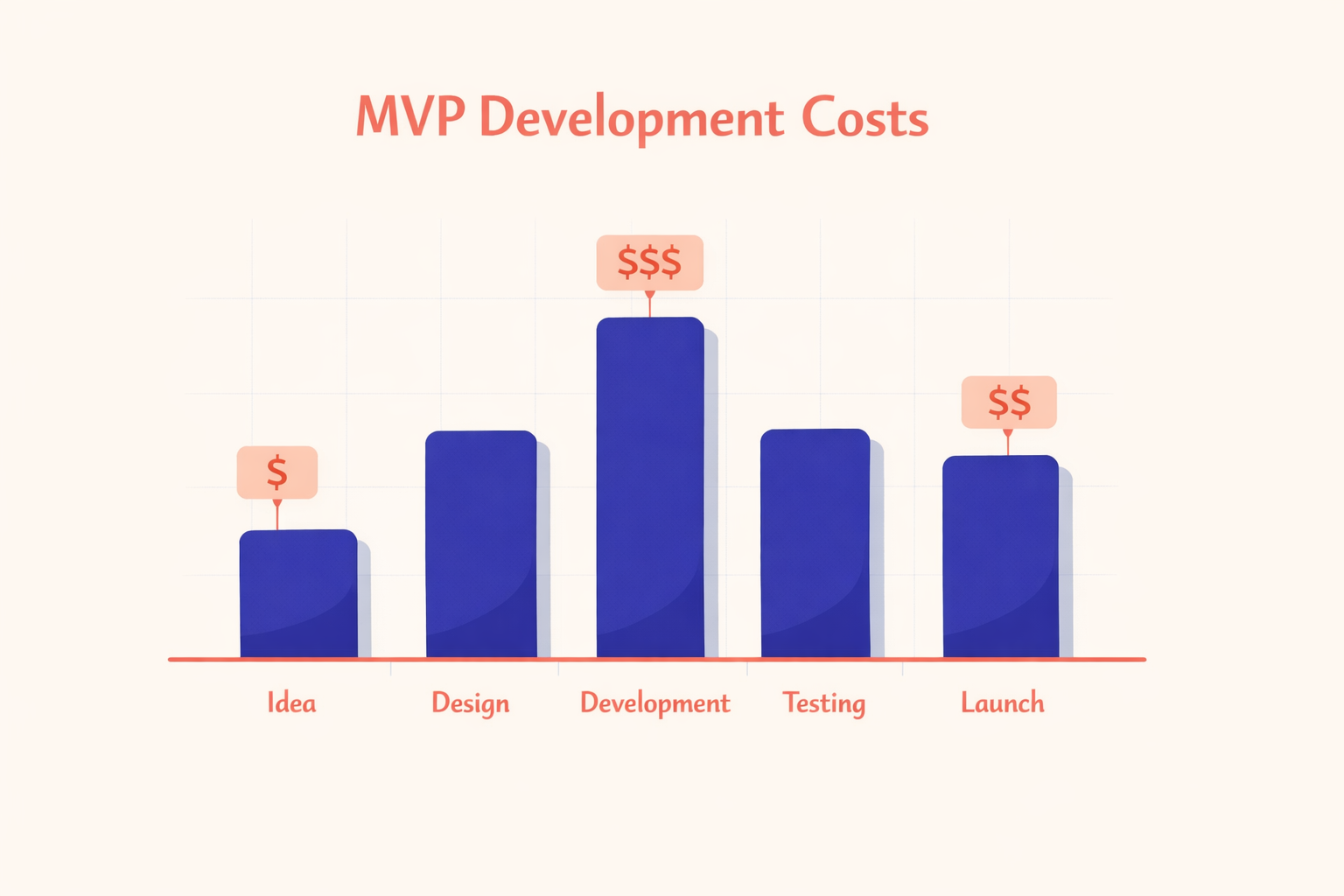
In the startup ecosystem, developing a minimum viable product (MVP) is a crucial first step. It lays the groundwork for a product's success, tests the viability of a business concept, and can attract initial users or investors. Among the many factors to consider in your startup journey, grasping the MVP development cost is essential and should be a central focus of your financial planning.
It's important to recognize that the cost of building an MVP can vary widely, primarily influenced by factors such as the product's functional complexity, the technologies employed, and the location of the development team. Generally, development costs range between $15,000 and $50,000. Additionally, balancing cost, quality, and time is crucial when budgeting for your startup.
Tip: Establishing the right MVP budget is vital for startups to manage their valuable resources effectively. Through our collective experience, we’ve found that the most expensive MVP isn’t necessarily the best. It’s about striking the right balance between your budget and your product's core functionality, without compromising the quality your customers expect.
In the following sections, we will provide a thorough breakdown of MVP development costs, highlighting cost drivers, team structure, and timelines associated with different stages. We will further explore necessary trade-offs, share budgeting tips, and discuss commonly used pricing models. Additionally, we will identify potential risk factors and offer examples to contextualize the cost ranges involved.
This blog serves as a detailed guide to understanding startup development costs, with a particular focus on creating and implementing an MVP. Whether you’re a seasoned entrepreneur or planning your first startup, learning about these financial aspects will equip you with the essential information needed to plan, execute, and manage MVP costs effectively.
Beginning your venture with a solid understanding of MVP development costs helps mitigate financial risks and facilitates strategic decision-making. Launching an MVP can validate your business idea and significantly contribute to securing early-stage funding. Investing wisely in this critical component is likely to yield long-term benefits.
In this blog, we will break down the MVP development process, providing you with the necessary insights to plan your MVP budget effectively. We have also included a section addressing frequently asked questions to offer further clarity on this subject.
: Post 15, Post 25
Ready to embark on your MVP development journey? Contact us today. You can also explore our custom software development services to learn more about how we can assist you.
Understanding MVP Development Cost Drivers
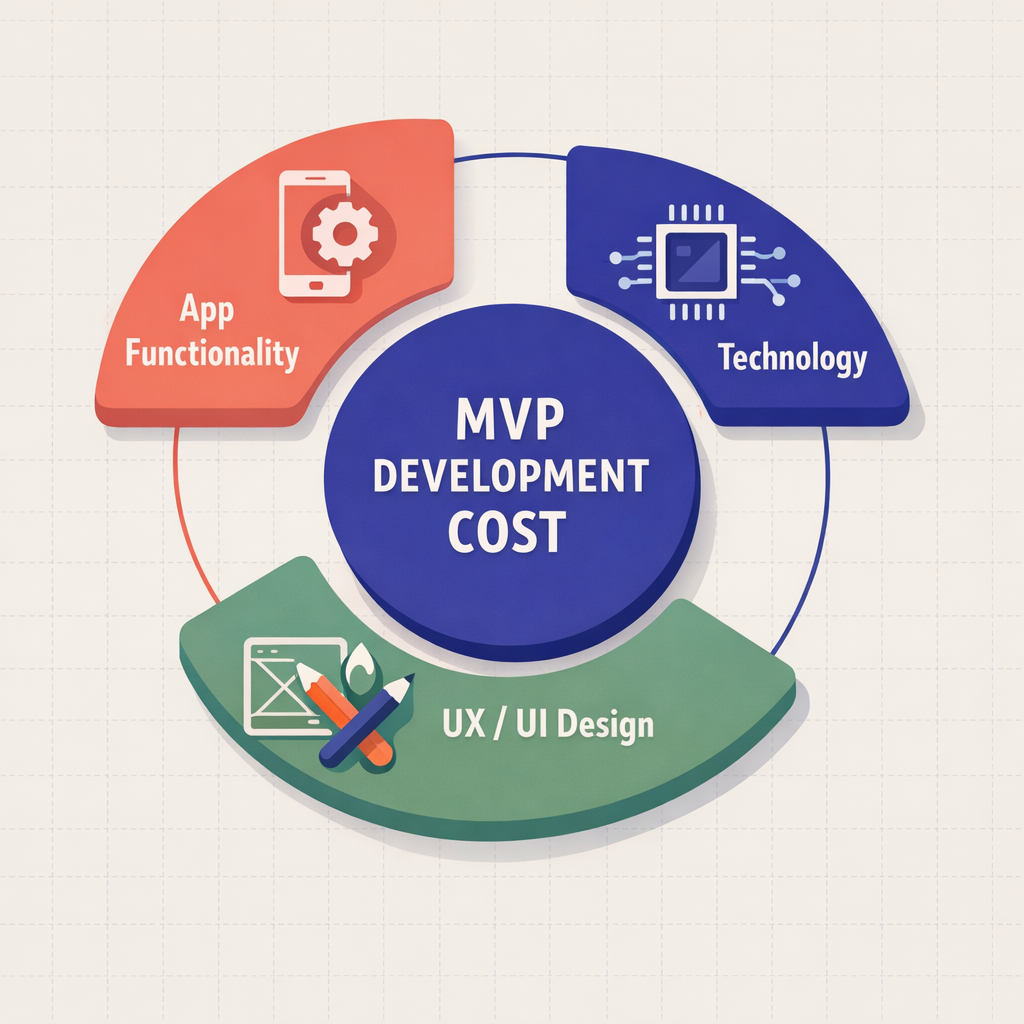
The cost of developing a Minimum Viable Product (MVP) can fluctuate significantly based on several factors. These cost drivers include the technological aspects and complexity of the project, as well as the geographical location of your development team.
App Functionality and Technological Aspects
The functionality and technological foundation of your application are crucial elements of the project. The expense of building an MVP may rise or fall depending on the complexity of its required features and functions.
You may wish to incorporate user-friendly features such as:
- Integrated payment gateways
- Location tracking
- Real-time chat support
Simultaneously, the backend infrastructure may necessitate sophisticated technological capabilities, including:
- Database integration
- Cloud storage
- Robust encryption for data security
As the technological setup and functionality become more complex, the startup development costs will increase, as these elements require specialized skills and their execution is time-intensive.
Physical Location of Your Development Team
Labor costs vary considerably across the globe. As a result, your MVP budget may shift based on the geographical location of your development team.
For example, hiring a development team from North America typically involves higher expenses compared to selecting developers from Asia or Eastern Europe. Therefore, startup founders should take these cost differentials into account when outsourcing MVP development.
Complexity
Creating a basic MVP will invariably be less expensive than developing one with advanced features and complex functions. The more intricate the design of an MVP, the more hours your team will need to dedicate to its development. This additional workload usually results in a higher overall cost.
UI/UX Design
The cost of an MVP is not solely determined by technical aspects. An aesthetically pleasing and user-friendly user interface (UI), along with a seamless and intuitive user experience (UX), is equally important. The ideal combination of visual appeal and efficiency can enhance user engagement and retention, ultimately leading to increased profitability over time.
However, achieving high-quality UI/UX design calls for skilled professionals, which can elevate the overall MVP development cost.
Using an Example
Consider a startup aiming to develop a language learning app as its MVP. The basic functionality could include:
- A self-directed lesson plan
- Progress tracking
- Possibly a community forum
Adding complexity through a speech recognition feature for pronunciation correction would increase the overall cost. Similarly, incorporating an AI-enabled chatbot for personalized vocabulary suggestions would also contribute to the budget. The geographic location of the development team, along with enhanced UI/UX for a user-friendly experience, will further influence the MVP budget.
While these variables may appear daunting, understanding them enables effective budget planning and helps strike a balance between desired features and feasible costs.
Important Tip: MVP development is not merely about minimizing expenses; it involves making informed decisions that promote effective resource allocation.
As you craft your MVP, keep these factors in mind. If you require assistance, don't hesitate to reach out to our experts here to guide you through the entire process and ensure your MVP aligns with both your budget and your business objectives.
Budgeting Tips for MVP Development
Crafting an accurate and realistic MVP budget is crucial for the success of your MVP development process. An effective budgeting strategy not only controls the costs of building your MVP but also maximizes the value derived from it.
Here are some practical tips to help you effectively budget for your MVP development:
Understand the MVP Development Process
Having total clarity about the MVP development process is essential before starting your budget. It is important to thoroughly understand each stage, its significance, and the costs associated with it. The four major stages of MVP development encompass various elements that need to be budgeted separately.
By understanding how each stage of the MVP development process contributes to the overall startup development cost, you can make more informed budgeting decisions.
Break Down the Costs
Breaking down individual costs will provide a realistic picture of what to anticipate. The cost to build an MVP extends beyond development costs alone; it includes various cost drivers such as UI/UX design, technological aspects, and team structure.
Given the unpredictable nature of MVP development, it is wise to adopt a flexible approach and prepare for any eventualities. Cost allocation may also require adjustments during various stages of development.
Choose a Suitable Pricing Model
The pricing model you select can have a direct impact on your MVP development costs. For example, a fixed pricing model might be ideal for a project with a clearly defined scope, while a value-driven pricing model can better leverage project outcomes.
Carefully consider the pros and cons of different pricing models and make decisions based on your specific needs to optimize the costs associated with building your MVP.
Account for Time and Project Risks
Timelines can significantly influence your budget. The longer it takes to develop an MVP, the higher the costs incurred, which may include additional personnel expenses or other overhead costs.
Additionally, project risks—such as unforeseen challenges or changes in project scope—can drive up the costs of building your MVP. Allocate some flexibility in your budget to account for these risk factors to create a more accurate projection.
Important Tip: A static budget is ineffective for MVP development. As your product evolves, it may be necessary to make adjustments based on actual versus budgeted costs. Regular reviews and revisions will help you manage your MVP budget more effectively.
For a focused perspective on MVP development and budget planning, consider reading Post 15 and Post 25 on our blog.
Budgeting wisely for your MVP development process can pave the way for better cost optimization and ensure efficient resource utilization. It also provides a roadmap that will help you stay on track with your project timelines and financial goals.
If you need further assistance with budget planning for your MVP, please don't hesitate to contact us.
Familiarizing Yourself with MVP Team Structure and Pricing Models
An essential aspect of managing startup development costs lies in understanding the team involved in MVP development and the common pricing models that influence those costs. Whether you're curious about the overall cost of an MVP or seeking a detailed breakdown of the expenses involved in building one, this knowledge will equip you to make informed decisions.
The Typical MVP Development Team
Creating a minimum viable product (MVP) requires a collaborative effort, uniting a cross-functional team with a diverse skill set. The typical structure of an MVP development team includes:
- Project Manager: Orchestrates the development process by facilitating communication among team members and stakeholders. Their role is crucial in removing obstacles, coordinating efforts, and ensuring a smooth workflow.
- UX/UI Designer: Focuses on designing an intuitive and visually appealing user interface.
- Developers: Typically two or more, who are charged with translating the product vision into a tangible reality.
- Quality Assurance Specialist: Conducts systematic activities to verify that the final product's functionality, reliability, security, and performance meet the established requirements.
Ultimately, this team structure can be scaled or customized to align with your startup's specific needs and budget constraints.
Pricing Models for MVP Development
Understanding the various pricing models can significantly aid in managing your MVP budget. There are three primary models to consider:
| Pricing Model | Description |
|---|---|
| Hourly Rate | You are charged for each hour the team spends working on your MVP. This option offers flexibility but may make it difficult to predict the total MVP development cost accurately. |
| Fixed Price | The total cost is predetermined before the project begins, helping to eliminate unexpected cost overruns, though it may lack flexibility for major changes mid-project. |
| Dedicated Team | A team of professionals is assigned to your project for an extended period, which is beneficial when the product requires ongoing development and support. |
Each pricing model presents its own advantages and potential drawbacks. Therefore, selecting the appropriate model often depends on the complexity, timeline, and specific requirements of your MVP project.
Important Tip:
Familiarity with the team structure and pricing models is crucial in preparing for the cost of building an MVP. This understanding helps ensure your project progresses smoothly and remains within the allocated MVP budget. For further inquiries, feel free to reach out to us via our /contact page.
Remember,
Effective budgeting and comprehension of your MVP team structure and pricing models mitigate risk, optimize the utilization of funds, and clarify your startup development costs.
- FAQ: How does team structure impact MVP development costs?
- FAQ: How do I choose the right pricing model for my MVP?
- FAQ: Does the pricing model affect the timeline for MVP development?
Trade-offs in MVP Development Cost
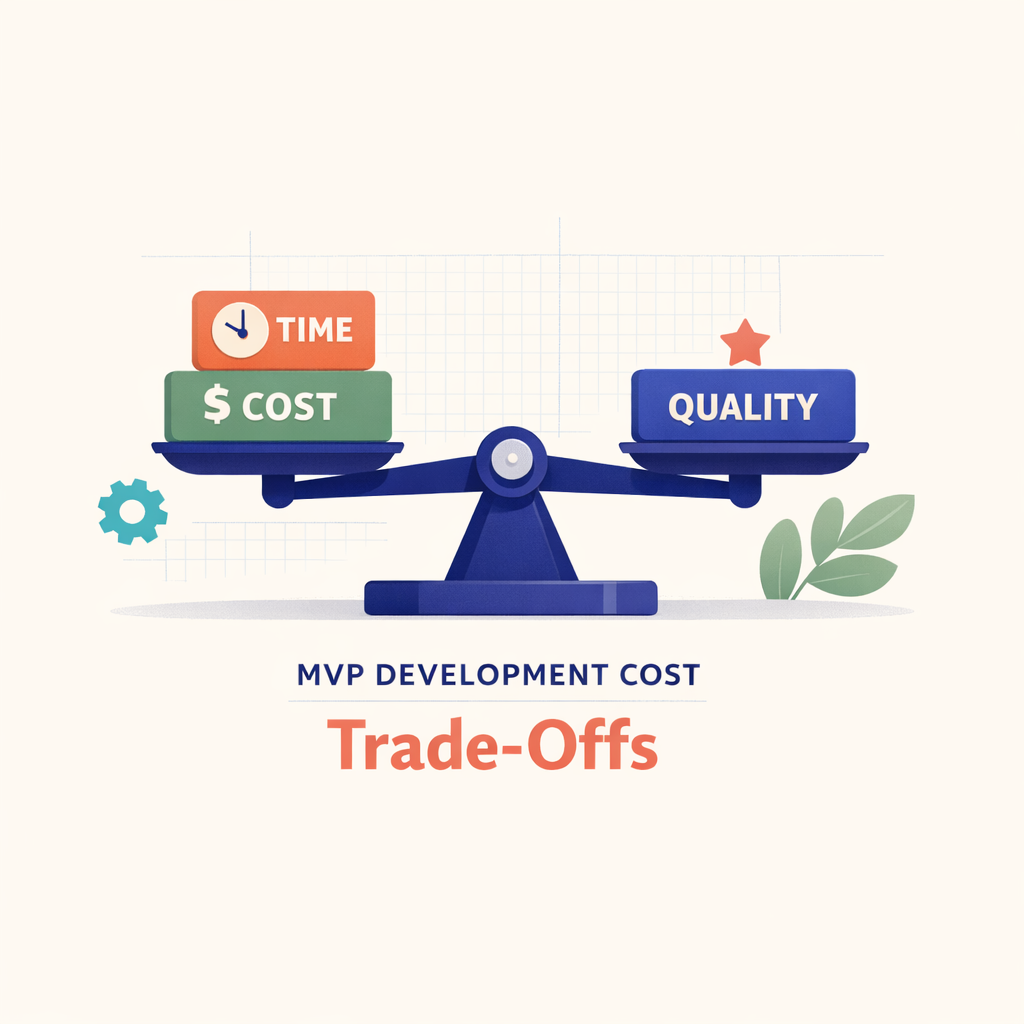
Creating a minimum viable product (MVP) is a crucial step for startups, requiring a careful balance between multiple factors such as core functionality, quality, and cost. Understanding the major trade-offs involved in MVP development costs helps startups make more strategic decisions while adhering to their budget.
Striking the Right Balance in MVP Functionality and Cost
When considering the cost of building an MVP, finding the right balance between incorporating essential functionalities and keeping development costs manageable is essential. Developing an MVP with too many features can significantly increase initial costs. Conversely, an overly simplistic MVP may fail to adequately validate your concept.
Tip: An effective MVP should strike a balance by including only necessary core features, avoiding unnecessary complexity and cost.
Quality vs. Cost in MVP Development
Another important trade-off lies between quality and cost. Higher development standards tend to incur higher costs. While a high-quality MVP may create a better first impression, it can also push your budget beyond optimal limits.
One actionable insight is to prioritize critical quality aspects, such as UX/UI design, that directly impact user experience. Non-essential quality improvements can be scheduled for future iterations based on feedback.
Team Structure and MVP Development Cost Trade-offs
The structure and size of your MVP development team can significantly affect development costs. A larger team may expedite the building process but will also increase expenses. In contrast, a leaner team may take longer to deliver but can help reduce overall costs.
It is crucial to adjust team size while ensuring that essential skills and expertise are not compromised. A typical team might include:
- 1 Project Manager
- 1 UI/UX Designer
- 2 Developers
- 1 Quality Assurance Specialist
This structure can be adjusted based on specific project requirements and budget constraints.
Navigating the trade-offs in MVP development necessitates strategic planning and a clear understanding of your startup's priorities. Equipped with this knowledge, startups can effectively optimize their MVP development approach while remaining within their allocated budget.
For more insights on MVP development and to address the challenges of strategizing your startup's activities, we offer services tailored to your specific needs. Reach us at /contact and select the exact service you need at /contact?service=mvp. For a deeper exploration of managing MVP development costs, refer to our earlier posts, Post 15 and Post 25, which provide comprehensive guidance.
Risk Factors to Consider In MVP Development Cost
Developing a Minimum Viable Product (MVP) is a strategic approach to evaluate the viability of a concept. While this process provides invaluable insights, it is also associated with potential risks and uncertainties that could lead to unexpected increases in MVP development costs. To ensure a viable startup development cost and effectively manage your MVP budget, understanding these risk factors is essential.
Market Fluctuations
One significant risk arises from the unpredictability of the market. Volatile market conditions can substantially impact the cost of building an MVP. As such:
- Changes in consumer behavior may necessitate revisions in functionality, resulting in increased startup development costs.
- The emergence of new competitors could require the addition of unique features, further driving up expenses.
- Economic fluctuations can also affect project funding and budgeting.
Technological Changes
Ongoing technological advancements introduce another risk factor:
- The integration of new software or systems may lead to unforeseen costs.
- Upgrades or patches during the development phase can add to the financial burden.
- Existing technologies might need replacement, leading to unexpected cost increases.
Project Extensions
Delays in the MVP development timeline can result in additional financial commitments. Extended timelines often arise from unforeseen complexities or changes in project scope.
Stakeholder Decisions and Changes
Frequent changes in decision-making by stakeholders can lead to increased costs. These changes may involve functional requirements, design elements, or revisions in project objectives.
Team-Related Factors
The efficiency of each team member significantly affects MVP development costs. Inefficient task management or coordination issues can extend the development timeline, ultimately raising costs.
Tip: These risk factors underscore the importance of a well-planned MVP budget and a vigilant approach throughout the development process. It's crucial to prepare for potential adjustments while balancing quality, cost, and functionality.
If you need assistance navigating the complexities of MVP development, please reach out to us at /contact?service=mvp.
Frequently Asked Questions:
- How does market fluctuation affect the cost of MVP development?
- What are the technological risks associated with MVP development costs?
- How do project extensions influence the overall cost of building an MVP?
MVP Development: Cost Splits Across Stages
When evaluating the cost of building a Minimum Viable Product (MVP), it is essential to understand how expenses are distributed across various stages. This insight enables meticulous planning and budgeting, ensuring that startup development costs remain within acceptable limits. Below, we analyze the key milestones in the MVP development process and their associated cost implications.
Cost Breakdown by Stage
| Stage | Estimated Cost | Description |
|---|---|---|
| Concept Validation | 20% | This stage accounts for one-fifth of the total MVP development cost. It involves defining user roles, formulating workflows, and listing features. The outcomes of this phase significantly influence subsequent stages. |
| Designing Phase | 20% | The design phase also consumes roughly 20% of the MVP budget, concentrating on wireframe models and app design. Expenses in this stage focus on optimizing user interface (UI) and user experience (UX). Increased design complexity can lead to higher costs. |
| App Development | 40% | As the most resource-intensive phase, app development takes up about 40% of the budget, primarily dedicated to coding tasks and integration efforts. |
| Launching, Testing, and Iteration | 20% | This stage utilizes the remaining 20% of the budget. If unforeseen issues arise during testing or post-launch, expenses may increase. The feedback and iteration process is crucial for product enhancement. |
Tip: These estimates can vary based on factors such as team structure, project timeline, technological stack, and overall complexity. Careful planning and balancing these aspects are vital for developing a successful MVP within a manageable budget.
In conclusion, while it is natural to aim for minimizing MVP development costs, it is equally important to ensure adequate investment in maintaining quality and achieving desired functionality. Thoughtful resource allocation across these stages can lead to a successful MVP that provides valuable insights while remaining within your startup's budget.
Takeaway: MVP costs are not fixed; they are distributed across different stages. Understanding this distribution helps startups manage their budget effectively and set realistic expectations.
FAQs
-
How can startups reduce the MVP development cost?
Startups can lower costs by clearly defining their MVP's core functionality, outsourcing to cost-effective regions, utilizing open-source tools, and adopting a lean development approach. -
What is the biggest cost driver in MVP development?
The complexity of the project, the chosen technological stack, and the location of the development team significantly impact the MVP development cost. -
Can startups negotiate MVP development costs with a software development agency?
Yes. By discussing project details and establishing mutually agreeable milestones, startups can work towards a more favorable pricing model.
To learn more about tailoring your MVP cost plan to your specific startup needs, visit our services page or reach out to us to discuss your project.
Concluding Development Cost for Startups' MVPs
Successfully navigating the challenging waters of MVP development can be demanding, not only on a creative level but also from a financial perspective. Understanding the MVP development cost at each phase is essential for effective financial planning and, consequently, successful startup execution.
To reiterate, the cost of building an MVP hinges primarily on three key cost drivers:
- App functionality
- Chosen technology stack
- Physical location and composition of your development team
The complexity and quantity of functionalities, along with UI/UX design, significantly impact your overall MVP budget.
With the total cost of developing an MVP estimated to range between $15,000 and $50,000, assembling the right team while managing your startup's development costs is crucial. Typically, this core team should include:
- A project manager
- A UX/UI designer
- Several developers
- A quality assurance specialist
Each stage of the MVP development process, from conceptual validation to iterative feedback, requires specific budget allocations. Industry best practices suggest allocating approximately 20% of the total budget to both the initial conceptual validation and design stages, followed by about 40% for the development phase.
Tip: Clear and meticulous budgeting is essential, alongside a solid understanding of cost drivers, risk factors, and potential trade-offs. Consider implementing flexible pricing models and regular monitoring to keep expenses in check. A well-structured financial plan will not only support your current operations but can also guide your startup toward sustained growth.
Keep in mind that while creating a high-quality MVP is important, it’s equally necessary to balance quality with cost. Overspending can deplete your resources, while cutting corners may result in an underperforming MVP.
In conclusion, grasping startup development costs and preparing a realistic budget for your MVP is a vital precursor to success. Through careful planning and effective cost management, startups can efficiently deliver an impactful MVP within an acceptable budget.
Curious about the cost to build an MVP for your unique project? Get in touch with our experts today. Start fortifying your startup’s path to success by making informed decisions. Visit our contact page to initiate the discussion about your project needs.
FAQ
-
How much can MVP development cost for a startup?
The cost of developing an MVP can vary significantly, with estimates typically ranging between $15,000 and $50,000. -
What factors might drive the cost to build an MVP?
Elements such as the technical complexity, geographical location of the development team, and the number of desired functionalities greatly influence MVP costs. -
What is a recommended team structure for my MVP development?
An average MVP development team generally consists of a project manager, a UX/UI designer, two developers, and a quality assurance specialist. However, it’s important to tailor your team according to the specific needs and budget of your project.
Make Imversion a preferred source on Google
Like this kind of AI and software analysis? Add Imversion as a preferred source so Google can highlight our articles for you in Search, AI Overviews, and AI Mode.

