TypeScript Adoption in 2026: Why Your Team Should Embrace It
Considering TypeScript for your team in 2026? Learn about its benefits, differences with JavaScript, and how to successfully adopt it.

Introduction to TypeScript Adoption
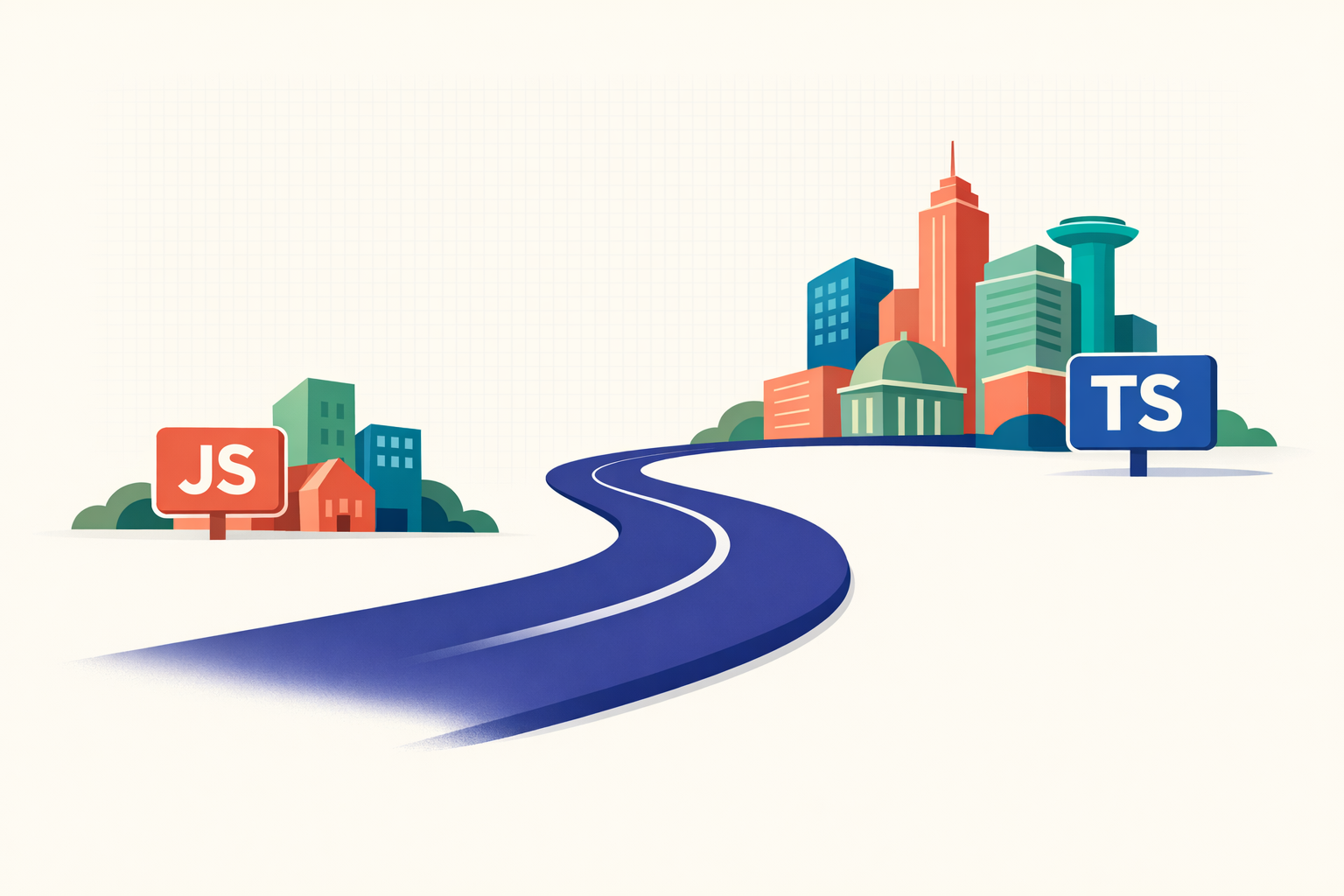
In the rapidly evolving landscape of technology, the adoption of TypeScript has become a crucial topic of discussion. Selecting the appropriate programming language for your team's project is vital, as it significantly influences the product's quality, scalability, and maintainability. Among the myriad of languages available, TypeScript stands out as a powerful option, offering substantial advantages.
TypeScript, a statically typed superset of JavaScript developed by Microsoft, alleviates many of the challenges associated with JavaScript's limitations. Over the years, TypeScript has transformed from a promising venture into a robust language that is shaping the future of software development, rapidly gaining traction among development teams worldwide.
TypeScript: The Evolution and Accelerated Adoption
Established in 2012, TypeScript was designed to overcome JavaScript's limitations, particularly its inefficiencies in handling complex, large-scale projects. Continuous improvements and its intuitive nature have contributed to TypeScript's soaring adoption rates, driven by a combination of features that enable it to excel where JavaScript occasionally falls short.
Benefits that Drive TypeScript Adoption
The advantages of TypeScript present a compelling case for its adoption. With static typing, TypeScript enhances code reliability by eliminating runtime errors commonly associated with JavaScript. Additionally, its superior tooling support provides developers with enhanced error detection and improved autocomplete functionality. When combined with object-oriented programming (OOP) features such as interfaces and generics, TypeScript becomes an excellent choice for structuring large-scale applications.
TypeScript vs JavaScript: A Comparative Examination
A comparative examination of TypeScript and JavaScript can clarify why TypeScript's adoption is on the rise. While JavaScript is universally applicable, TypeScript addresses its gaps with strong typing and advanced features. Additionally, TypeScript is suitable for both frontend and backend applications, offering unmatched versatility.
| Feature | JavaScript | TypeScript |
|---|---|---|
| Typing | Dynamic | Static |
| Error Detection | Run-time | Compile-time |
| Tooling Support | Limited | Enhanced |
| Application Structure | Less structured | More structured with OOP features |
While JavaScript continues to play a crucial role, TypeScript adds a valuable layer of safety, making it an excellent choice for ambitious projects. Furthermore, TypeScript enables developers to express themselves more clearly in their code, which is particularly beneficial when working on large, complex applications.
As we progress further into the 21st century, the adoption of TypeScript appears set to continue its upward trajectory. Choosing TypeScript for your team can significantly enhance project quality, maintainability, and scalability.
Are you ready to explore how to manage this transition smoothly? Do you wish to understand potential trade-offs, read compelling real-world case studies, and find answers to frequently asked questions about TypeScript adoption? Stay tuned. Next up: strategies for seamless TypeScript migration. In the meantime, let's begin discussing your team's needs at /services/staff-augmentation.
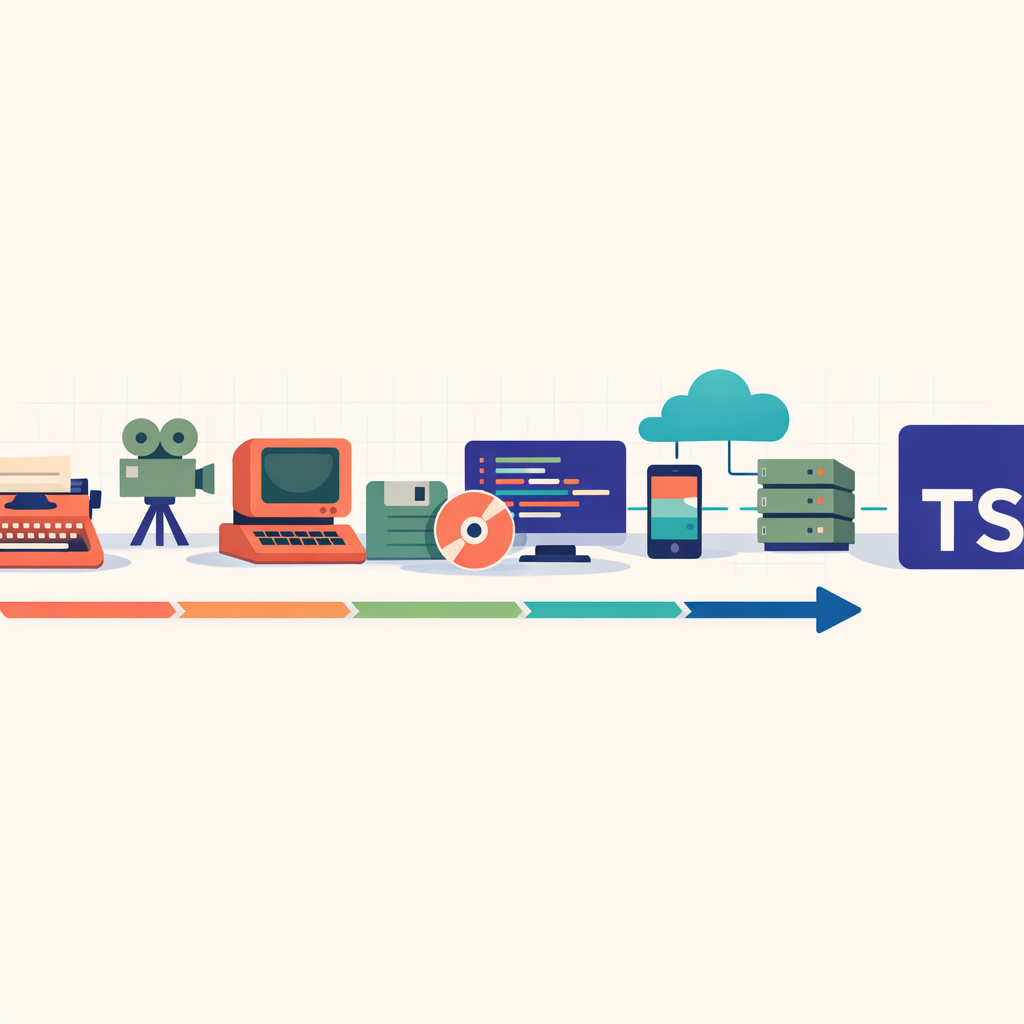
The Evolution and Adoption of TypeScript: A Historical Perspective
TypeScript was introduced by Microsoft in 2012 to address the limitations of JavaScript, particularly in managing large and complex projects. Since its inception, TypeScript has undergone a remarkable transformation—from an ambitious initiative to a robust programming language that is influencing the software development landscape. Let’s explore its history, advancements, and growing popularity in the industry.
The Evolution of TypeScript
In its early stages, TypeScript emerged as a statically typed superset of JavaScript. This innovative combination provided the advantages of static typing, which JavaScript inherently lacked, while preserving the flexibility and widespread applicability of JavaScript.
Through ongoing updates and enhancements, TypeScript has introduced a range of valuable features. Notably, static typing has led to more accurate code and a reduction in runtime errors. Additional features, such as interfaces and generics, have empowered developers to build large-scale, structured applications. Recent releases have further elevated the development experience with improved error detection and enhanced autocomplete functionality, thanks to TypeScript's advanced tooling and IDE support.
TypeScript vs. JavaScript: A Turning Point
As TypeScript matured, comparisons with JavaScript became inevitable. TypeScript has proven its reliability and versatility, effectively addressing the needs of both frontend and backend applications. By introducing a safety net to JavaScript, TypeScript has solidified its position as a formidable option in the programming language landscape.
Rapid TypeScript Adoption in the Tech Sphere
There is a noticeable trend toward increased TypeScript adoption among developers. Motivating factors include its scalability, robust tooling, type safety, and the capacity to produce code that is more predictable and easier to debug than JavaScript.
Important Tip: TypeScript's growth trajectory continues to ascend, bolstered by heightened community engagement and adoption by prominent tech companies like Google and Slack.
This surge in adoption can be attributed to the substantial benefits TypeScript offers, persuading developers to either transition to TypeScript or integrate it into their existing JavaScript projects.
In conclusion, TypeScript's evolution has been characterized by significant advancements, consistent improvements over JavaScript, and a rapid increase in adoption within the tech community. These factors present a compelling case for incorporating TypeScript into your team's projects.
In the next section, we will evaluate the key benefits of TypeScript. Stay tuned!
Comparing TypeScript and JavaScript: Why Adoption is Growing
When comparing TypeScript and JavaScript, it's essential to understand the origins of TypeScript. As a statically-typed superset of JavaScript, TypeScript was designed to address some of JavaScript's inherent flaws while preserving its advantages, which has contributed to the increasing adoption of TypeScript.
Strengths and Weaknesses of TypeScript and JavaScript
JavaScript, despite its widespread usage, has notable drawbacks such as weak typing and scalability issues. TypeScript builds on JavaScript's strengths and offers solutions to its structural and scaling challenges, which can significantly hinder a development team's productivity.
| Feature | TypeScript Benefits | JavaScript Limitations |
|---|---|---|
| Static Typing | Introduces static typing, allowing for type checking at compile time, which minimizes runtime errors. | Weak typing may result in runtime errors. |
| IDE Support | Provides enhanced tooling and Integrated Development Environment (IDE) support that enables developers to identify problems before execution. | Limited IDE support can complicate debugging. |
| Scalability | Incorporates Object-Oriented Programming (OOP) features like interfaces, namespaces, and generics, allowing for improved code reusability and maintenance. | Experiences scalability challenges in large applications. |
TypeScript vs. JavaScript: Why Use TypeScript?
The advantages of TypeScript, combined with its suitability for both front-end and back-end applications, present a compelling argument for its adoption over JavaScript. Businesses and developers recognize that TypeScript fosters a safe and productive environment for building scalable, maintainable, and efficient code.
Adopting TypeScript: Migration Strategy
Transitioning from JavaScript to TypeScript is remarkably straightforward due to TypeScript's nature as a superset of JavaScript. Consequently, existing JavaScript code can operate within a TypeScript environment with minimal changes.
Tip: As with any transition, there may be initial challenges, and teams should anticipate a learning curve when adopting TypeScript. To ease this process, it is advisable to gradually integrate TypeScript into your existing codebase, starting with the most complex components of your application that would benefit most from TypeScript’s static typing.
Real-world Case of TypeScript Adoption
Companies like Airbnb have transitioned to TypeScript, reporting benefits such as increased confidence in their code and reduced time spent on bug identification and resolution, ultimately enhancing overall productivity.
FAQs
-
Why should we use TypeScript over JavaScript?
TypeScript offers robust typing, improved error handling, and additional features for structuring large-scale applications, making it a preferred choice for scalable, enterprise-level projects. -
Is transitioning to TypeScript from JavaScript a complicated process?
While there may be a learning curve, transitioning to TypeScript from JavaScript is facilitated by TypeScript’s compatibility with JavaScript. -
Are large organizations adopting TypeScript?
Yes, TypeScript adoption is on the rise, with well-known companies like Airbnb validating its effectiveness.
In conclusion, TypeScript's growing adoption is attributed to its robust features and its ability to address JavaScript's weak typing and scalability issues. As a business leader, consider investing in TypeScript to develop efficient and scalable applications. Furthermore, if you're looking not just to start with TypeScript but also to ensure a standardized and highly efficient approach, our Staff Augmentation services can help you maximize the potential of this versatile language. Learn more .
Understanding The Benefits of TypeScript Adoption
As we have established, the TypeScript ecosystem has grown and evolved significantly since its inception. When considering the adoption of TypeScript, it is essential to recognize the key advantages that differentiate it from JavaScript and the benefits it can bring to your development operations.
TypeScript vs. JavaScript: Key Differences
While both languages are built on the same foundation, there are crucial distinctions between TypeScript and JavaScript that contribute to TypeScript's rising popularity. These distinctions are primarily driven by TypeScript's powerful features, including static typing, advanced tooling support, and enhanced Object-Oriented Programming (OOP) capabilities.
| Feature | TypeScript | JavaScript |
|---|---|---|
| Static Typing | Addresses JavaScript's typing deficiencies, allowing for more accurate code with reduced runtime errors. | |
| Advanced IDE Support | Offers improved error detection, accurate autocompletion, and effective refactoring, thereby enhancing developer productivity. | |
| Enhanced OOP | Delivers extensive Object-Oriented Programming features, such as interfaces and generics. |
Why Use TypeScript: Notable Benefits and Use Cases
-
Scalability: TypeScript is designed to handle large-scale codebases and complex applications, offering substantial improvements over JavaScript in terms of scalability. It is versatile enough for both frontend and backend applications.
-
Tooling: The additional tooling support provided by TypeScript can significantly enhance development efficiency and ensure a consistent codebase.
-
Migration Strategy: TypeScript facilitates a gradual migration from JavaScript, allowing you to incorporate TypeScript into your projects incrementally, making the transition manageable and less time-consuming.
Important Consideration: The adoption of any new technology inevitably involves trade-offs. While TypeScript presents numerous advantages, developers unfamiliar with static typing may face a learning curve, and a build step is required before deployment, which can potentially delay the development process. Decision-makers should assess the potential benefits and challenges based on their specific requirements.
"Real-world Adoption: Many major companies, such as Airbnb and Slack, have successfully made the transition to TypeScript. They cite enhanced developer experience, cleaner code, and improved scalability as key benefits."
FAQs
-
What is the benefit of static typing?
Static typing in TypeScript enables earlier error detection and aids in managing large codebases. -
Can an existing JavaScript project be migrated to TypeScript?
Yes, TypeScript supports gradual migration, which allows for an incremental transformation of JavaScript code into TypeScript. -
Is TypeScript beneficial for both frontend and backend development?
Absolutely. TypeScript is versatile and can be used effectively for both frontend and backend applications.
No programming language is a silver bullet. However, TypeScript has demonstrated its value across various use cases and could serve as a valuable addition to your technical toolkit. Our experts are available to assist you in custom software development, ranging from TypeScript migration to comprehensive TypeScript implementations. Ready to explore the benefits of TypeScript adoption? Let our staff augmentation services help you build a robust and scalable development team.

Scalability and Tooling in TypeScript
TypeScript has rightfully established its significance in the software industry, largely due to its robust tooling capabilities and potential for scalability—two critical factors in managing and maintaining large codebases.
The Power of TypeScript for Scalability
Consider a growing team tasked with a large-scale project. As the codebase expands, maintaining alignment and preventing issues from spiraling out of control becomes increasingly challenging. In this context, TypeScript serves as an effective solution to manage rising complexity.
The use of static typing in TypeScript is particularly advantageous, enhancing the safety and efficiency of refactoring. Furthermore, it enables the early detection of errors at compile-time, thereby preventing runtime catastrophes and contributing to overall code quality.
However, scalability involves more than just static typing. TypeScript's additional features—such as interfaces, generics, and optional typing—promote improved structuring and abstraction. Collectively, these attributes make TypeScript an exceptionally scalable language, adept at gracefully managing projects of any size.
Harnessing TypeScript Tooling
The flexibility of TypeScript’s tooling adds to its compelling advantages. Tools are essential for the effective execution of any project, particularly in software development. TypeScript's powerful compiler, which can also function as a linter, enables early error detection and reduces debugging time throughout the workflow.
Additionally, the comprehensive Integrated Development Environment (IDE) support that TypeScript offers is noteworthy. This support significantly enhances productivity with advanced IntelliSense, including superior autocomplete, intuitive code navigation, and streamlined refactoring.
TypeScript vs JavaScript: Scalability and Tooling
In the TypeScript vs JavaScript debate, TypeScript’s enhanced tooling and scalability features give it a distinct edge. JavaScript, while an excellent language for web development, often struggles with the demands of large-scale projects.
| Feature | TypeScript | JavaScript |
|---|---|---|
| Static Typing | Yes | No |
| Enhanced Tooling | Comprehensive IDE support and tooling | Limited tooling options |
| Robust Refactoring | Safer refactoring due to type safety | Prone to errors during refactoring |
Important Tip: TypeScript's features effectively address many of the scalability and tooling challenges inherent in JavaScript, demonstrating its value in broader and more complex projects.
In conclusion, the question of "why use TypeScript" is answered by its scalability and robust tooling. These attributes contribute to the language's growing popularity, as more teams recognize the benefits of TypeScript’s unique features while navigating the ever-evolving landscape of software development.
If your team is considering adopting TypeScript, visit our custom software development services to ensure a smooth transition.
For further assistance in building and augmenting your development team, check our staff augmentation services.
A Guide to Successful TypeScript Adoption: The Migration Strategy
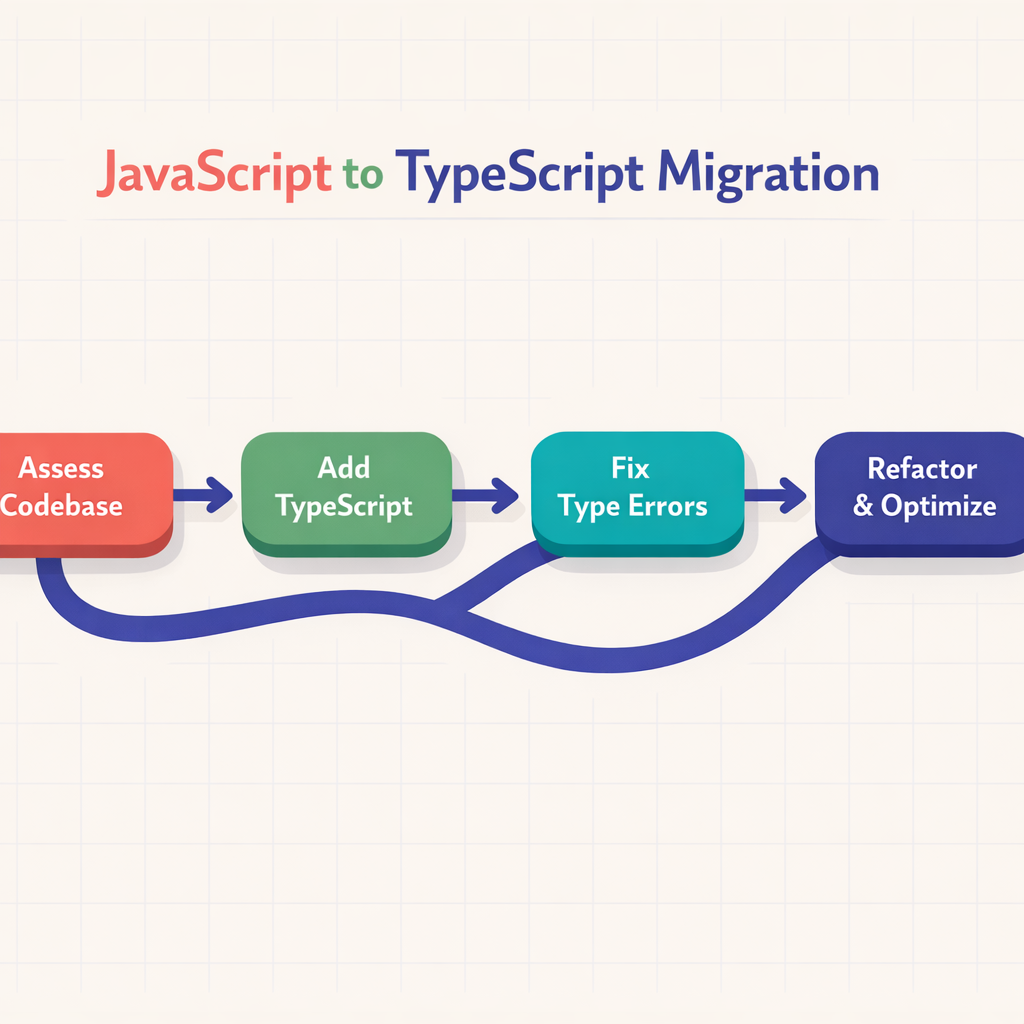
When considering TypeScript adoption, it is essential to recognize that transitioning from JavaScript to TypeScript is not merely a switch; it involves a strategic and iterative process. This section will guide you through the crucial steps and considerations necessary to successfully migrate your team's project from JavaScript to TypeScript.
1. Understand TypeScript Benefits and Implications
Before diving into technical details, ensure your team comprehensively understands the rationale behind the switch to TypeScript. Highlight the benefits of TypeScript, emphasizing how features such as static typing, enhanced tooling, and scalability can facilitate the management of large projects. Use this opportunity to articulate the advantages of using TypeScript over JavaScript.
2. Gauge Your Team's Readiness
Assess your team's openness to learning TypeScript. Encourage open discussions about the differences between TypeScript and JavaScript to cultivate a mutual understanding of TypeScript's added value.
3. Plan for Incremental Adoption
Unlike some programming languages, TypeScript is designed for gradual integration. You can:
- Introduce TypeScript to specific segments of the codebase where its benefits will be most evident.
- Retain portions of the project in JavaScript throughout the transition.
- Prioritize high-impact areas for early adoption.
4. Provide Training and Resources
Facilitate developer training sessions to ease the learning curve. Leverage TypeScript's user-friendly documentation, tutorials, and additional resources to support your team.
5. Leverage TypeScript Tooling
Take advantage of the robust tooling that accompanies TypeScript. Features available in Integrated Development Environments (IDEs), such as automated refactoring and intelligent autocompletion, can expedite the transition while minimizing errors.
6. Evaluate and Iterate
Monitor the impact of the migration by tracking error reduction, developer productivity, and code maintainability. Use this feedback to inform subsequent steps in your TypeScript migration process.
Tip: Remember, TypeScript migration can be incremental and tailored to fit your project's unique needs. Embrace this flexibility to ensure a smooth transition.
TypeScript adoption should not be daunting if your team adheres to this systematic approach. Each step is vital and requires focused attention. With a well-structured plan, your team can fully leverage the power of TypeScript, enhancing code quality, scalability, and overall productivity.
Interested in adopting TypeScript but need expert input? Explore our staff augmentation services to find the right professionals for your project.
Real Cases of Successful TypeScript Adoption
In the realm of software development, the adoption of TypeScript is not merely a trend but a strategic decision aimed at enhancing code reliability and maintainability. Several prestigious companies have transitioned to TypeScript, reaping the numerous benefits this robust language offers. Let’s explore some real-life examples to illustrate why use TypeScript instead of JavaScript.
Airbnb
Airbnb, a leading global service app in the hospitality industry, has embraced TypeScript. Their adoption led to significant improvements in the maintainability and reliability of their codebase. TypeScript's stricter typing system enabled the Airbnb development team to identify and resolve errors early in the development process, vastly accelerating their workflow.
Key Takeaway: TypeScript's static typing is crucial for enhancing the speed and efficiency of development by catching errors at an early stage.
Slack
Next, consider Slack, the global communication platform. They have made substantial strides in adopting TypeScript, recognizing its advantages in both their frontend and backend codebases. Compared to their previous JavaScript setup, they discovered that TypeScript was more effective for managing larger-scale applications. This capability is essential for a platform like Slack, which serves millions of users daily. TypeScript has empowered them to build more reliable, stable, and scalable applications.
Asana
The productivity software company Asana has also notably migrated from JavaScript to TypeScript. A key motivation for this transition was TypeScript's significant advancements in tooling. Its features provide enhanced autocomplete functionality, thereby reducing developer keystrokes and increasing code accuracy.
Given these real-world applications, TypeScript emerges as a superior, reliable, and maintainable alternative to JavaScript. It is evident why teams should consider adopting TypeScript, as its benefits—including early error detection, increased efficiency, improved handling of large-scale applications, and enhanced tooling—are well-documented.
To learn more about reshaping your project with TypeScript, feel free to explore our custom software development services. Lastly, if your team requires expert guidance, our team augmentation services are available to provide the support and expertise needed during your transition to TypeScript.
Frequently Asked Questions about TypeScript Adoption
Despite its growing popularity, many developers still have reservations about adopting TypeScript. To address some of these common concerns, we present three frequently asked questions regarding TypeScript adoption.
1. Why Use TypeScript Over JavaScript?
The choice to adopt TypeScript can be attributed to several key benefits. Firstly, TypeScript offers the safety of static typing, which independently verifies the consistency of your code. This significantly reduces run-time errors and enhances the maintainability of your codebase. Additionally, TypeScript includes essential OOP features, such as interfaces and generics, making it well-suited for developing large, structured applications.
2. What are the Trade-offs of Adopting TypeScript?
While TypeScript offers many advantages, its adoption comes with certain trade-offs. Here are a couple of important considerations:
- Compilation Requirement: TypeScript must be compiled, which may add to the initial development time.
- Debugging Complexity: Debugging can become more complex, as you will be required to debug the compiled JavaScript code rather than the original TypeScript code.
Tip: Consider these trade-offs in relation to the long-term benefits when evaluating TypeScript for your projects.
3. Can I use TypeScript for both Frontend and Backend Development?
Absolutely! TypeScript's versatility makes it suitable for both frontend and backend applications. With its scalability features, TypeScript is ideally suited for managing large codebases, making it a highly efficient choice for end-to-end development.
For further insights, check out our blog posts on custom software development, and Post 27, Post 28.
Thinking about adopting TypeScript? We can connect you with the experts you need. Explore our staff augmentation services.
Why TypeScript Adoption is a Smart Move in 2026
In the face of ongoing advancements in software development, adopting TypeScript has become a strategic choice for both enterprise-level and start-up organizations. The factors supporting this trend underscore the advantages TypeScript presents over JavaScript and other dynamically-typed languages.
TypeScript’s Evolution and Its Benefits
Introduced in 2012, TypeScript has undergone a remarkable transformation into a resilient and robust programming language. Over the years, it has not only resolved many of JavaScript's limitations but has also integrated static typing, enabling greater accuracy and a significant reduction in runtime errors. This static typing feature has enhanced IDE support, improved tooling, and created opportunities for developing large-scale, structured applications.
Today, TypeScript stands out as a compelling alternative to JavaScript. By adopting TypeScript, your team can experience a multitude of benefits:
| Benefits | Description |
|---|---|
| Versatility | TypeScript is suitable for both frontend and backend applications, showcasing impressive versatility. |
| Scalability | TypeScript is particularly well-suited for large codebases, where JavaScript may face scalability challenges. |
| Tooling and IDE Support | TypeScript provides superior error detection and autocomplete accuracy, resulting in an enhanced developer experience. |
| Extra Safety Layer | TypeScript includes additional object-oriented programming features such as interfaces and generics, which improve code safety and maintainability. |
The Trade-Offs
While TypeScript offers various benefits, it's essential to consider the trade-offs involved. Your team may require time to adjust to static typing, especially if they are coming from a JavaScript background. However, since TypeScript is a superset of JavaScript, the learning curve is manageable. Moreover, this investment of time can significantly enhance the accuracy and readability of your code, making it easier to identify and rectify errors.
Why Use TypeScript?
From a long-term perspective, the advantages of TypeScript far outweigh the initial effort required for its adoption. Its scalability, versatility, and robust features position TypeScript as a smart strategic choice for software development teams in 2026.
Tip: Do the benefits of accurate typing, enhanced tooling, scalability, and robustness resonate with your team’s software development process?
Consider embracing TypeScript today to unlock its benefits tomorrow. To facilitate a smoother transition, explore our staff augmentation services. With a highly skilled team at your disposal, adopting TypeScript could become a strategic advantage for your organization.
Make Imversion a preferred source on Google
Like this kind of AI and software analysis? Add Imversion as a preferred source so Google can highlight our articles for you in Search, AI Overviews, and AI Mode.