AI Agents for Business: A Complete Guide for Leaders
Unlock the future of automation with our complete guide on AI agents for business. Discover their potential and revolutionize your operations!

Introduction to AI Agents for Business
In today's rapidly evolving digital landscape, businesses require strategic automation solutions to streamline operations and drive growth. This necessity has given rise to "AI agents for business," representing a significant evolution from traditional chatbots. But what exactly are these autonomous AI agents, and what implications do they hold for businesses around the globe?
AI Agents: From Chatbots to Sophisticated Automations
AI agents, also referred to as 'agentic AI,' are defined as autonomous processing entities that can independently execute specific tasks. Unlike chatbots, which operate based on pre-programmed responses, AI agents utilize advanced machine learning, deep learning, and natural language processing techniques. This capability enables AI agents to understand their environment, make informed decisions, and take actions without human intervention to achieve targeted objectives.
In essence, these autonomous AI agents represent a substantial advancement over the basic automations we are accustomed to. Businesses should recognize that AI agents exemplify the heart of modern strategic automation, significantly outpacing the capabilities of chatbots and even Robotic Process Automation (RPA) tools.
Advantages Over Chatbots and RPA
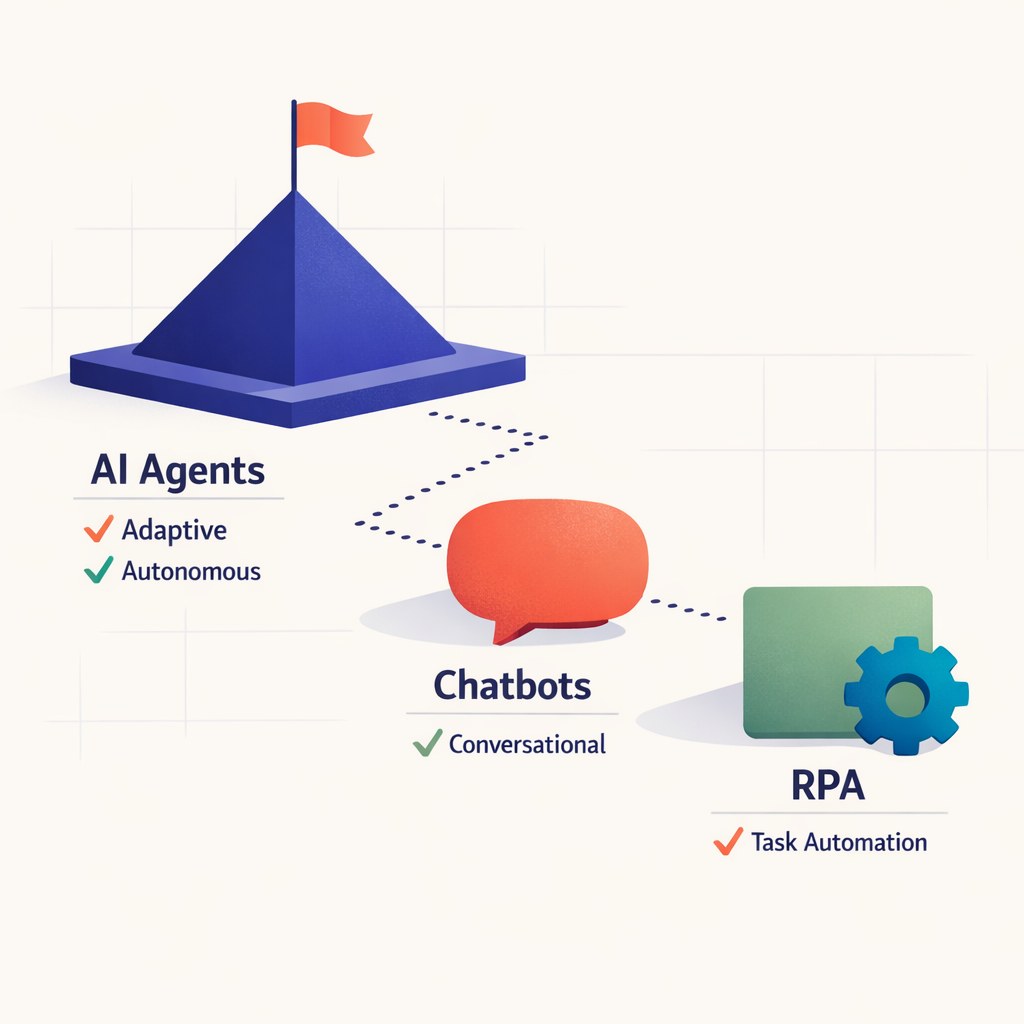
It is important to note that AI agents exhibit a level of sophistication well beyond that of chatbots or RPA tools. While chatbots can manage queries solely through predetermined responses and RPAs automate routine tasks, AI agents offer the promise of autonomy, adaptability, and learning capabilities. They leverage machine learning to handle complex tasks and adapt to real-time changes, making them a compelling option for businesses seeking intelligent operational solutions.
| Feature | Chatbots | RPA Tools | AI Agents |
|---|---|---|---|
| Processing Queries | Pre-designed Responses | Automate Routine Tasks | Autonomous & Goal-Oriented |
| Adaptability | Low | Moderate | High |
| Learning Capabilities | None | None | Yes |
The potential applications of AI agents span numerous sectors, including customer service, sales, operations management, and more. Available in both custom and off-the-shelf formats, a comprehensive assessment framework may be essential for successfully implementing AI agents in companies ready to leverage this advanced technology.
In conclusion, autonomous AI agents are an advancement that no business leader can afford to overlook. As the AI landscape continues to evolve, it is crucial to stay abreast of these developments and consider how AI agents can be tailored to fit the unique contexts of your business.
In the upcoming sections, we will explore the architecture of AI agents, the key components that contribute to their efficiency, and practical business use cases. We will also discuss the best strategies for choosing between custom and off-the-shelf AI agents, as well as the optimal assessment framework to ensure successful AI agent integration.
"AI agents – offering autonomy, adaptability, and learning capabilities – are far beyond what chatbots or even RPA tools can deliver."
Continue reading to delve deeper into agentic AI, covering its architecture, core components, various use cases, and much more.
: AI Agents: Definition & Architecture
Understanding AI Agents for Business: Definition and Architecture
AI agents represent a significant advancement in technology and a marked departure from traditional chatbots. Also known as 'Agentic AI', these autonomous entities are designed to perform specific tasks, introducing an elevated level of sophistication and adaptability to business processes.
Definition of AI Agents
AI agents are autonomous processing entities engineered to execute tasks without human intervention. They are constructed using a combination of machine learning, deep learning, and natural language processing techniques, which enable them to perceive their surroundings, make decisions based on that perception, and act to achieve defined objectives. Specifically tailored for the business landscape, AI agents can interpret complex workflows and respond accordingly, assisting in a wide range of tasks from customer service to pattern recognition.
"Agentic AI agents do not just automate – they adapt, learn, and evolve."
AI Agent Architecture
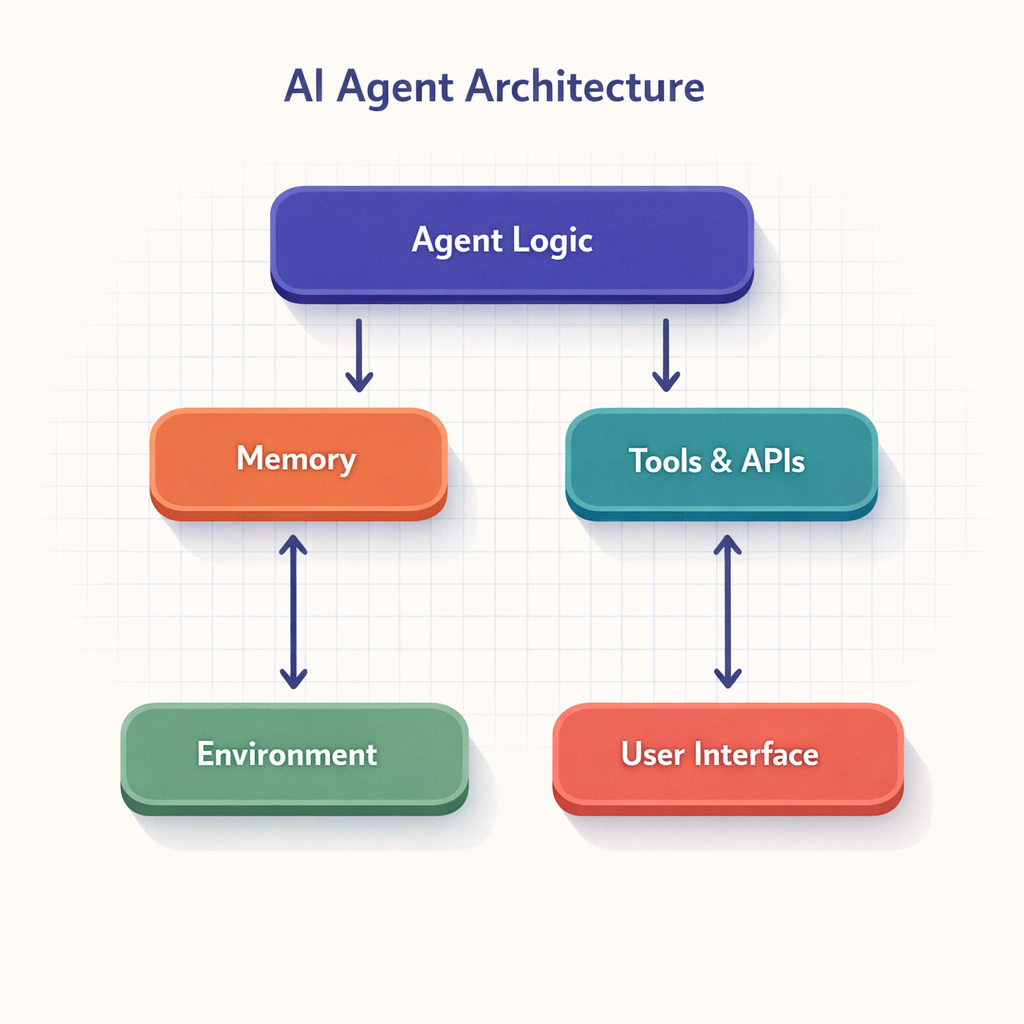
The architecture of a typical AI agent consists of several core components, outlined in the table below:
| Component | Description |
|---|---|
| Sensors | Sensing the environment is the first step for AI agents to engage with their surroundings. Much like human senses, this component allows AI agents to gather and process data from diverse sources. |
| Processors | Processors interpret and analyze the data collected by the sensors. This step is crucial for effective decision-making. |
| Actuators | Once a decision is reached, actuators execute the task. This can range from sending an email to altering system settings based on the perceived environment. |
| Knowledge Base | Just as humans rely on past experiences to guide their future actions, AI agents utilize a knowledge base to inform their decisions. This repository stores all the data and insights that the AI agent has previously learned or accessed. |
| Inference Engine | This component integrates the knowledge base with current environmental data to draw conclusions and determine the next course of action. |
Together, these components enable AI agents to traverse diverse environments, interpret complex scenarios, and respond in real-time, offering a significant advantage in optimizing business processes.
Tip: To fully harness the potential of 'AI agents for business,' it is essential to understand their capabilities and architecture. This knowledge empowers businesses to leverage these autonomous entities effectively and realize meaningful benefits.
AI Agents, Chatbots, and RPA: A Comparative Analysis
Today's digital landscape is teeming with a variety of technological solutions aimed at streamlining business processes. Among these, AI agents for business, chatbots, and Robotic Process Automation (RPA) tools are gaining significant traction. Each of these systems boasts distinct functionalities and advantages, resulting in a diverse array of options for decision-makers.
Let’s explore the capabilities and competencies of these systems, focusing on the increasing prominence of autonomous AI agents.
AI Agents: The Pinnacle of Agentic AI
Autonomous AI agents are intelligent, adaptive entities that interact with their environment, learn, and make decisions independently. Their architecture, driven by machine learning, deep learning, and natural language processing techniques, allows them to interpret complex scenarios. This sophistication and adaptability surpass that of other automation tools, paving the way for substantial improvements in business productivity and efficiency.
Chatbots: The Reliability of Pre-programmed Responses
In contrast, chatbots are primarily designed to handle customer inquiries through pre-programmed responses. While this approach simplifies customer interactions by delivering instant and accurate answers, the capabilities of chatbots are often constrained by their inability to learn or adapt without explicit reprogramming.
RPA: Automating Routine Tasks
Robotic Process Automation (RPA) tools represent a step up from chatbots by automating routine tasks across various platforms, thereby freeing valuable human resources for more strategic endeavors. However, despite being more advanced than chatbots, RPA still lacks the autonomous learning and decision-making capabilities inherent in AI agents.
The AI vs RPA Dichotomy: While RPA focuses on automating routine tasks, AI agents advance further by autonomously learning, adapting, and improving through interactions.
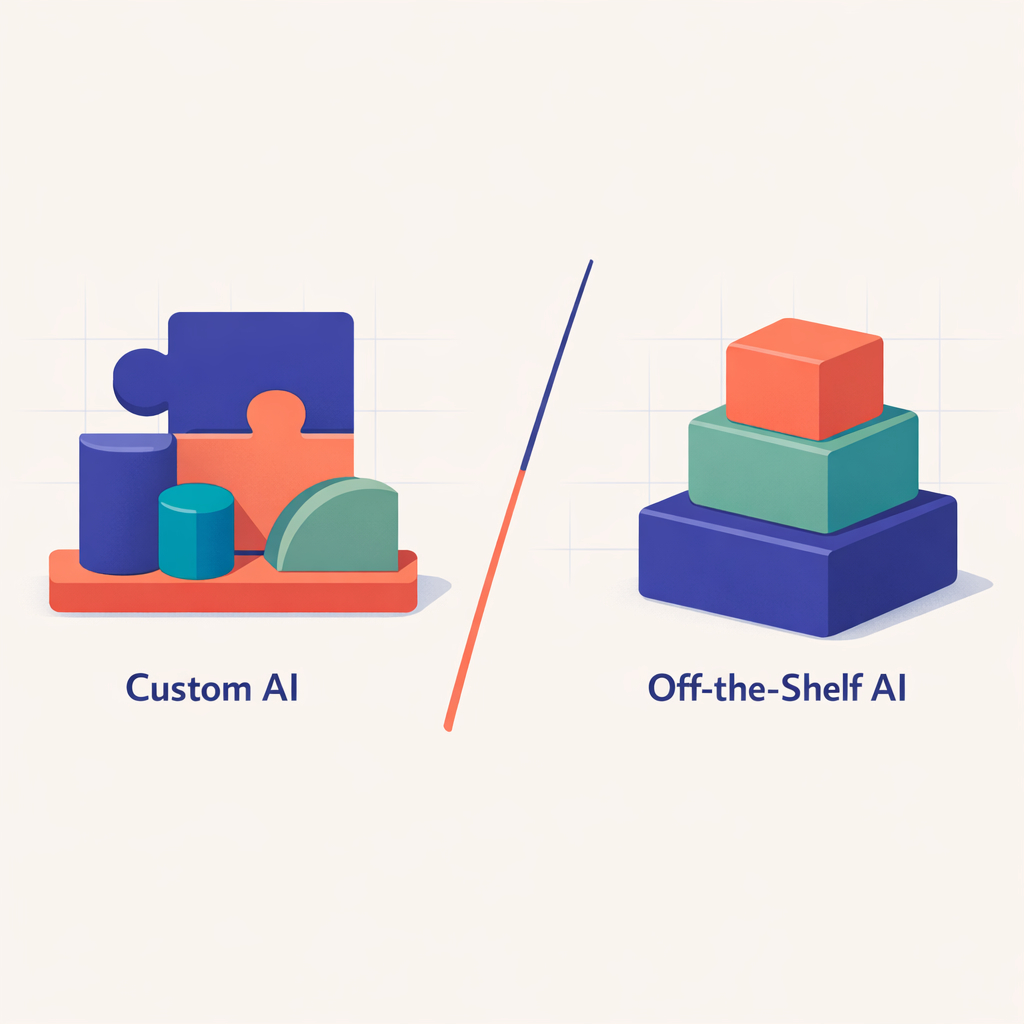
When considering options between custom and off-the-shelf solutions, it is crucial to evaluate not only the features but also the capacity for adaptation and growth in alignment with business needs. Off-the-shelf AI agents can meet standard requirements, but custom AI agents offer the flexibility to be tailored to the specific needs and growth strategies of a business.
Finally, when assessing an AI agent solution, a thorough evaluation framework should encompass the following aspects:
- The agent's core functionality
- Learning capabilities
- Cost
- Scalability
FAQs
-
What are the main differences between AI agents, chatbots, and RPA?
- AI agents learn and make decisions independently.
- Chatbots provide pre-programmed responses to customer inquiries.
- RPA automates routine tasks.
-
Is it better to choose a custom or off-the-shelf AI agent solution?
- The decision depends on your business's unique requirements. Off-the-shelf solutions can address standard needs, while custom options provide tailored solutions that can evolve with your business.
-
What factors should a business consider when adopting an AI agent solution?
- Core functionality of the agent
- Learning capabilities
- Overall cost
- Scalability
- Suitability for your business's unique needs
In conclusion, the choice between AI agents, chatbots, RPA, or a combination of these systems hinges on the specific needs and growth objectives of a business. As an advanced option, AI agents possess significant potential to optimize operations and drive innovation in the digital age.
Examining the Core Components of AI Agents
AI agents for business represent a significant advancement, not merely automating processes but also refining them over time through learning. Understanding the core components of these AI agents is crucial for leveraging their capabilities effectively.
The architecture of AI agents typically comprises several essential elements:
Sensors
Sensors enable AI agents to perceive their surroundings. Through image recognition, speech detection, or data analysis, these sensors collect information from the environment. This incoming data allows the AI to make informed and relevant decisions.
Processors
The processors of AI agents serve as their 'thinking' component, interpreting data through algorithms. This interpretation occurs in real-time, empowering AI agents to manage complex situations and adapt to changes in their environment.
Actuators
Actuators allow AI agents to take action based on their decisions. They represent the output generated after data processing. In the case of autonomous AI agents, this may involve initiating a conversation, sending an email, or conducting a transaction.
Knowledge Base
The knowledge base functions as the repository of pre-set information for the AI agent. It is used to compare new data inputs and inform decision-making. With the aid of machine learning, an AI agent's knowledge base can grow and evolve over time.
Inference Engine
An inference engine employs rules and logic to derive new insights from existing information. This capability is critical for enabling AI to make informed choices, even in unpredictable circumstances.
Having examined these components, we can appreciate how they underpin the ability of AI agents to deliver autonomous and agentic capabilities. They form the core of the AI agent, continuously gathering data, processing it, and taking appropriate actions. In contrast to more basic digital tools like RPAs and chatbots, AI agents are distinguished by their ability to handle complex tasks and adapt to real-time changes.
By integrating autonomous AI agents into business processes, company leaders can transform operations, enhance customer interactions, and ultimately create additional value for their businesses. Their sophistication surpasses that of typical chatbot or RPA solutions, suggesting that organizations that invest early and thoughtfully in AI agents will gain a competitive edge.
Takeaway: When considering AI agents for business, it is essential to understand their core components. It is through these elements that AI agents can perceive, learn, decide, and achieve organizational goals.
Revolutionizing Businesses: AI Agent Use Cases
As we delve deeper into the age of digital innovation, AI agents for business are emerging as transformative tools. Renowned for their versatility, these autonomous AI agents are finding applications across various sectors while delivering impressive benefits. Here are some compelling use cases that illustrate the potential of AI agents to revolutionize businesses:
Customer Service Automation
AI agents can provide round-the-clock autonomous customer service. From answering routine questions to resolving complex issues, they ensure a seamless customer experience in a cost-effective manner. This not only enhances customer satisfaction but also allows human staff to focus on more strategic tasks.
Predictive Maintenance in Manufacturing
AI agents can predict machinery faults and impending breakdowns through real-time data analysis. This capability enables streamlined maintenance schedules, reducing equipment downtime and enhancing overall operational efficiency.
Personalized Marketing
Advanced AI agents leverage machine learning algorithms to analyze customer data and forecast future behaviors. This enables businesses to deliver personalized marketing at scale, resulting in higher conversion rates and increased customer loyalty.
Fraud Detection
In the financial services sector, AI agents can identify irregular patterns indicative of fraud or criminal activity. By enhancing security and ensuring compliance with evolving regulatory requirements, they play a crucial role in risk management.
Supply Chain Optimization
AI agents can effectively manage inventory levels, monitor procurement, and streamline distribution—leading to more efficient supply chain operations. This ensures timely deliveries to customers while minimizing holding costs.
It is evident that AI use cases exemplify the depth and breadth of opportunities available with the adoption of autonomous agents. However, businesses must recognize that AI agents represent advanced iterations of agentic AI, offering a level of sophistication that surpasses traditional chatbots and Robotic Process Automation (RPA). They not only automate tasks but also employ machine learning to enhance ongoing processes, ensuring adaptability in ever-evolving business environments.
When deciding between custom AI agents and off-the-shelf solutions, businesses face another critical consideration. While custom solutions may provide tailored advantages for unique business needs, off-the-shelf options can be a cost-effective way to test the waters.
In conclusion, AI agents offer a multitude of benefits, ranging from improved efficiency and personalized services to enhanced fraud detection. By understanding the unique capabilities of AI agents, businesses can fully harness their potential and drive transformational changes within their operational landscape.
Remember: The key is to utilize AI to its fullest potential, exploring all possible use cases and adapting based on your business needs.
Custom vs Off-The-Shelf AI Agents: Which Should Businesses Opt for?
When selecting AI agents for their operations, business leaders face a critical decision: should they invest in a custom-built agentic AI solution or choose an off-the-shelf product? Both options present distinct advantages and disadvantages that warrant careful consideration before any commitment.
The Case for Custom AI Agents
Custom-built AI agents offer tailored solutions specifically designed to meet an organization’s unique objectives and operational demands. Companies with clearly defined goals can significantly benefit from personalized, autonomous AI agents that align precisely with their in-house requirements. These agents are:
- Adaptable: Capable of evolving alongside changing business needs
- Unique: Crafted to address specific industry and organizational challenges
- Rigorous: Developed from the ground up, allowing for comprehensive control over every component
The Case for Off-The-Shelf AI Agents
Conversely, off-the-shelf AI products present a fast and cost-effective means of deploying AI agents. They require considerably less development time and resources compared to custom-built solutions, making them an ideal choice for businesses seeking immediate enhancements in AI capabilities. Key benefits include:
- Speed: Rapid deployment for organizations requiring quick results
- Cost: Lower investment compared to custom-built solutions
- Efficiency: Ready-made solutions designed to meet common business needs
Important Tip: Businesses should note that off-the-shelf solutions may not fully address unique needs as they evolve and may lack the same level of autonomy or adaptability offered by custom solutions.
In conclusion, the decision between custom or off-the-shelf AI agents ultimately hinges on a business's specific requirements, resources, and time constraints. It is essential to recognize that AI’s potential extends well beyond the capabilities of basic RPA tools and chatbots. Therefore, opting for an AI solution tailored to your unique needs can provide a significant competitive advantage in the marketplace.
How to Assess AI Agent's Performance: A Comprehensive Framework
For businesses leveraging autonomous AI agents, evaluating performance is critical to ensuring tangible benefits and enhanced efficiency. Below is a comprehensive framework designed to assess the effectiveness of these advanced AI agents in a business context:
-
Effectiveness of Tasks:
Evaluate how competently the AI agent accomplishes its designated tasks. This analysis can range from basic functions, such as customer service interactions, to more complex activities like data analysis. -
Learning and Adaptability:
Unlike static technologies such as Robotic Process Automation (RPA), agentic AI excels in continuous learning and adaptability. It is essential to assess how well your AI agent adjusts to new scenarios and how quickly it can learn from past mistakes or changes in its environment. -
Autonomy:
A defining feature of AI agents is their capability to operate independently, without human intervention. Evaluate the level of autonomy of your AI agent, including its ability to navigate unfamiliar situations. -
Resource Efficiency:
Measure efficiency by examining the resources—both time and processing power—utilized by your AI agent. A highly efficient AI agent can deliver results quickly while optimizing resource consumption. -
Compatibility:
Assess the compatibility of your AI agent with existing systems. An effective agent should integrate seamlessly into your current infrastructure, providing a smooth and unified user experience.
Tip: Performance assessment is an ongoing process; regular reviews can ensure that your autonomous AI agents effectively drive your business forward. Remember, AI is not intended to replace human intelligence, but rather to augment it, enhancing overall business performance.
FAQs on AI Agents for Business
As leaders navigate the intricate landscape of AI for business, several recurring questions arise about autonomous AI agents. Here, we address three of these pressing inquiries:
Q: What distinguishes AI agents from chatbots and RPA tools?
A: While chatbots and Robotic Process Automation (RPA) tools automate basic tasks using pre-programmed instructions, AI agents offer a higher level of sophistication. AI agents exhibit autonomy, adaptability, and learning capabilities, allowing them to respond to real-time changes effectively.
Q: Are agentic AI agents truly autonomous?
A: Yes, agentic AI agents are designed to operate autonomously. They independently pursue specific objectives, utilizing advanced AI techniques such as machine learning, deep learning, and natural language processing to interpret their environments and make informed decisions.
Q: What's the best assessment framework for AI agents?
A: A robust framework for evaluating AI agents in a business context should encompass the following criteria:
- Effectiveness of tasks
- Accuracy of responses
- Adaptability to changes
- Ability to learn from interactions
- Return on Investment (ROI)
- Customer satisfaction
Important Tip: When assessing AI agents, consider both quantitative and qualitative metrics to gain a comprehensive understanding of their performance.
Harnessing the Power of AI Agents: An Imperative for Business Growth
AI agents for business function as catalysts for operational revolution, transcending the limitations of chatbots and Robotic Process Automation (RPA). These autonomous AI agents, also known as agentic AI, promise self-determined, adaptable functionality, enabling them to tackle complex tasks while providing real-time adaptability.
With the potential to fundamentally reshape business processes, AI agents are essential to achieving future business growth and competitiveness. Thus, understanding and effectively implementing AI agent technology becomes a strategic imperative for business leaders aiming to maintain a competitive edge in an increasingly dynamic digital landscape.
Tip: Embrace AI agent technology to unlock new efficiencies and drive innovation in your business operations.
Make Imversion a preferred source on Google
Like this kind of AI and software analysis? Add Imversion as a preferred source so Google can highlight our articles for you in Search, AI Overviews, and AI Mode.


