AI in Healthcare: Essential Use Cases & Compliance Insights
Uncover the potential of AI in Healthcare through real use cases, compliance guidance, and a roadmap for successful implementation.

Introduction: AI in Healthcare - Revolutionizing Modern Medicine
Artificial Intelligence (AI) is a transformative force, shaping the future of various industries around the globe. Its impact on healthcare is especially profound, ushering in an era marked by unprecedented efficiency, personalization, and accuracy in medical services. The applications of AI in healthcare extend well beyond traditional uses, offering advanced solutions for diagnosing diseases, developing personalized treatment plans, and enhancing patient care. Indeed, AI healthcare software plays a crucial role in redefining modern medicine.
With AI, medical professionals and institutions can harness innovative tools and capabilities that were previously unavailable. One significant application of AI in healthcare is its contribution to improved diagnostic accuracy. For instance, AI-powered medical software such as Google's DeepMind Health employs machine learning algorithms to analyze medical images, resulting in quicker and more precise diagnoses.
Furthermore, AI's role in predictive analytics is transforming the dynamics of healthcare. AI predictive analytics enable medical systems to anticipate disease patterns and outcomes, shifting healthcare from a reactive approach to a more proactive and preventative model. These advancements in AI implementation signify a new dawn in patient care.
Important Note: The integration of AI in healthcare comes with significant responsibilities, including adherence to security and privacy laws.
AI’s impact extends beyond diagnosis; it also enhances patient engagement and facilitates more personalized care. Advanced healthcare software can monitor patient health in real-time, ensuring prompt responses to any changes in their condition. Additionally, these systems can offer tailored treatment options based on each patient's unique health data.
However, it is vital to recognize that implementing AI in healthcare entails considerable responsibilities. AI systems must comply with HIPAA regulations to ensure the security and privacy of patient data. As more healthcare institutions navigate the evolving AI landscape, compliance with laws such as HIPAA becomes increasingly critical.
In the pursuit of transforming healthcare, AI stands as a beacon of hope for enhancing patient care and optimizing medical processes. As the industry continues to explore the potential of artificial intelligence, we can anticipate a future where quality healthcare is accessible, personalized, and efficient.
Stay tuned as this blog delves into the intricacies of AI in healthcare, covering everything from use cases and HIPAA compliance to data security, implementation roadmaps, real-life scenarios, and return on investment (ROI). Discover how AI is making waves in the healthcare sector and how you can benefit from it.
Have questions? We’ll address them in our FAQs section. For further inquiries or assistance, please don't hesitate to reach out at /contact?industry=healthcare.
Key Use Cases: The Broad Scope of AI in Healthcare
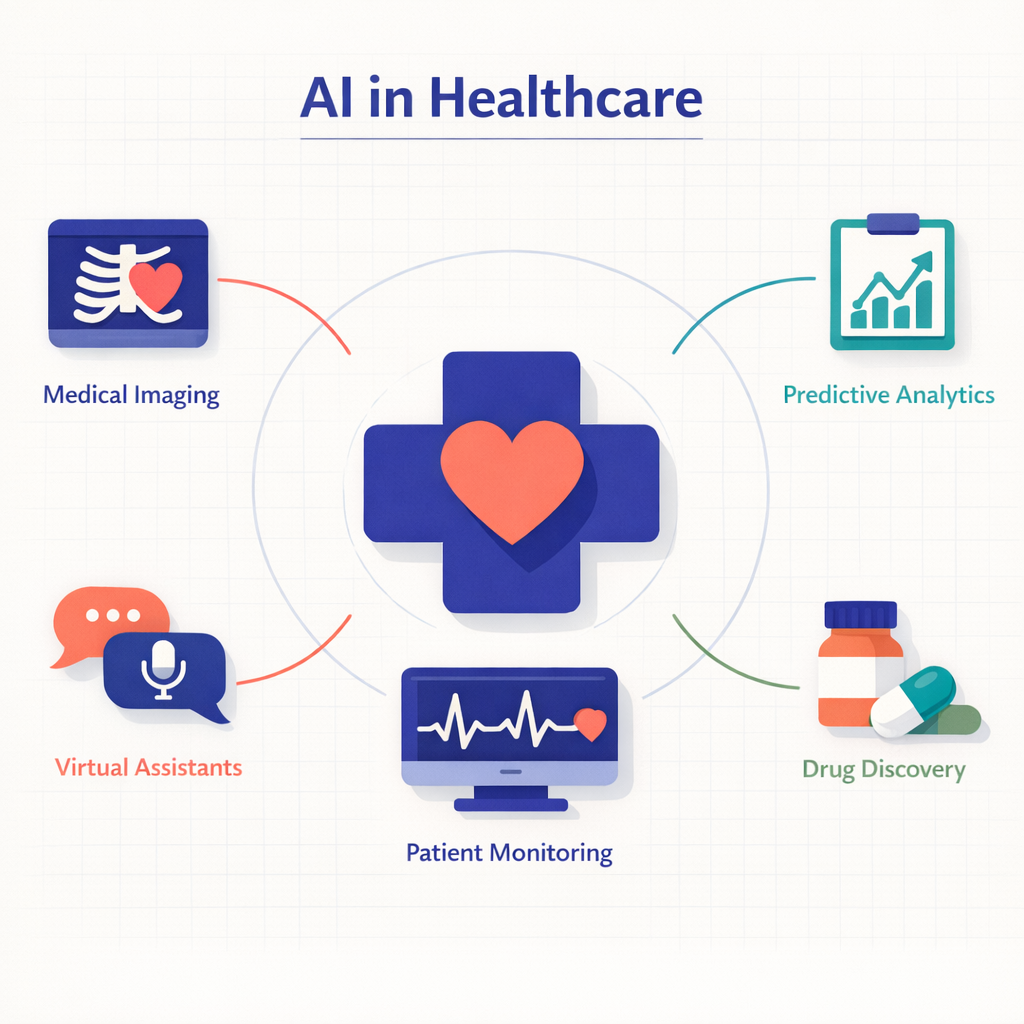
Artificial Intelligence is transforming the healthcare sector by enhancing efficiency, accuracy, and significantly elevating the level of personalization in medical services provided to patients. Let's explore some of the key use cases of AI in healthcare.
Enhanced Diagnostic Accuracy
Medical AI software applications have played a crucial role in improving diagnostic accuracy. For instance, Google's DeepMind Health utilizes machine learning algorithms to analyze medical imagery, thereby increasing diagnostic precision. These advancements empower healthcare professionals to swiftly identify and address potential health issues, helping to prevent complications before they arise.
Predictive Analytics
The future of healthcare is proactive, and AI is at the forefront with its advanced predictive capabilities. Predictive analytics harnesses the power of AI and machine learning to discern patterns and forecast illness trajectories. This enables healthcare professionals and patients to plan effectively, implement appropriate interventions, and ultimately enhance patient outcomes.
Patient Engagement and Personalization
AI has the extraordinary potential to elevate personalization in healthcare. It facilitates the development of tailored treatment plans that consider individual patient needs, lifestyles, and genetic profiles. The impact of such personalization is significant, improving both therapeutic efficacy and patient engagement. Additionally, AI-powered solutions offer real-time monitoring of patient health, empowering individuals to take charge of their well-being.
Tip: To successfully integrate AI into healthcare, a strategic and consistent approach to AI implementation is essential, with a strong focus on compliance and data privacy. For instance, HIPAA-compliant AI systems are crucial for safeguarding patient data and maintaining privacy.
In conclusion, the transformative potential of AI in healthcare is substantial, surmounting the limitations of traditional healthcare methods. It promises a future characterized by efficiency, personalization, and, most importantly, enhanced accuracy.
The journey of AI utilization in healthcare is ongoing. It is vital that as AI becomes increasingly integrated into the healthcare landscape, considerations around compliance, patient privacy, and security protocols are prioritized at all times.
If you would like to further explore the transformative power of AI in healthcare, please visit our specific services pages: [Software Development for Healthcare], [AI Agents Services].
Have any questions? We would be delighted to assist! [Contact us].
Data Privacy and Compliance: Ethics of AI in Healthcare
In the realm of healthcare, the integration of AI and machine learning requires a distinct focus on data privacy and compliance. HIPAA compliant AI safeguards patients' personal health information, guided by principles of data security and ethics.
HIPAA Compliant AI
As AI becomes increasingly prevalent in healthcare, the demand for HIPAA compliant AI systems intensifies. HIPAA regulations, designed to protect patients' privacy rights, impose significant responsibilities when managing patient data. Effectively incorporating AI into these frameworks necessitates a thorough understanding of, and adherence to, stringent measures that secure personal health information.
-
Data Security: With the widespread adoption of AI in healthcare, it is crucial to implement robust measures that ensure all patient data is fully encrypted and safeguarded against cyber threats. Every interaction, from patient engagement to diagnostics and predictive analysis, must adhere to secure data-handling protocols. For instance, medical AI software like Google's DeepMind Health exemplifies a strong commitment to data security.
-
Privacy: Implementing HIPAA compliant AI systems requires strict adherence to privacy regulations. Ensuring data privacy involves preventing unauthorized access to health information and empowering patients with control over their personal data.
Risks and Implementation Roadmap
However, the deployment of AI in healthcare carries inherent risks. The potential for data leaks and breaches poses a significant threat. To mitigate these risks, effective safeguards, such as data anonymization and regular security audits, are essential.
Important Tip: A well-conceived roadmap for AI healthcare implementation must prioritize data compliance and security.
An effective implementation roadmap may include:
- Ensuring all AI systems comply with HIPAA and other relevant data regulations.
- Employing advanced data encryption technologies.
- Conducting regular audits of systems and processes to identify and address potential risks.
Given the transformative potential of AI, it’s no surprise that healthcare organizations are keen to utilize this technology. Nevertheless, as the applications of healthcare AI expand, it is vital that a regulatory-compliant approach, grounded in HIPAA standards and a robust security framework, is central to all AI deployment strategies.
Ultimately, the ethical application of AI in healthcare not only advocates for a safer environment but also fosters trust, paving the way for a future where technology and healthcare seamlessly coexist.
Have questions about developing a HIPAA compliant AI system? Reach out to us today through /contact?industry=healthcare. We would be delighted to assist you on your healthcare AI implementation journey.
AI in Healthcare: Exploring the Architecture
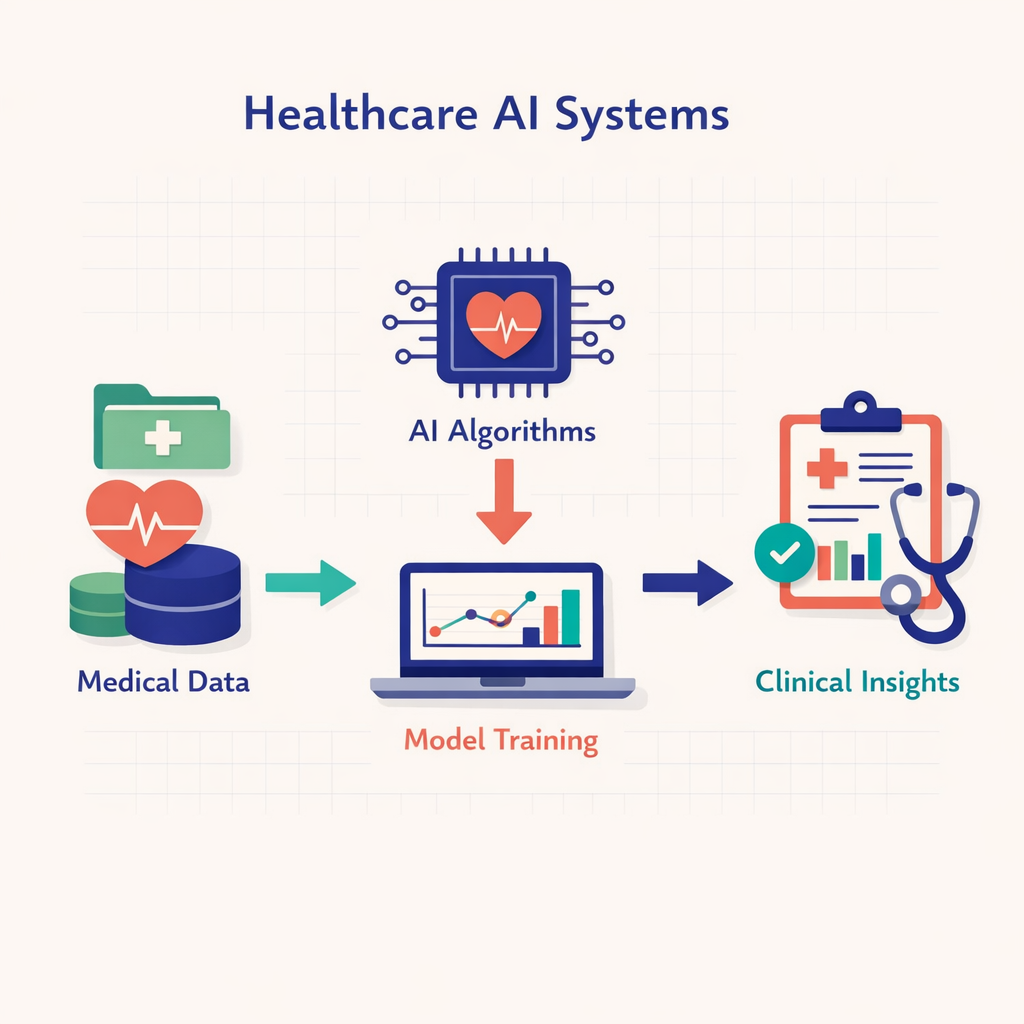
Artificial Intelligence (AI) in healthcare represents a groundbreaking innovation that enhances diagnostics, predictive analysis, patient engagement, monitoring, and personalized medicine. To leverage AI effectively, one must possess a thorough understanding of the system's architecture. The architecture of AI, particularly in healthcare applications, serves as a roadmap for comprehending how these systems function, from their learning algorithms to their decision-making processes.
System Design
AI systems in healthcare can be analyzed through four primary components:
| Component | Description |
|---|---|
| Data Input | Medical AI software systems require data for training, which can include patient medical histories, images from radiology scans, or real-time health statistics from medical devices. |
| Processing Power | After data input, powerful processor chips within the AI system enable the complex mathematical computations essential for AI operations. |
| AI Models | At the core of AI systems, these models consist of machine learning algorithms that discern patterns in input data to predict or determine outcomes. |
| Application Interface | The processed information is presented through an application interface, allowing physicians to interact with the AI's analysis and findings. |
An accessible, user-friendly interface simplifies the implementation of AI in Healthcare Applications, ultimately benefiting both clinicians and patients.
Compliance and Security in Architecture
The architectural design of AI systems should prioritize compliance—particularly with HIPAA regulations—and data security as essential components. It is vital to incorporate data security measures, such as encryption, within the system to safeguard sensitive patient information from unauthorized access.
System Integration in Healthcare
Integrating AI into the broader framework of software development in healthcare enhances operational efficiency, improves patient care, and boosts overall healthcare service delivery. However, effective implementation of AI in healthcare necessitates careful design and execution of integration strategies.
The key stages of AI integration include:
- Consultation and Strategy Development
- System Design
- Piloting and Testing
- Deployment
When meticulously executed, these stages lay the groundwork for successful AI adoption in healthcare.
While the deployment of AI in healthcare is complex, its potential to significantly enhance patient care and overall productivity is undeniable. Understanding this architecture and adhering to compliance standards such as HIPAA is crucial. By thoroughly analyzing the architecture of healthcare AI and meticulously planning the implementation process, healthcare providers can harness the potential of AI to further revolutionize the industry.
Do the AI systems in your healthcare organization comply with comprehensive HIPAA regulations? Can they seamlessly integrate with existing infrastructure? If you have questions or require assistance with AI implementation, contact our team of experts[/contact?industry=healthcare].
Risk Management: Understanding the Perils of AI in Healthcare
As the integration of AI into healthcare progresses, it is essential to meticulously understand and manage the potential risks involved. While medical AI software facilitates numerous critical healthcare functions, comprehensive risk management is necessary to address the hazards these systems may introduce.
A. Data Breaches
One of the most significant concerns when employing AI in healthcare is the risk of data breaches. Given the sensitive nature of health information, safeguarding this data is of paramount importance. Improper handling or unauthorized access to patient data can have severe ethical and legal consequences. Therefore, AI systems must be designed with robust security measures to protect patient information.
B. Over-Reliance on AI
AI systems enhance efficiency and accuracy in healthcare; however, human oversight remains crucial in decision-making processes. We must avoid over-reliance on AI, as this could lead to complacency and diminish the essential human touch in healthcare delivery.
C. Ethical Considerations
Numerous ethical issues are tied to the implementation of AI in healthcare, particularly regarding decisions made by algorithms. It is vital to scrutinize these ethical elements and establish appropriate boundaries to ensure the responsible integration of AI into healthcare.
Despite these potential risks, effective mitigation strategies can limit their impact:
Key Risk Mitigation Strategies:
- Adherence to HIPAA laws: All AI healthcare systems must comply with HIPAA regulations that protect patient data privacy. Strict adherence significantly reduces the risk of data breaches.
- Continuous Safety and Efficiency Monitoring: The risks associated with excessive use or dependence on medical AI software can be managed through regular performance audits, evaluating both safety and utility.
- Ethics Guidelines: Establishing clear ethical guidelines for AI use in healthcare fosters responsible practices and helps avert potential moral dilemmas.
In conclusion, while the benefits of implementing AI in healthcare are substantial, it is crucial to strike a balance to mitigate potential risks. Effective risk management entails vigilance regarding data security, ensuring necessary human oversight, and maintaining ethical standards in the use of AI systems.
Continue exploring our expertise in AI development for healthcare[^/software-development-healthcare] or learn more about our AI services[^/services/ai-agents]. Feel free to reach out to us with your questions[^/contact?industry=healthcare].
FAQs
-
What are the main risks of implementing AI in healthcare?
- Data breaches, over-reliance on AI, and ethical considerations are among the foremost concerns.
-
How can we manage these risks in AI healthcare use cases?
- Effective risk management measures include adherence to HIPAA laws and data security protocols, continuous performance audits, and the development of ethical guidelines.
-
Is the use of AI in healthcare ethical?
- When implemented responsibly and guided by clear ethical frameworks, AI can significantly enhance healthcare while upholding moral integrity. It is important to recognize that classroom ethics may not fully align with real-world complexities, underscoring the need for ongoing education and proactive mitigation of emerging dilemmas.
A Roadmap to AI Healthcare Implementation
AI in healthcare is dynamically transforming the medical landscape, with AI implementation enhancing diagnostic accuracy, predictive analysis, and patient engagement. However, the successful introduction of AI systems in healthcare demands a strategic approach that maximizes benefits, ensures regulatory compliance, and mitigates risks. Below is a sequential guide for effective implementation.
Key Use Cases for AI Implementation in Healthcare
AI plays an instrumental role in healthcare, with numerous applications. Here are some notable use cases:
| Use Case | Description |
|---|---|
| Diagnostics | Medical AI software, such as Google's DeepMind Health, analyzes medical images to provide precise diagnoses. |
| Predictive Analysis | AI algorithms can anticipate disease patterns, enabling proactive healthcare interventions. |
| Patient Engagement | Real-time tracking of patients' health ensures they remain informed and engaged throughout their healthcare journey. |
| Personalized Medicine | AI facilitates the development of customized treatment plans tailored to individual patients. |
Compliance: HIPAA and Data Security
The use of AI in healthcare necessitates adherence to stringent compliance measures, primarily focused on the protection of patient data. HIPAA-compliant AI systems safeguard patient information from potential breaches. Regular compliance audits and robust data security measures are crucial for maintaining a secure AI ecosystem within healthcare.
AI Implementation Roadmap
Integrating AI into healthcare systems follows the same fundamental principles applied to any large-scale change initiative. Here’s a step-by-step guide:
- Planning Phase: Identify specific healthcare processes where AI can enhance efficiency.
- Compliance Audit: Ensure the proposed AI system complies with HIPAA and data protection regulations.
- System Design and Testing: Design the AI system—select appropriate architecture and algorithms—and conduct rigorous performance testing.
- Deployment: Integrate the AI system into the existing framework, starting on a small scale while closely monitoring its performance.
- Review and Scale: Continuously assess performance and gradually expand the scale of AI integration, incorporating feedback and performance metrics.
Risks
Important Tip: While AI systems are increasingly accurate, they are not infallible. It is essential to establish risk management protocols to address potential challenges such as data breaches, misdiagnoses, and system failures.
ROI and Real Scenarios
The return on investment (ROI) from AI in healthcare extends beyond financial metrics; it also encompasses improved patient care, enhanced diagnostics, and increased operational efficiency. In practice, the deployment of AI in healthcare systems has resulted in saved lives through early disease detection, improved personalized care, and better patient monitoring.
For a deeper understanding of AI in healthcare services, visit our AI Agents services page and explore our healthcare software development options.
FAQs
-
Is AI in Healthcare Safe?
While AI introduces certain risks, thorough testing, compliance adherence, and effective risk management protocols ensure the safe operation of AI systems in healthcare. -
Can AI Replace Doctors?
AI is designed to support doctors rather than replace them. It enhances their capabilities by providing accurate diagnostics and personalized care plans. -
How Can I Implement AI in My Healthcare Facility?
A well-structured AI implementation roadmap is essential. For expert support, you can contact us for personalized AI implementation services.
For more information on AI healthcare implementation and navigating HIPAA regulations, get in touch with us.
ROI: Assessing the Value of AI in Healthcare
In a sector as vital as healthcare, the effective implementation of AI technologies is essential. Achieving a high return on investment (ROI) relies on leveraging key use cases, addressing potential risks, and ensuring compliance with industry-specific standards such as HIPAA. Let's explore how infrastructure optimization, effective AI healthcare implementation, and HIPAA-compliant medical AI software can significantly enhance ROI in healthcare.
Efficiency and Cost Savings
AI in healthcare drives operational efficiency, which directly translates to increased cost savings. Key AI use cases that promote productivity include:
| Use Case | Impact |
|---|---|
| Predictive analysis | Enables proactive care and reduces hospital re-admissions |
| Accurate diagnosis | Improves the quality of patient evaluations |
| Telemedicine | Expands access to care and lowers overhead costs |
| Automation of administrative tasks | Reduces operational burdens and enhances workflow efficiency |
AI-powered predictive analytics further enable proactive care, potentially leading to fewer hospital re-admissions and decreased associated costs.
Improved Patient Outcomes
The impact of AI on enhancing patient outcomes is profound. From early diagnosis to personalized treatment plans, this technology strengthens providers' ability to deliver efficient and targeted health services. By utilizing medical AI software, clinicians can customize treatment plans for individual patients, resulting in:
- Improved health outcomes
- Increased patient satisfaction
Tip: Focusing on personalized treatment can significantly enhance patient engagement and adherence.
Resolving the Compliance Conundrum
A frequently overlooked aspect of ROI is the cost of non-compliance. Adhering to HIPAA regulations through the use of HIPAA-compliant AI systems minimizes the risk of substantial penalties. Therefore, this compliance represents a significant (though indirect) contribution to ROI.
In conclusion, while the initial investment in AI may appear considerable, the long-term benefits in efficiency, improved patient outcomes, and compliance strongly support the case for a robust ROI. As AI continues to advance, we can expect even greater returns as its applications are further integrated within the healthcare sector.
For a deeper exploration of how AI can transform your medical practices, check out our detailed guide on software development in healthcare, AI agents services, and [blog](Post 14). Alternatively, begin your bespoke strategy by contacting our team of experts.
Real-World Scenarios: AI Transforming Healthcare
The remarkable advancements of AI in healthcare extend beyond theoretical benefits—they are actively changing lives, improving outcomes, and streamlining operations at healthcare facilities worldwide. From practical applications in diagnostics to innovative patient care solutions, numerous real-world examples illustrate the significant impact of AI interventions powered by medical AI software.
Improved Diagnostics with AI
The integration of AI in healthcare has revolutionized diagnostics, empowering providers to deliver accurate results faster than ever before. For instance, medical AI software like Google's DeepMind Health employs advanced machine learning algorithms to analyze medical imaging data. This pioneering application of AI has resulted in quicker, more reliable diagnoses of conditions that were previously difficult to identify, paving the way for proactive healthcare.
Personalized Patient Care
Another remarkable application of AI lies in the development of personalized treatment plans. For example, genetic sequencing data is utilized in oncology for targeted cancer therapies. Additionally, AI-powered ChatBots engage with patients, offering tailored health advice and medication reminders. This ensures that personalized medicine becomes the standard rather than the exception.
Efficiency Through AI
In addition to enhancing patient diagnostics and care, AI demonstrates tremendous potential in improving administrative efficiency. Key areas of impact include:
| Area | Benefits |
|---|---|
| Scheduling Systems | Reduces errors in appointment scheduling |
| Automated Billing | Streamlines billing processes |
| Compliance Checks | Ensures adherence to healthcare regulations |
These healthcare AI use cases provide compelling evidence of the transformative role AI plays in enhancing healthcare operations.
To describe the AI revolution in healthcare as merely underway would underestimate its impact. These real-world scenarios illustrate its transformative power, and with the swift advancements in AI technology, we can expect this influence to grow.
Nonetheless, ensuring that AI implementations prioritize HIPAA compliance and data security is crucial. With HIPAA-compliant AI systems and a strong emphasis on data security, the future of AI in healthcare appears both promising and secure.
Explore how AI can transform your healthcare practice. Learn more about our healthcare software development services and AI agents offerings. Ready to get started? Connect with us today.
FAQs
-
Is AI in healthcare really effective?
According to multiple studies, AI interventions have proven effective in improving diagnostics, patient care, and administrative tasks. -
How secure is patient information in an AI-integrated healthcare system?
Healthcare AI systems adhere to HIPAA regulations that protect patient data. Robust data security measures in medical AI software ensure that patient information remains secure. -
What's the next big thing in AI for healthcare?
While current applications are impressive, future possibilities include the expansion of telehealth services, enhanced drug discovery, and more sophisticated patient monitoring.
Frequently Asked Questions about AI in Healthcare
As we explore the extensive applications of AI in healthcare, certain questions frequently emerge. In this section, we address three common inquiries regarding healthcare AI use cases, HIPAA compliance, and the implementation process for AI in healthcare.
1. What are the key healthcare AI use cases?
AI is playing a transformative role across various aspects of healthcare. The primary use cases include:
- Diagnostics and Predictive Analysis: Medical AI software, such as Google's DeepMind Health, utilizes machine learning algorithms to analyze medical images, thereby enhancing diagnostic accuracy. Additionally, AI's predictive analysis capabilities empower healthcare providers to anticipate disease patterns, fostering a proactive approach to patient care.
- Patient Engagement and Health Monitoring: AI enhances patient engagement by personalizing treatment plans and improves health monitoring through real-time tracking of patient health.
2. What does HIPAA compliance mean for AI in Healthcare?
The Health Insurance Portability and Accountability Act (HIPAA) mandates the protection of patient health information. Consequently, HIPAA-compliant AI systems must prioritize data security to safeguard patient information from unethical use or potential breaches. Adhering to HIPAA regulations is essential for ensuring the highest levels of patient data confidentiality and integrity.
3. What are the steps for implementing AI in healthcare?
The implementation of AI in healthcare follows a structured process:
- Needs Assessment: The first step involves identifying specific needs for AI integration and aligning them with the overall vision of the healthcare organization.
- Workflow Integration: AI should be seamlessly integrated into the existing healthcare workflow without disrupting regular operations.
- Training: Staff and personnel must receive training to utilize the new AI tools effectively and efficiently.
- Performance Evaluation: Regular assessments are necessary to gauge the AI's impact and identify areas for improvement.
AI has undoubtedly opened new possibilities in healthcare, revolutionizing patient diagnosis, engagement, monitoring, and personalized medicine. A keen understanding of HIPAA regulations and a clear implementation roadmap are vital for achieving successful outcomes and maximizing the benefits of AI in healthcare.
Ready to learn more? Explore our software development for healthcare services and AI solutions. For a more in-depth discussion, feel free to reach out to us via our contact form.
Connect with Us – Your Partners in Healthcare AI
As you navigate the journey of AI in healthcare, having a trusted partner to illuminate the path and help you overcome obstacles is essential. We bring a wealth of expertise and experience in developing HIPAA-compliant, data-secure medical AI software to support your AI healthcare implementation.
Together, let’s delve into innovative healthcare AI use cases and transform the health sector in unimaginable ways. Our specializations include:
| AI Application | Benefits |
|---|---|
| Deploying AI in diagnostics | AI enhances early and accurate diagnoses, significantly improving patient outcomes. |
| Driving predictive analytics | By leveraging AI's capability to analyze and interpret vast volumes of data, healthcare providers can anticipate and proactively address potential health concerns. |
| Personalizing treatment plans with AI | We utilize AI to tailor treatment plans to individual patient needs, ensuring personalized care for each patient. |
Our Commitment: Data Security & HIPAA Compliance
We recognize that data security is paramount in healthcare. Consequently, adherence to HIPAA regulations and maintaining data security standards are non-negotiable priorities for us. Our AI healthcare solutions focus on patient privacy and robust data protection.
We guide you through every stage of your AI journey, from architecture and implementation to optimization. By minimizing the risks associated with healthcare AI, we promise a seamless, compliant, and efficient AI integration that ensures a high return on investment (ROI). As you progress along the AI path, we commit to being your dependable partners, ensuring that AI becomes a beacon of hope and health within your organization.
In summary, our expertise lies in simplifying complex AI implementations, making them both easy and secure. If you are ready to unlock a future where healthcare is more powerful, efficient, and personalized, then we are just one step away. Let’s embark on this transformative journey together.
Please reach out to us here to begin your adventure in Healthcare AI.
Make Imversion a preferred source on Google
Like this kind of AI and software analysis? Add Imversion as a preferred source so Google can highlight our articles for you in Search, AI Overviews, and AI Mode.