AI Media Publishing Automation: Transforming Content Operations
Unlock the future of media with AI-driven publishing automation. Learn how top companies are enhancing workflows and boosting revenue!

Introduction to AI Media Publishing Automation

The media and publishing sectors are on the brink of a new era, driven by artificial intelligence (AI). One of the game-changing innovations AI introduces is media publishing automation. In this introductory section, we will explore AI's transformative potential for media companies and how it is set to automate content operations, thereby redefining the publishing technology landscape.
Media and publishing companies grapple with a wide array of challenges in their daily operations, including:
- Ensuring content consistency across various platforms
- Managing metadata inconsistencies
- Performing time-intensive manual tasks such as transcription and tagging
These challenges, compounded by ever-evolving consumer behavior, significantly hinder the timely production and distribution of high-quality content.
Enter AI—the game changer. Amid these obstacles, AI-driven automation emerges as a crucial solution within the media tech landscape. With nearly 97% of publishers adopting AI for backend tasks like metadata tagging, grammar checking, and plagiarism detection, AI accelerates processes and enhances newsroom operations and workflows. Essentially, AI alleviates pressures on backend operations, facilitating the creation of efficient content production pipelines.
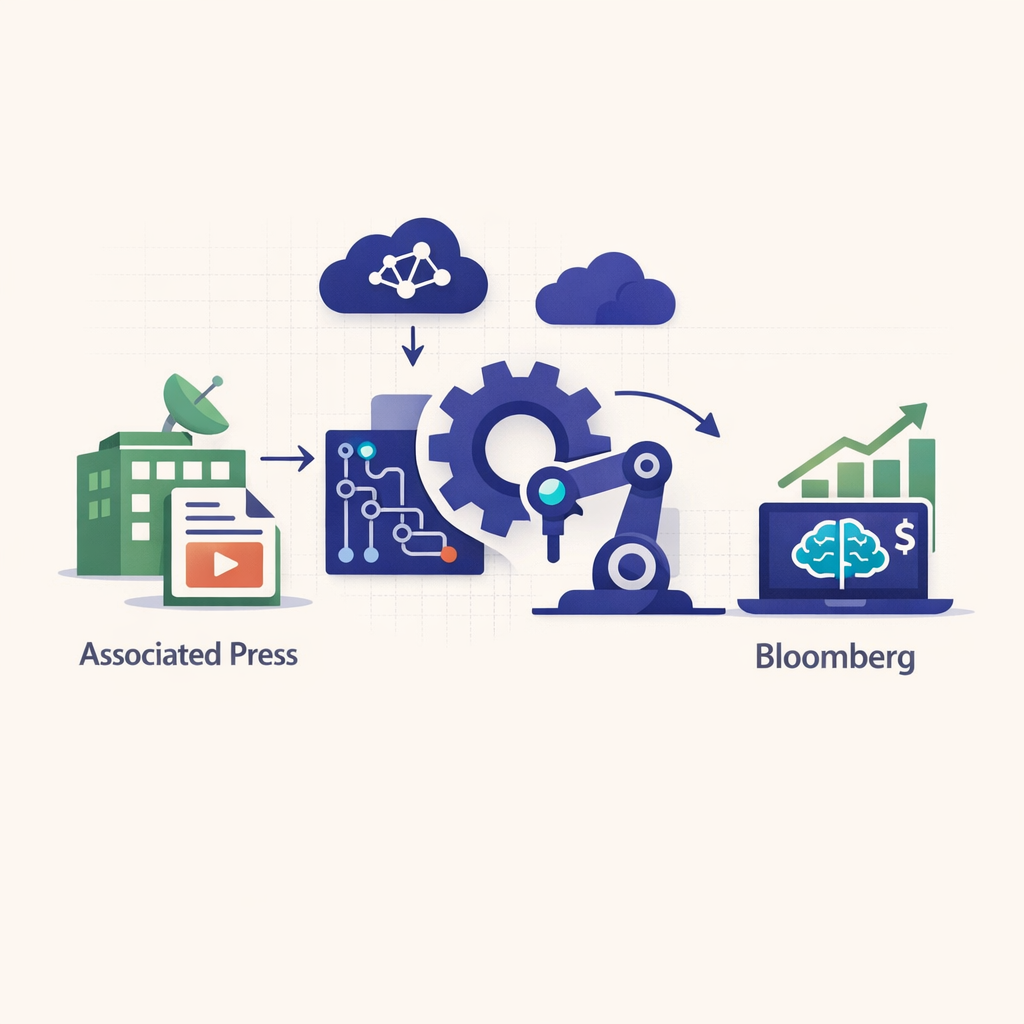
Established media companies are already harnessing AI's power. For example, the Associated Press and Bloomberg leverage AI to automate the generation of news articles from raw data, allowing journalists to devote more time to in-depth reporting. Bloomberg uses AI to expedite interview transcriptions and generate draft articles from financial reports, further highlighting the effectiveness of Content Automation.
Insight: AI's impact extends beyond backend automation. It is increasingly being employed for front-end tasks, enhancing ad and revenue operations, driving content personalization, and refining analytics insights. Ultimately, this creates a more customized and engaging experience for audiences.
As we progress through the subsequent sections of this blog, we will delve deeper into these applications, discuss implementation strategies, evaluate inherent risks, and examine real-world use cases of AI in media publishing automation.
The transformation is imminent, and AI's role is pivotal. Join us as we explore how artificial intelligence is unlocking the future for media and publishing companies.

Challenges In The Media and Publishing Industries
Today's media and publishing industries are dynamic sectors that continuously seek innovations to enhance efficiency and accuracy. The introduction of AI into media companies is recognized as a significant game changer, enabling the automation of content operations and streamlining workflows. Despite AI's potential, these sectors still face several considerable challenges.
Consistency Across Platforms
In our digital age, media and publishing companies distribute content across various platforms—websites, social media, newsletters, podcasts, and even print publications. Maintaining a consistent brand voice and tone across these diverse channels is essential, yet it presents a formidable challenge. This difficulty is amplified when dealing with large volumes of content, often resulting in inconsistencies that can adversely affect brand image.
Metadata Management
Frequently overlooked, metadata plays a crucial role in content discovery and distribution. In the context of AI, metadata is instrumental in optimizing algorithms for tailored content recommendations. Media and publishing companies typically handle vast amounts of metadata, but inconsistencies and errors can hinder the effectiveness of these recommendations. However, AI-powered solutions, like content automation, can significantly enhance metadata management.
Manual Tasks
Within the media and publishing landscape, numerous time-consuming manual tasks include:
- Transcription
- Content tagging
- Grammar checking
- Plagiarism detection
These tasks can create significant bottlenecks, hindering the content production and distribution process. More importantly, they divert valuable resources away from creative and strategic pursuits.
Tip: In light of these challenges, the rise of AI and publishing technology presents promising solutions. AI automates these mundane manual tasks, thereby enhancing newsroom workflows. Integrating AI into content operations can also help ensure consistency across platforms and optimize metadata management.
However, realizing these benefits requires a thoughtful and comprehensive implementation strategy. Media and publishing companies must carefully consider potential risks, such as ensuring that AI-generated content adheres to journalistic standards and ethical guidelines.
Automation is not merely about imitating human behavior; it must yield improved outcomes without compromising the quality and integrity of the work. Consequently, adherence to best practices and reference to real-world use cases are paramount for success.
AI's role in media and publishing is undeniable, providing innovative solutions to combat these challenges and paving the way for more efficient and optimized content operations.
Addressing Challenges with AI Media Publishing Automation
The dynamic landscape of the media and publishing industries presents myriad challenges. Maintaining consistency across platforms, managing metadata discrepancies, and executing manual tasks such as transcription and tagging can significantly delay content production and distribution. AI media publishing automation, equipped with advanced tools and technologies, emerges as an effective solution to these setbacks.
Automating Media Workflows
By leveraging AI, media companies can significantly streamline tasks that were once performed manually. For example, metadata tagging traditionally consumed excessive time and resources. With AI, this process can now be automated, enhancing content discoverability while reducing the need for manual input.
Additionally, AI-based grammar checking tools help maintain content quality, allowing editors to concentrate on the core elements of the content creation process. Plagiarism detection, another critical aspect of publishing, can also be automated, ensuring the authenticity of the content.
Tip: Embracing AI tools can significantly reduce the workload on your editorial team while improving overall content quality.
Leaning on AI for Content Production Pipelines
Companies such as the Associated Press and Bloomberg provide exemplary models of utilizing AI in content automation to accelerate their production pipelines. AI enables rapid transcription of interviews, drafts of news articles from financial reports, and the automatic generation of news pieces from raw data, enhancing operational efficiency.
Personalization and Ad/Revenue Operations
One of the key factors driving AI's adoption in media companies is its ability to personalize content for audiences. By analyzing data and learning from user behavior, AI can curate tailored content that enhances user engagement and, consequently, increases ad revenues.
Sifting through the Numbers: Analytics Insights
AI plays a crucial role in processing the vast volumes of data generated by publishers. With AI tools, businesses can analyze this data to extract actionable insights about audience preferences and trends. This supports strategic decision-making and helps publishers stay ahead of the competition.
Implementation Strategy and Risks
While the benefits of AI in content automation are numerous, careful consideration must be given to the implementation strategy. Deploying AI and automation tools requires meticulous planning to effectively manage risks related to change management, costs, and security.
In conclusion, AI and automation tools are revolutionizing how media and publishing companies address their persistent challenges. From automating backend tasks in the newsroom to customizing content for audiences, AI is proving indispensable in advancing digital transformation within the media and publishing technology sectors.
Real World Use Cases of AI Media Publishing Automation
Implementing AI media publishing automation is not merely a theoretical concept; it is a practical solution backed by real-world evidence of effectiveness. This section explores various instances where AI has successfully facilitated content automation for media companies. This innovation has revolutionized workflows, addressed operational challenges, and driven business growth.
The Associated Press: Newsroom Automation
The Associated Press (AP) exemplifies successful newsroom automation by leveraging AI to produce approximately 3,000 stories every quarter. AP employs AI technologies to convert raw data from partners into comprehensible news content. This allows AP's journalists to concentrate on more in-depth and investigative reporting, thereby enhancing the overall quality of newsroom operations.
Bloomberg: Maximizing Content Production Pipelines
Media giant Bloomberg capitalizes on AI to enhance its content production pipelines. It has developed an AI-powered tool called "Cyborg," which excels at swiftly transcribing interviews and drafting news articles from complex financial reports. This technology not only reduces the time and resources spent on transcription but also minimizes human error, significantly improving operational efficiency.
Netflix: Outperforming in Personalization
In the streaming media sector, Netflix provides a prime example of AI applied to personalization. The platform heavily relies on AI to analyze viewing patterns among its subscribers, allowing it to personalize recommendations and optimize the user experience. This strategy enhances user engagement and reduces churn rates, significantly bolstering ad and revenue operations.
The New York Times: Gaining Analytical Insights
The New York Times has harnessed AI to gain exceptional analytical insights into its extensive content archives. AI-powered algorithms enable the organization to scan and sort through decades of content, improving search functionality and discovery. Additionally, the Times has begun to explore AI's potential in predicting reader preferences.
Strategy for Implementation of AI in Companies
The successful implementation of AI in media and publishing technology begins with identifying specific operational pain points that AI can effectively address. Potential applications include:
- Enhancing content quality
- Streamlining workflows
- Personalizing content
- Optimizing advertising operations
Understanding AI's capabilities and customizing them to a company's needs is the first step toward effective deployment.
Key Insight: Grasping the risks, challenges, and potential benefits of integrating AI into media and publishing workflows is critical. Embracing an experimental mindset recognizes that achieving success may necessitate trial, error, and adjustment, thereby fostering productive innovation.
These real-world examples illustrate that the potential benefits of AI media publishing automation can indeed be extensive.
Case Study: The Associated Press
The use of AI in media companies has significantly transformed their operations, with the Associated Press (AP) serving as a leading example. Their application of AI to generate news articles from raw data brilliantly illustrates the benefits of content automation.
Addressing Media Workflow Challenges
The AP newsroom encountered several challenges, including the need to maintain consistency across multiple platforms while publishing high-quality content promptly for a diverse audience. To address these issues, they integrated AI and publishing technology into their operations.
Newsroom Automation
Incorporating AI into their workflow has allowed the AP to streamline numerous backend tasks. AI tools auto-generate news articles from raw data, enabling journalists to focus on in-depth reporting. This significantly improved the efficiency of the newsroom workflow.
Content Production Pipelines
AP's AI-powered algorithms also automated their content production pipelines, converting raw information into coherent narratives. The result was a substantial increase in content output, accompanied by a reduction in labor and errors.
Personalization
Through the use of AI, the AP offered personalized content to its audience based on their interests and behaviors, which enhanced audience engagement and retention.
Ad Revenue Operations and Analytical Insights
By implementing AI, AP gained insights into audience behavior and content performance. These analytics were utilized to optimize ad operations, leading to increased ad revenues.
Strategic Implementation and Risks
Strategic AI implementation is crucial, particularly concerning risks such as AI bias and data privacy issues. The AP proactively addressed these risks by maintaining robust algorithms and data processing norms.
In conclusion, the AP case elucidates the significant advancements that AI can bring to media and publishing in terms of automating operations, optimizing revenues, and enhancing user experiences, highlighting the technology’s potential. The Associated Press establishes a viable blueprint for AI adoption, benefiting both media companies and their audiences.
Key Takeaway: Embrace AI for operational efficiency, but consider associated risks and approach implementation with a comprehensive strategy.
Case Study: Bloomberg
In the fast-paced media and publishing landscape, maintaining consistency across various platforms while executing operations like transcriptions and tagging is demanding. However, AI in media companies like Bloomberg has led to remarkable improvements in this domain, particularly concerning content automation AI.
Addressing Media Workflow Challenges with AI
Bloomberg has faced many common media workflow challenges. To confront these issues, Bloomberg harnessed AI and publishing technology to automate time-consuming tasks. This turnkey solution expedited key operations, enhancing productivity and accuracy in the newsroom.
Newsroom Automation
In the newsroom, Bloomberg employed sophisticated AI technologies for transcribing interviews and drafting news articles. Notably, this content automation AI tool swiftly distills financial reports into informative articles.
Optimizing Content Production Pipeline
AI has revolutionized Bloomberg's content production pipelines, enhancing production speed and maintaining consistency across various reporting formats. This accelerated the pace at which Bloomberg generated, formatted, and disseminated news articles.
By utilizing AI for content operations, Bloomberg has effectively managed large volumes of data, reaping substantial benefits in productivity and content quality.
Optimizing Ad Revenue Operations and Personalization
AI has also played a crucial role in Bloomberg’s ad and revenue operations, where precision and targeted reach are essential. This technology has led to enhanced customization and improved audience engagement, resulting in a noticeable increase in ad revenues.
AI has unequivocally demonstrated its transformative capabilities within the media and publishing domains. Bloomberg's case underscores the potential AI has to overcome significant challenges while bringing about increased automation and efficiency.
This case study suggests that successful AI implementation in media operations requires a well-developed strategy. Equally vital is assessing inherent risks and implementing necessary mitigation measures to ensure optimal performance and safeguard against potential obstacles. As the technology advances, it will be intriguing to observe the transformation it brings.
Risks Associated with AI in Media Publishing Automation
AI media publishing automation offers significant advantages, including enhanced efficiency, personalized content, and innovative advertising operations. However, navigating the landscape of AI is not without its challenges. Key concerns include the proliferation of misinformation, an overreliance on data, and potential legal implications.
Misinformation
AI models are only as reliable as the data on which they are trained. Consequently, AI can inadvertently spread misinformation, undermining consumer trust and damaging brand reputations.
For example, a minor error in an automated news article can distort the facts, leading to serious repercussions, especially in sensitive areas such as political or financial reporting.
Reliance on Data
A heavy reliance on data also poses challenges for AI technology. The quality, relevance, and impartiality of data can greatly impact AI output. If the input data is biased, incomplete, or outdated, the content generated by AI may be of poor quality or contain significant bias.
Legal Concerns
Additionally, legal aspects are intertwined with the use of AI in media publishing. Issues related to content copyright, data security, and privacy are particularly concerning. AI-driven media companies must ensure compliance with data protection regulations and respect intellectual property rights while automating content operations.
Addressing the Risks: A Balanced Approach
To mitigate these risks, a balanced approach to integrating AI within existing workflows is essential. This involves:
- Establishing a robust data governance strategy that addresses data quality and bias correction.
- Using AI as a complementary tool to human expertise, rather than a complete replacement.
- Regularly updating AI training data to maintain content relevance and accuracy.
- Adhering to legal regulations and industry standards in all AI-powered operations.
In conclusion, while there are risks associated with implementing AI for media companies, a well-thought-out plan and diligent monitoring can turn these challenges into opportunities, positioning publishing technology leaders at the forefront of innovation in media tech AI.
Strategy For Implementing AI Media Publishing Automation
The advantages of AI for media companies are evident. However, the successful integration of AI media publishing automation into existing workflows presents significant challenges. Therefore, an implementation strategy is essential. Below are key elements and phases to consider during your rollout:
Planning
No technological change should occur in isolation. It is vital to understand your current content production pipelines, identify areas where automation can enhance efficiency or output, and establish specific goals for AI integration. Involving all teams—from the newsroom to ad operations—will ensure a comprehensive understanding of potential impacts.
Tip: Remember, AI isn’t a cure-all solution. Focus on areas where it can deliver the maximum return on investment.
Testing
Once key areas for transformation have been identified, begin with small-scale tests. For example, you might start by using AI for straightforward backend tasks such as metadata tagging or grammar checking. Gradually incorporating AI while evaluating its performance at each step will help identify any issues and allow for corrections before a full-scale launch.
Scaling and Execution
When you are satisfied with your AI's performance, it’s time to integrate it more broadly into your workflows. Whether your focus is on content automation or enhancing ad operations, scale AI implementation to align with your strategic goals. Ensure a seamless transition by communicating changes clearly and providing necessary training to your staff.
Maintenance and Evolution
After implementation, continually monitor your AI systems to evaluate their effectiveness. Utilize analytical insights to measure success against the benchmarks established during the planning phase. Furthermore, given the rapid advancements in publishing technology, it is essential to consistently adapt and upgrade your systems.
Mitigating Risks
While AI has the potential to revolutionize operations, it also presents inherent risks, such as the spread of misinformation or reliance on data quality. Consequently, ongoing testing, audits, and updates are crucial to ensure that systems operate as intended and that the content produced remains accurate and reliable.
With the right planning and execution, AI can significantly enhance content operations within the media and publishing sectors. Industry leaders like The Associated Press and Bloomberg have already demonstrated the effectiveness of AI, leveraging automation for both routine tasks and complex activities like drafting news articles from raw data.
In conclusion, successfully adopting AI to transform media operations requires a strategic and thoughtful approach. It’s not merely about embracing the latest technology; it’s about integrating it into existing processes in a manner that adds the most value. Selecting the right tools and strategies, along with dedicating time for preparation and testing, can pave the way for a successful AI integration.
The Future of AI in Media Publishing Automation
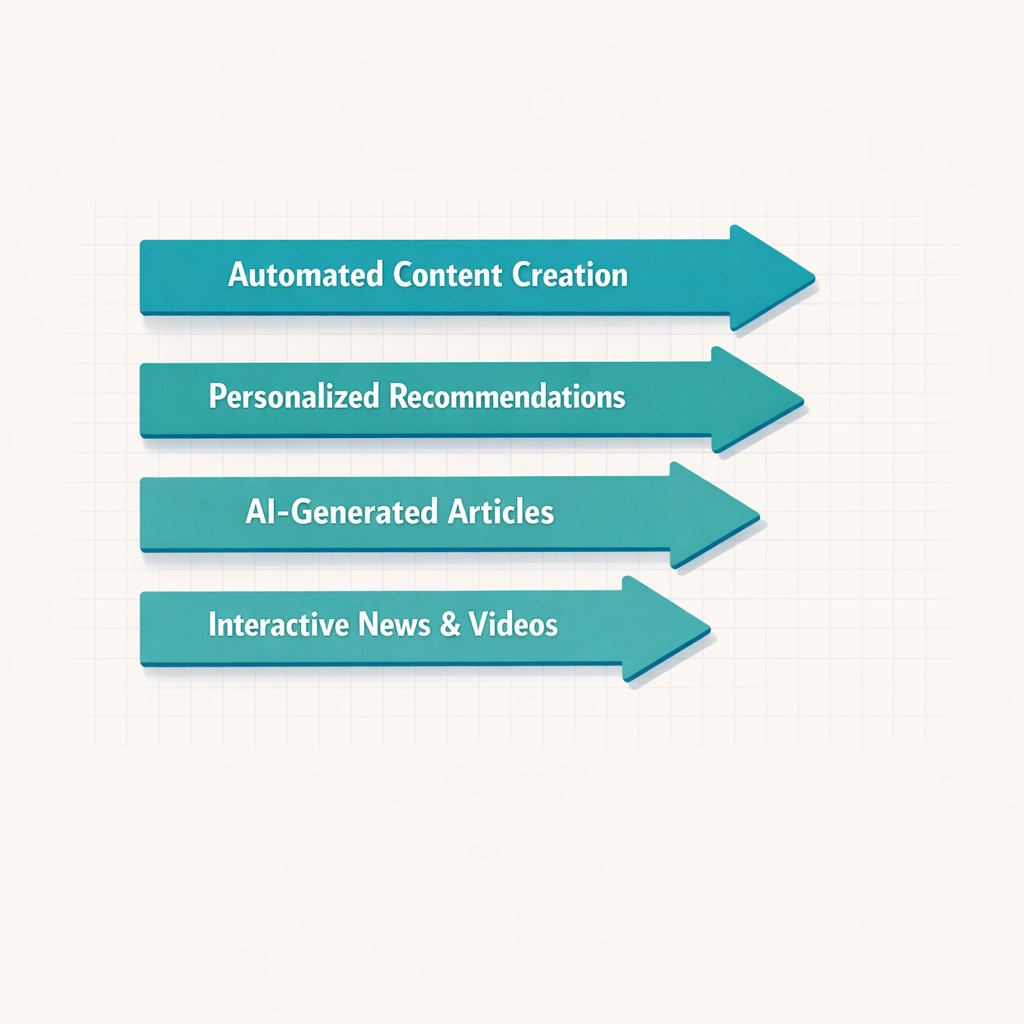
As we look ahead, the integration of AI in media publishing automation is poised to revolutionize traditional media workflows and enhance seamless content operations.
Media Workflow Challenges and AI
Many media companies face significant challenges in maintaining consistency across platforms, managing metadata, and handling labor-intensive tasks such as tagging and transcription. AI media publishing automation offers an effective solution to these issues, improving operational efficiency by streamlining backend workflows.
Currently, approximately 97% of publishers are utilizing AI for tasks like metadata tagging and plagiarism detection. This widespread adoption demonstrates that AI's impact on redefining workflows is not just a future possibility—it is already a present reality.
Newsroom Automation
The newsroom, often defined by fast-paced timelines and high-pressure environments, stands to benefit immensely from AI. Companies like Associated Press are now harnessing AI to automate tasks such as generating news articles from raw data, enabling journalists to focus on more in-depth reporting.
Bloomberg similarly employs AI to transcribe interviews and generate reports from financial data. It’s clear that AI is on track to become the backbone of future newsrooms, driving both efficiency and productivity.
Content Production Pipelines
AI also shows significant promise in content production. By analyzing user behavior and preferences, AI can recommend personalized content, enhancing the customer experience. This not only helps retain current audiences but also attracts new ones.
Ad and Revenue Operations
Advertising remains a vital revenue source for media companies. With the advent of AI, ad operations are evolving to become more data-driven and personalized. AI can analyze user interests and behaviors to deliver relevant ads, boosting user engagement and increasing advertising revenues.
Analytics Insights
AI's data processing capabilities provide unprecedented opportunities for extracting actionable insights from vast datasets. This functionality can assist media companies in making strategic decisions and anticipating user trends.
Real Use Cases
Real-world applications of AI within media companies highlight its transformative potential. For example, Reuters's tool Lynx Insight uses AI to recommend trending topics to journalists.
The future of AI in media publishing automation appears increasingly influential. By providing powerful solutions to existing challenges, AI is set to transform the media industry. However, as new innovations continue to emerge, it is evident that we have only begun to explore the depths of AI’s potential in media and publishing.
"With AI predicted to become an integral part of future media workflows, the industry is set to witness a monumental shift, promising improved efficiency, personalized content, and enhanced revenue operations."
As AI advances, it presents a striking vision of a new era where content automation enables media companies to not only survive but thrive in an increasingly digital landscape.
Make Imversion a preferred source on Google
Like this kind of AI and software analysis? Add Imversion as a preferred source so Google can highlight our articles for you in Search, AI Overviews, and AI Mode.