Agentic GTM: AI Agents Revolutionizing Revenue Teams in 2026
Discover how Agentic GTM is transforming modern revenue teams with AI agents, enabling faster workflows and improved outcomes.

Agentic GTM Explained for Modern Revenue Teams
Slow follow-up, messy CRM data, and generic outreach still sink pipeline momentum. Agentic GTM has become relevant because revenue teams need faster execution, cleaner systems, and more personalized engagement without piling on manual work.
Agentic GTM Key Takeaways
- Agentic GTM shifts revenue execution from manual task handling to supervised AI-led orchestration. Instead of simple rules, AI revenue agents analyze signals, decide next steps, and trigger actions across CRM, MAP, and sales engagement workflows.
- The biggest wins usually show up in revenue team automation for lead qualification, account enrichment, routing, outreach drafting, CRM updates, funnel monitoring, and forecasting support. Repetitive work first. Judgment-heavy work second.
- AI sales agents help teams move faster, but speed without guardrails creates bad outreach, dirty data, and noisy pipeline views. Human oversight should stay in approval flows, messaging review, exception handling, and model performance checks.
- Evaluate GTM automation readiness by checking data quality, process consistency, system integration, and ownership across sales, marketing, and RevOps. We have seen that user experience is as important as functionality -- if workflows are clumsy, adoption drops fast.
- Start with one measurable workflow, define ROI around time-to-follow-up, conversion movement, or ops hours saved, then expand. Controlled rollout beats broad automation that nobody trusts.
What Agentic GTM Means and Why Revenue Teams Are Adopting It Now
Rule-based automation starts to crack when revenue volume rises, handoffs get messy, and every team is staring at a different version of the funnel.
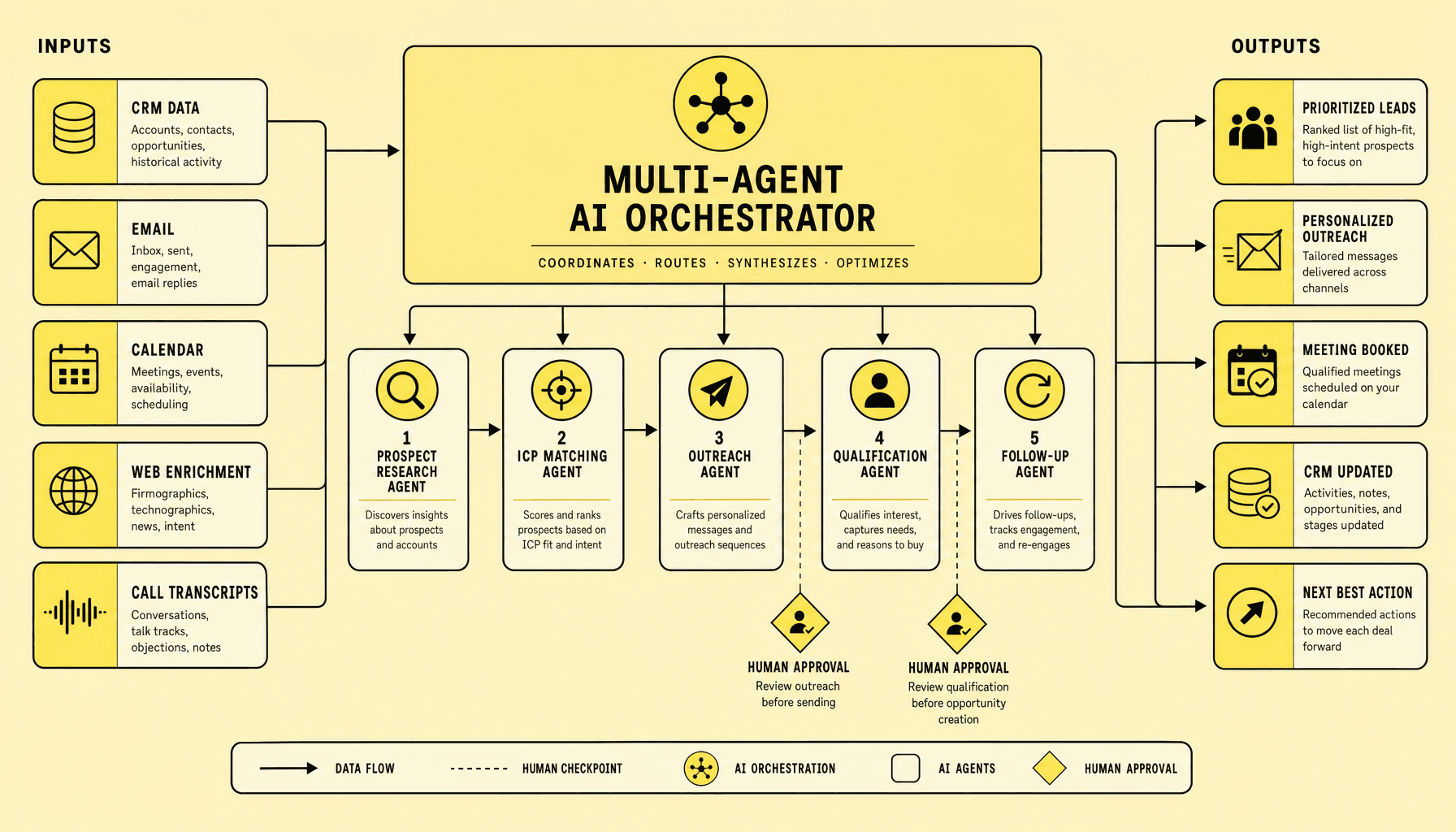
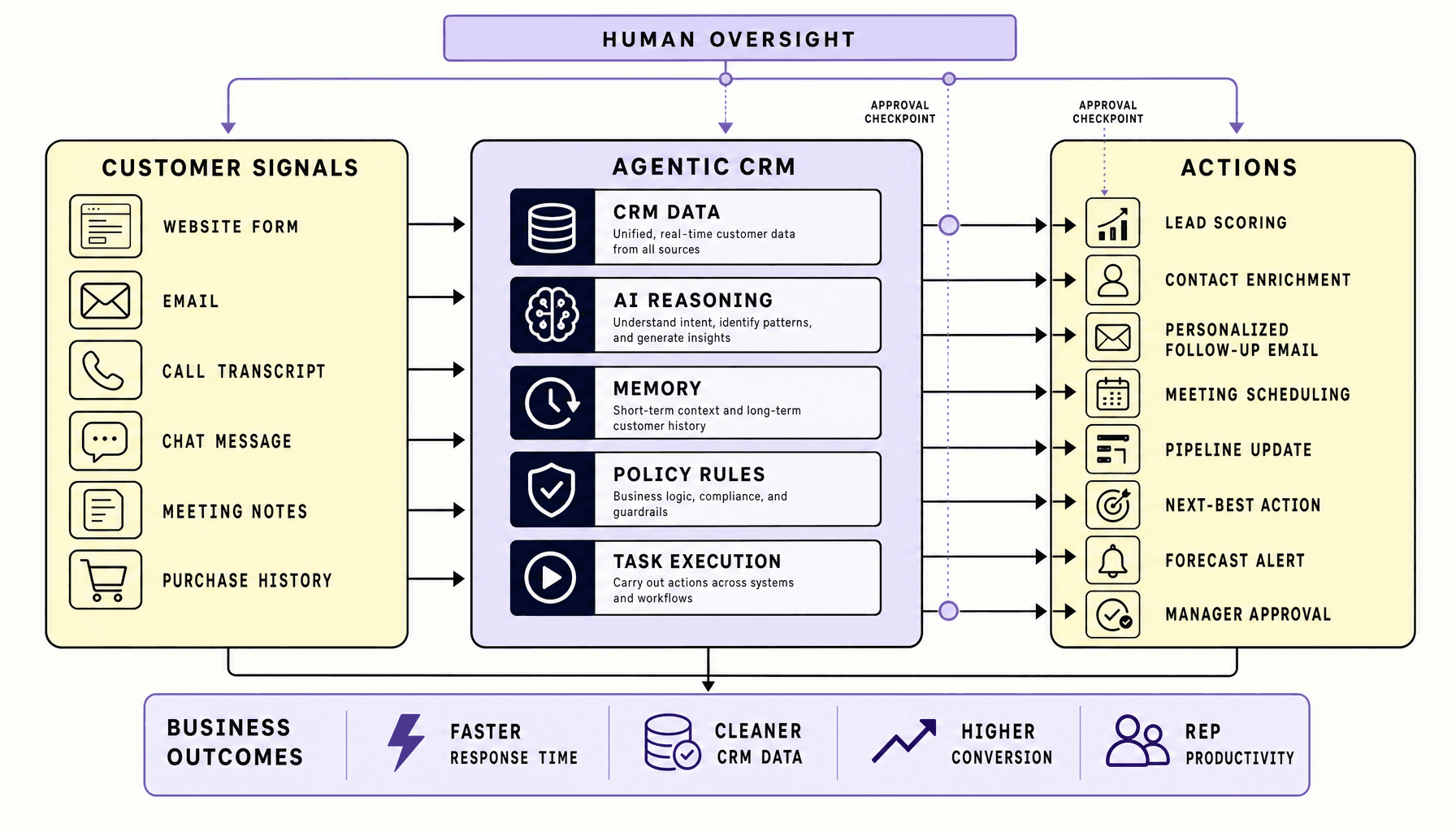
Traditional GTM automation follows fixed logic: if a form is submitted, assign a lead; if a stage changes, send a notification. Useful. But limited. Agentic GTM adds context-aware decisioning on top of workflow orchestration, so AI revenue agents do not just trigger tasks -- they evaluate signals, choose from allowed actions, and carry work across systems like the CRM, marketing automation platform, and sales engagement tools.
That operational difference matters.
In an AI go-to-market strategy, an agent can watch buying signals, check lead scoring, enrich an account, draft outreach, update records, and route the next step without waiting for three different teams to touch the same object. It behaves less like a macro and more like a supervised operator with guardrails.
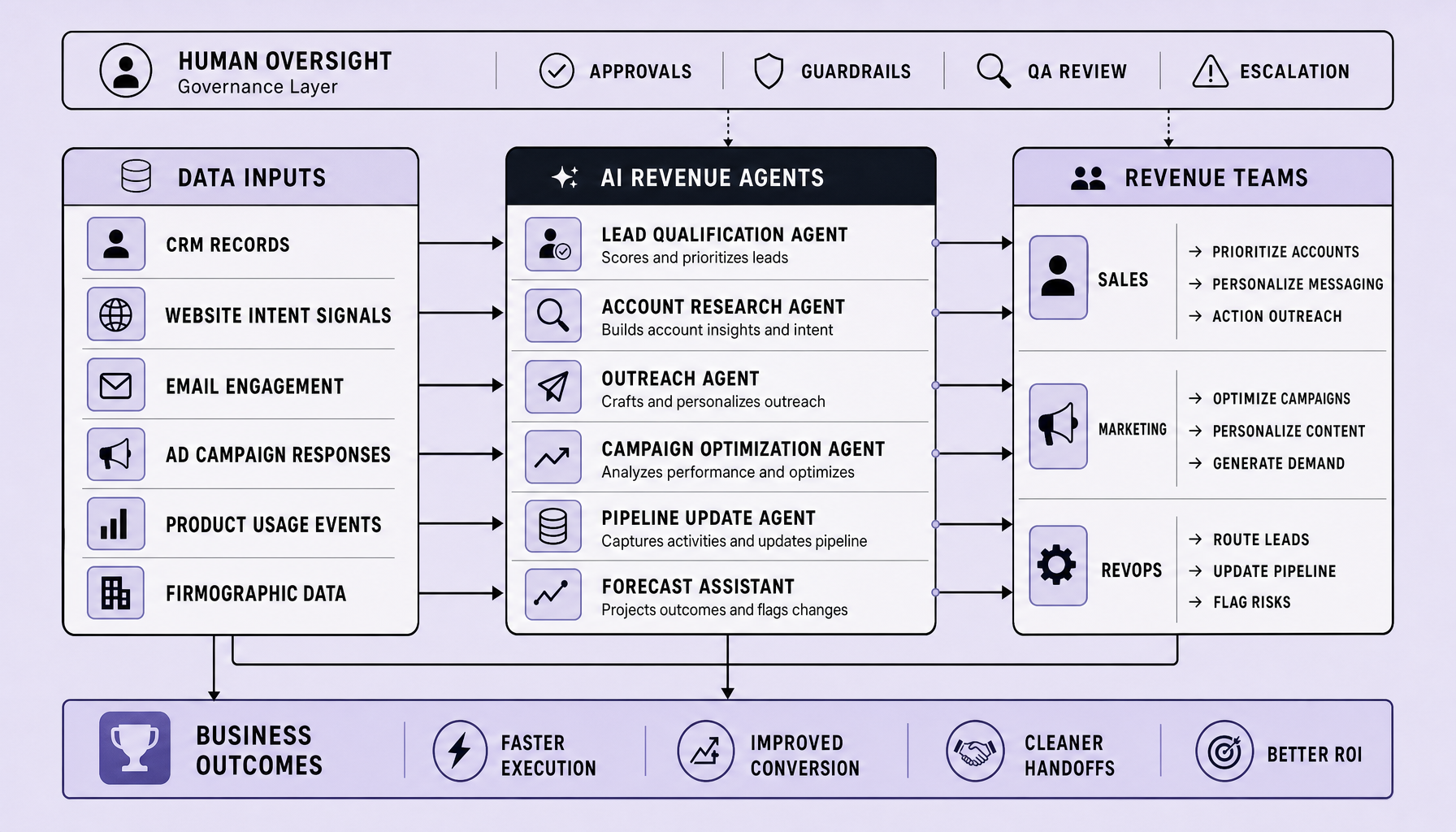
Why now? Four reasons are driving adoption:
- Better models can interpret messy commercial signals with fewer brittle rules.
- Richer data exhaust exists across product analytics, email activity, CRM history, and web behavior.
- Revenue teams face more execution pressure -- faster follow-up, tighter personalization, cleaner funnel management.
- Businesses need GTM automation that scales output without proportional headcount growth.
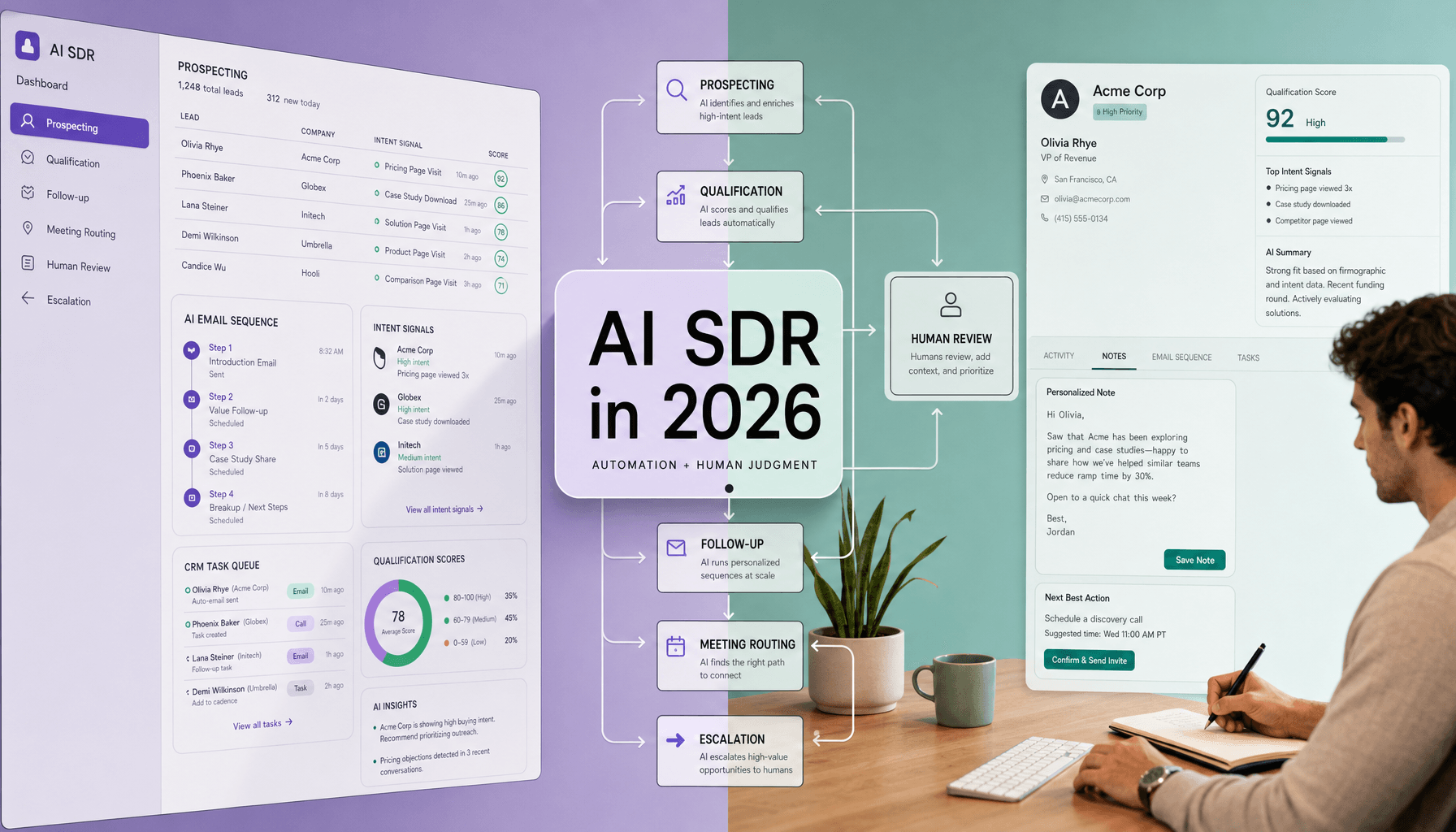
Here is a compact example: a prospect downloads a pricing guide. A rule-based workflow might only send a generic email. An agentic workflow can score the lead, compare firmographic fit, detect recent repeat visits, check open opportunities in the CRM, notify the right rep, generate a tailored follow-up, and log every action. One chain. Multiple decisions.
Still, most teams should not start with fully autonomous AI sales agents.
A safer path is supervised revenue team automation: let agents recommend, draft, enrich, route, and update -- while humans approve sensitive messaging, pricing-related actions, and stage changes. User experience is as important as functionality, and poor automation creates bad outreach fast. So the goal is not maximum autonomy on day one. It is trustworthy execution at scale.
How Agentic GTM and AI Revenue Agents Support Sales, Marketing, and RevOps
Most revenue problems do not come from a single task. They come from the gaps between tasks, systems, and teams. That is where AI revenue agents tend to earn their keep.
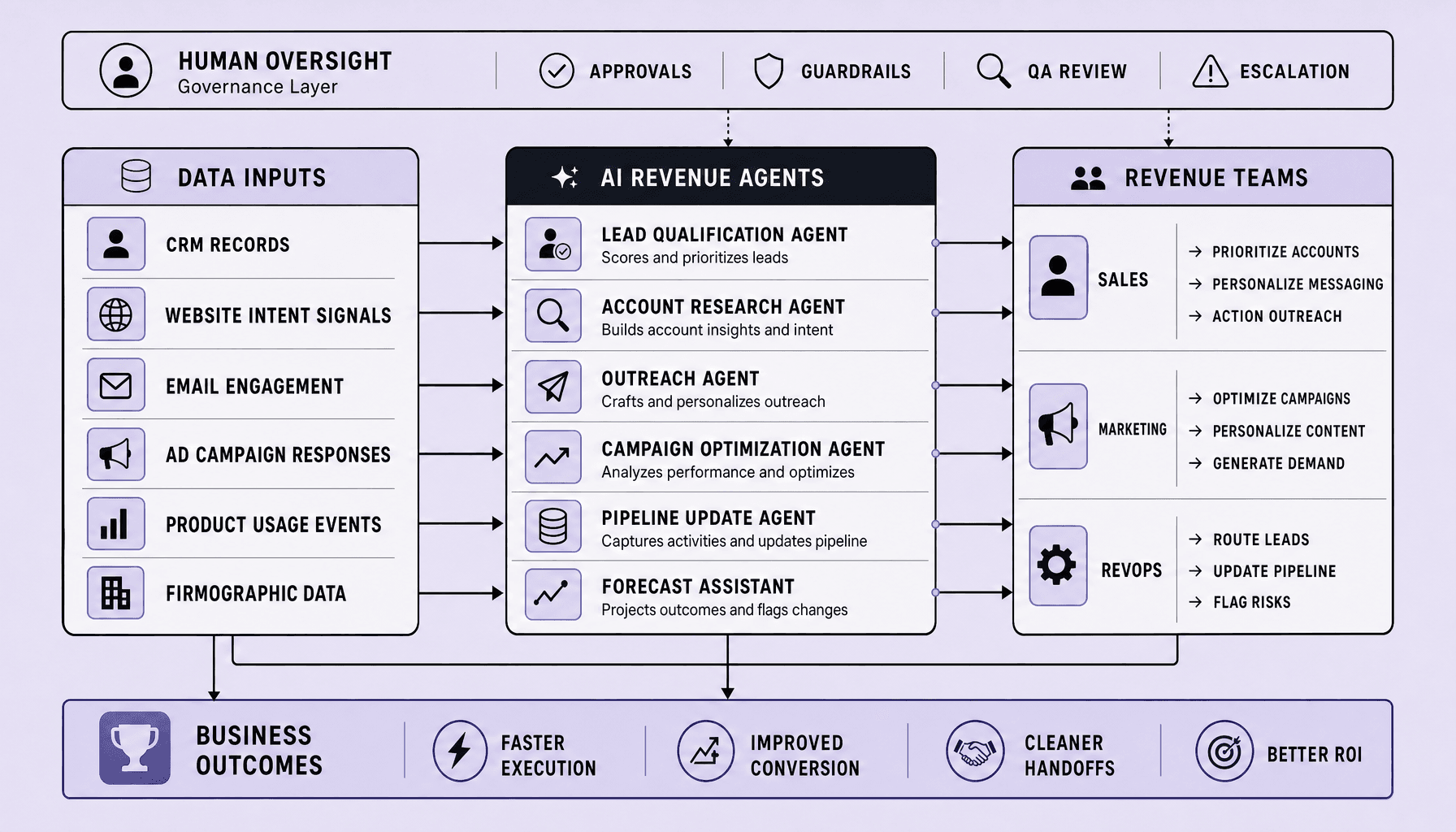
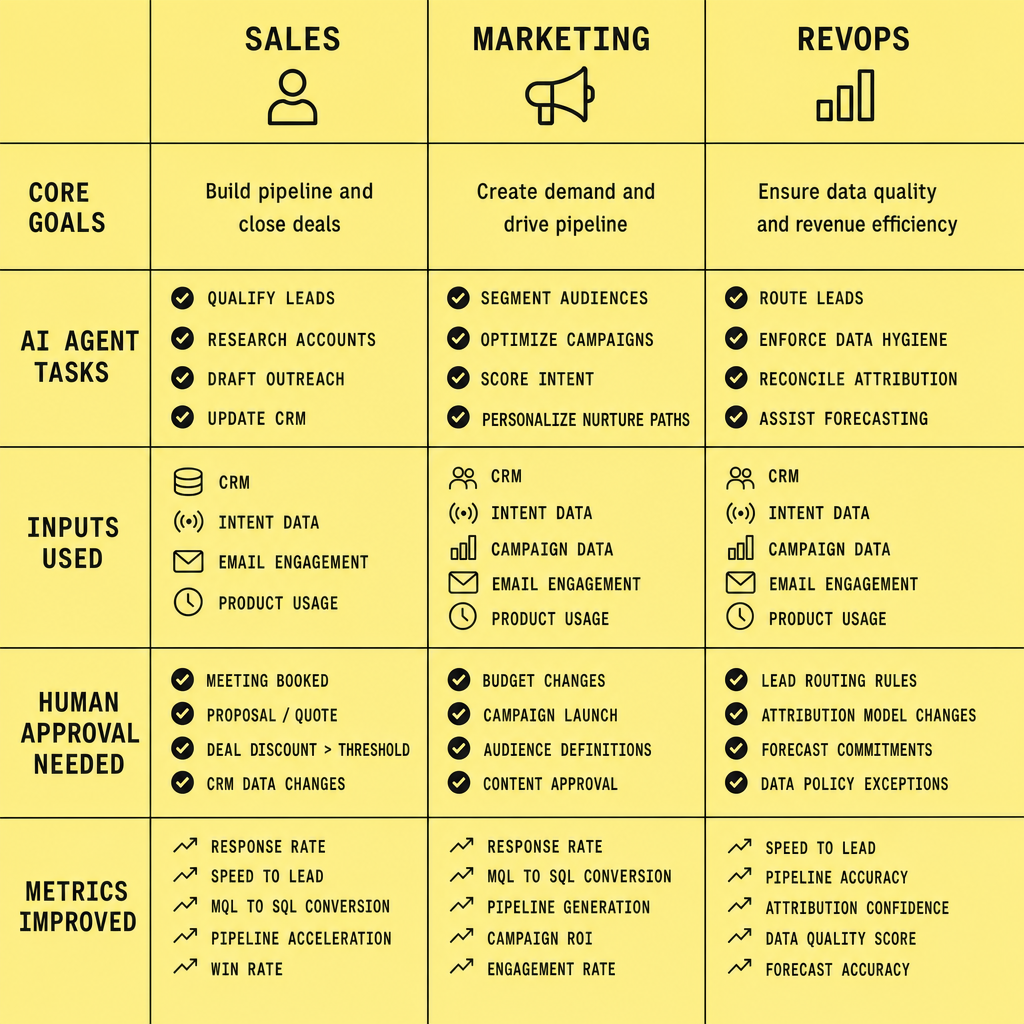
AI revenue agents create practical value by taking over repetitive execution across the revenue engine while keeping humans in control of judgment, messaging, and exceptions. The strongest use cases are usually cross-functional handoffs, because most revenue friction happens between teams -- not inside a single task.
Sales
For sales, AI sales agents reduce admin drag and improve response quality. They can research accounts, enrich contact records, prioritize leads based on buying signals, draft personalized follow-ups, and log activity back into the CRM or sales engagement platform. Reps often lose time switching between inboxes, call notes, firmographic data, and CRM fields.
But we should not hand over final messaging blindly. Personalized follow-up works best when agents prepare the first draft and recommend next-best actions, while reps approve tone, timing, and deal-specific nuance. In practice, that balance improves speed without turning outreach into templated noise.
Marketing
Marketing teams use GTM automation to move faster on audience segmentation, campaign optimization, and content reuse. An agent can group accounts by behavior or firmographic fit, suggest A/B test variants, repurpose webinar or blog content into email and paid campaign assets, and identify high-intent leads for sales handoff.
The handoff matters more than the asset generation. If an agent can detect engagement patterns, package the context, and pass a qualified lead into the CRM with source data attached, marketing and sales stop arguing over lead quality and start working from the same signal set.
RevOps
For RevOps, revenue team automation is less about flashy output and more about control. Agents can enforce routing rules, support pipeline forecasting, monitor funnel leakage, and maintain CRM hygiene by flagging duplicates, missing fields, stale stages, or broken ownership logic.
This is where supervised automation pays off.
RevOps should still own policy, exception handling, and forecast interpretation. Agents can surface anomalies and run checks across systems, but humans should retain control over routing logic changes, stage definitions, and pipeline forecasting decisions. We take that position because data quality, process design, and revenue accountability all meet here, and those tradeoffs should stay visible.
Agentic GTM Workflows That Drive Faster Execution
Not every revenue process is a good automation target. The best Agentic GTM workflows have clear inputs, repeatable decisions, and a system of record to update. Start there. Vague strategy work is a poor first target, but execution-heavy revenue processes are ideal for GTM automation.
A high-leverage chain usually looks like this: signal, decision, action, system update. For example, a pricing-page visit or form fill triggers lead qualification, checks firmographic fit, assigns a score, routes the account, drafts outreach, and logs the activity in the CRM. Fast. Traceable.
Lead qualification and account research
Lead qualification and account enrichment are often the first wins for AI revenue agents because the logic is structured: source, company size, role, intent signal, territory, and routing rules. Instead of waiting for manual review, agents can score and route leads in minutes, which improves speed-to-lead and reduces queue backlog.
They can also enrich the record before a rep touches it. Company profile, likely use case, recent buying signals, duplicate checks. Cleaner data improves prioritization over time -- and better structure reduces downstream rework.
Outbound sequencing and meeting preparation
AI sales agents can turn research into action by drafting message variants, selecting sequence branches based on persona or behavior, and pausing outreach when signals change. That lowers manual effort while keeping personalization at a useful level.
Before meetings, agents can compile account summaries, open opportunities, stakeholder notes, and recent engagement into a prep brief. Reps spend less time gathering context and more time preparing questions.
Pipeline updates, handoffs, and forecasting
Pipeline management is another strong fit. Agents can capture call notes, suggest stage changes, flag missing fields, and update next steps after emails or meetings. That cuts manual CRM update effort and improves forecast hygiene.
Customer handoff matters too.
When a deal closes, revenue team automation can package contract terms, goals, contacts, and risk notes for onboarding. Fewer dropped details. Smoother transitions.
Post-campaign analysis
After campaigns, agents can segment performance by source, persona, offer, or funnel stage, then surface leakage points and suggest follow-up actions. But human oversight stays necessary -- especially for messaging quality, exception handling, and forecasting judgment. The goal is faster execution with supervision, not unattended decision-making.
Risks of Agentic GTM and the Human Oversight Revenue Teams Still Need
Fast automation can compound bad decisions just as quickly as good ones. That is why Agentic GTM works best with guardrails.
The common failure modes are predictable: hallucinated outreach, weak personalization that sounds human but misses account context, misrouted leads from brittle routing rules, biased scoring tied to flawed historical data, and CRM contamination from bad writes or duplicate updates. AI sales agents can also over-automate -- pushing outreach, qualification, or forecasting actions past the point where human judgment should step in. And compliance is not a side issue. If AI revenue agents touch consent status, regulated fields, or customer communications, data governance has to be explicit.
A practical model is human-in-the-loop by risk tier, not by every task. Automate low-risk repetitive actions first -- CRM field normalization, account enrichment checks, meeting prep, basic task creation. But require approval for customer-facing messaging, lead qualification edge cases, pricing-related content, and forecast-impacting changes.
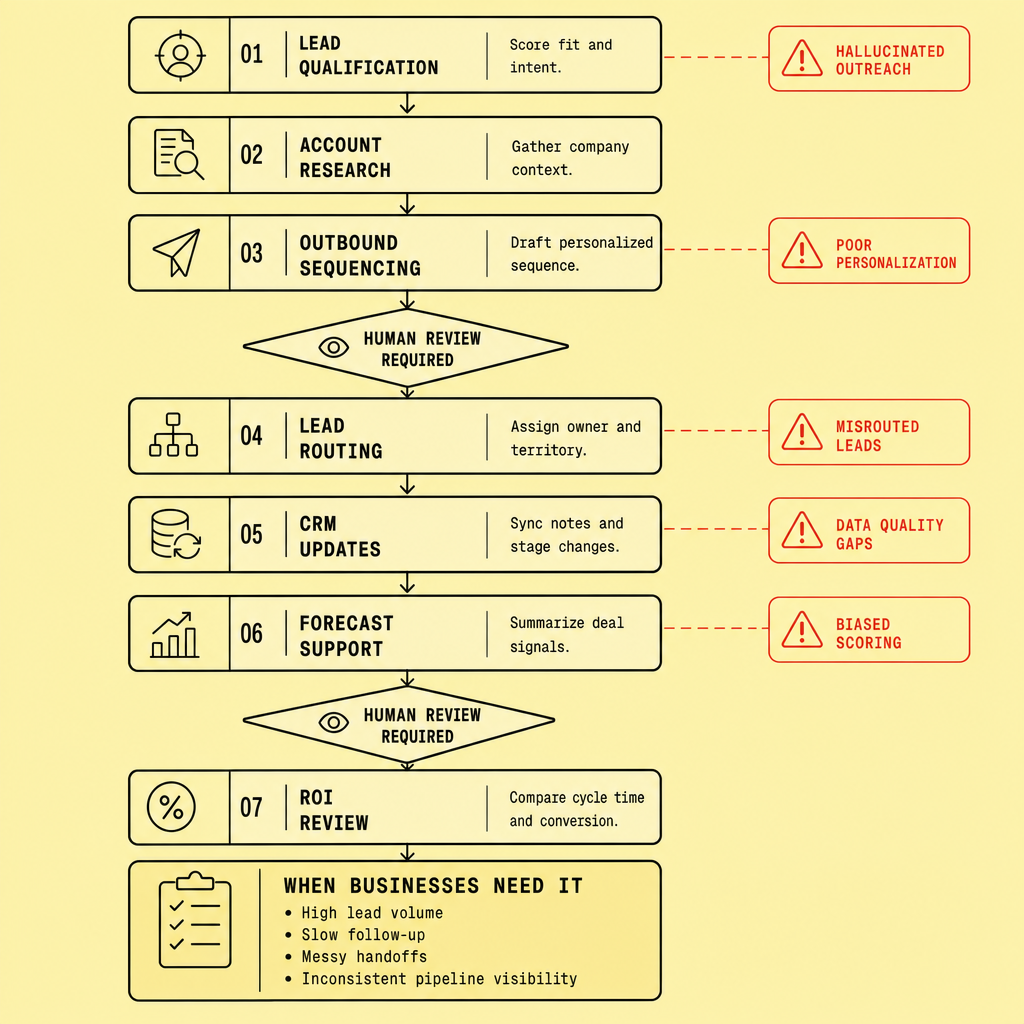
What responsible supervision looks like
Use clear controls:
- Confidence scoring to decide when an agent can act vs. escalate
- Audit trail logging for prompts, inputs, outputs, and system changes
- Exception handling for missing data, conflicting signals, or policy violations
- Role ownership where revenue leaders define business rules and RevOps owns workflow logic, monitoring, and rollback
We take a firm view here: user experience is as important as functionality. In Agentic GTM, that includes the buyer’s experience, not just internal efficiency.
How to Implement Agentic GTM, Measure ROI, and Know When Your Business Needs It
Most teams do not need a giant rollout. They need one workflow that is painful enough to fix, measurable enough to judge, and stable enough to scale later.
Implement Agentic GTM by starting with one narrow, measurable workflow, adding guardrails, and expanding only after the process is stable. It is usually a fit when revenue teams face rising volume, slow follow-up, broken handoffs, or heavy admin work.
Start with one bottleneck workflow, such as lead routing, CRM updates, account enrichment, or speed-to-lead follow-up. These are good first candidates because they have clear triggers, defined outputs, and measurable outcomes. Then clean the inputs. If CRM fields are inconsistent, routing rules are stale, or handoff logic lives in Slack threads, AI revenue agents will amplify the mess instead of fixing it.
Use a simple pilot:
- Pick one team and one workflow.
- Set guardrails -- approval thresholds, do-not-send rules, field-level write permissions, and escalation paths.
- Connect the workflow across CRM, MAP, and sales engagement tools.
- Measure before and after.
- Expand only after the workflow is stable.
For ROI, compare results against your own baseline. Track leading indicators such as time saved, speed-to-lead, task completion rate, and CRM data quality. Then track lagging outcomes such as conversion rate, response rate, cleaner pipeline stages, and reduced operational drag.
If workflows are still undefined, delay GTM automation until the process is clear.
FAQs
What is the first Agentic GTM workflow to automate?
Start with repetitive, rules-heavy work like lead routing, CRM logging, or enrichment.
How do AI revenue agents improve ROI?
They can reduce manual work, speed follow-up, and improve execution consistency across revenue workflows.
What metrics matter most for Agentic GTM?
Track speed-to-lead, CRM data quality, conversion rate, response rates, and time saved.
When should a company avoid GTM automation?
Avoid it when data quality is poor and process rules are unclear.
Do AI revenue agents replace sales or RevOps teams?
No. They handle execution-heavy tasks, while humans own judgment, exceptions, and strategy.
Frequently Asked Questions
What is Agentic GTM in simple terms?
Agentic GTM is a go-to-market model where AI agents do more than automate fixed steps. They evaluate signals, choose approved next actions, and execute work across sales, marketing, and RevOps systems while humans keep control over strategy, risk, and exceptions.
How does Agentic GTM differ from traditional GTM automation?
Traditional GTM automation follows prewritten rules, while Agentic GTM adds contextual decision-making. That means AI revenue agents can adapt to lead behavior, data quality, and workflow conditions in real time instead of only running static if-this-then-that sequences.
When do businesses usually need AI sales agents or AI revenue agents?
Businesses usually need AI revenue agents when lead volume increases, follow-up slows down, CRM hygiene gets worse, and teams spend too much time on repetitive coordination. The strongest signal is not curiosity about AI, but measurable revenue friction across handoffs and execution.
How can companies measure revenue team automation success beyond time saved?
Revenue team automation should also be measured by quality and consistency outcomes, not just labor reduction. Strong indicators include better routing accuracy, fewer duplicate records, faster meeting prep, improved forecast confidence, and more consistent follow-up across the funnel.
What should companies prepare before launching Agentic GTM?
Companies should prepare clean core data, documented workflow rules, system permissions, approval thresholds, and a rollback plan before launching Agentic GTM. A weak process will not become strong just because an agent runs it faster; it will usually become harder to control.
Make Imversion a preferred source on Google
Like this kind of AI and software analysis? Add Imversion as a preferred source so Google can highlight our articles for you in Search, AI Overviews, and AI Mode.