AI ROI: Accurate Measurement Techniques for 2026
Learn how to effectively measure AI ROI in sales and marketing workflows, including key metrics and common mistakes.

How to Measure AI ROI in Sales and Marketing Workflows
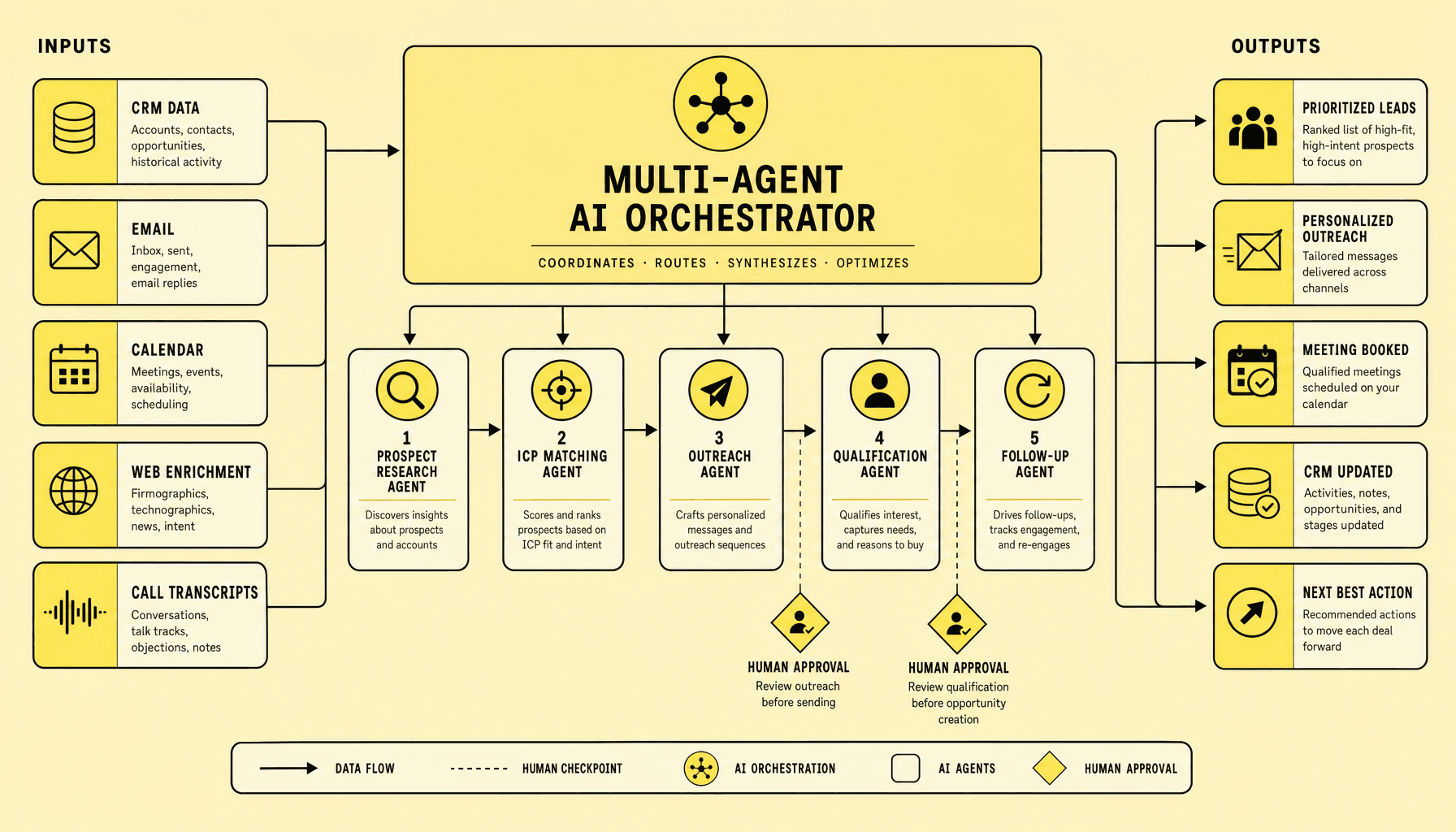
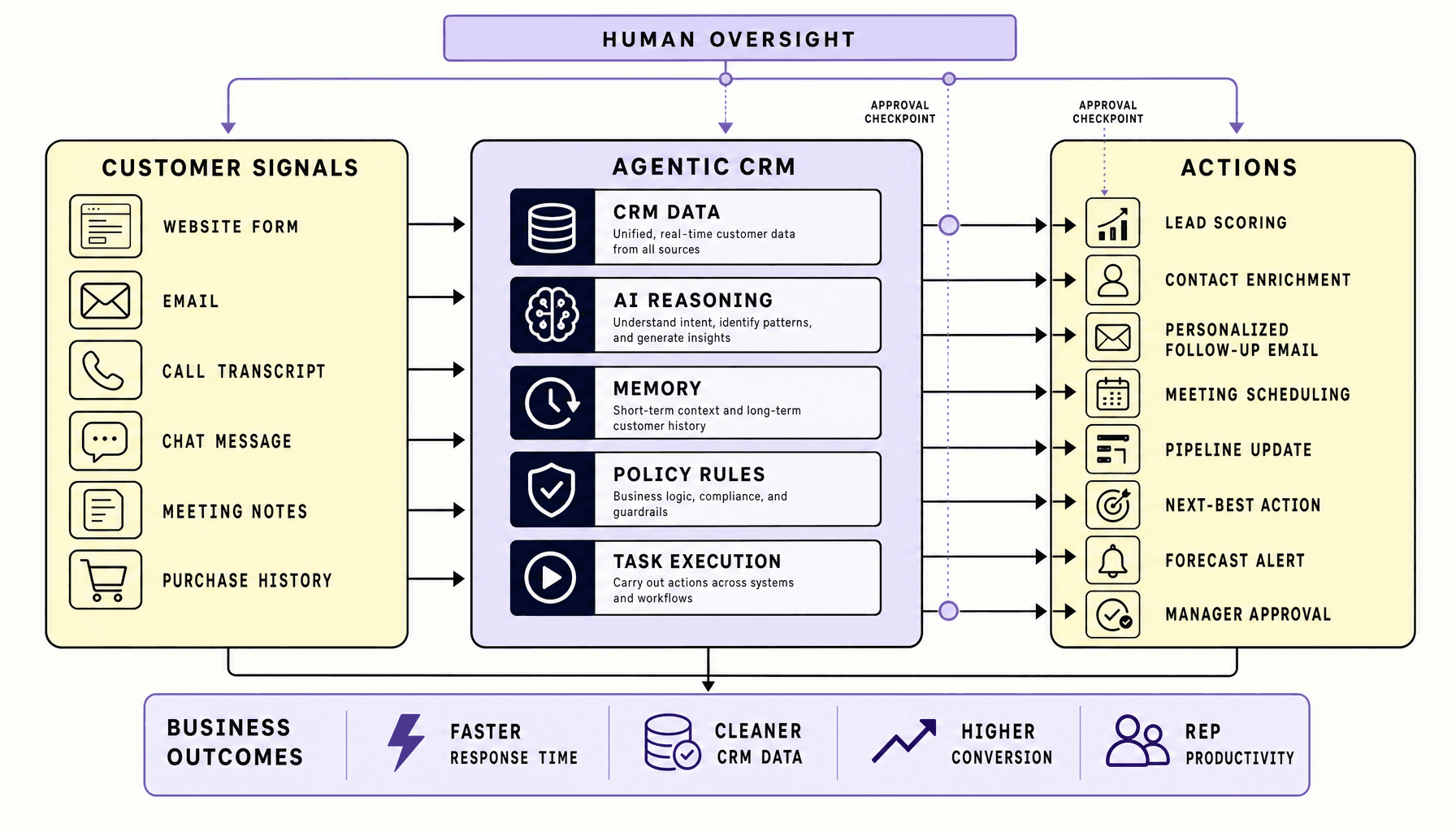
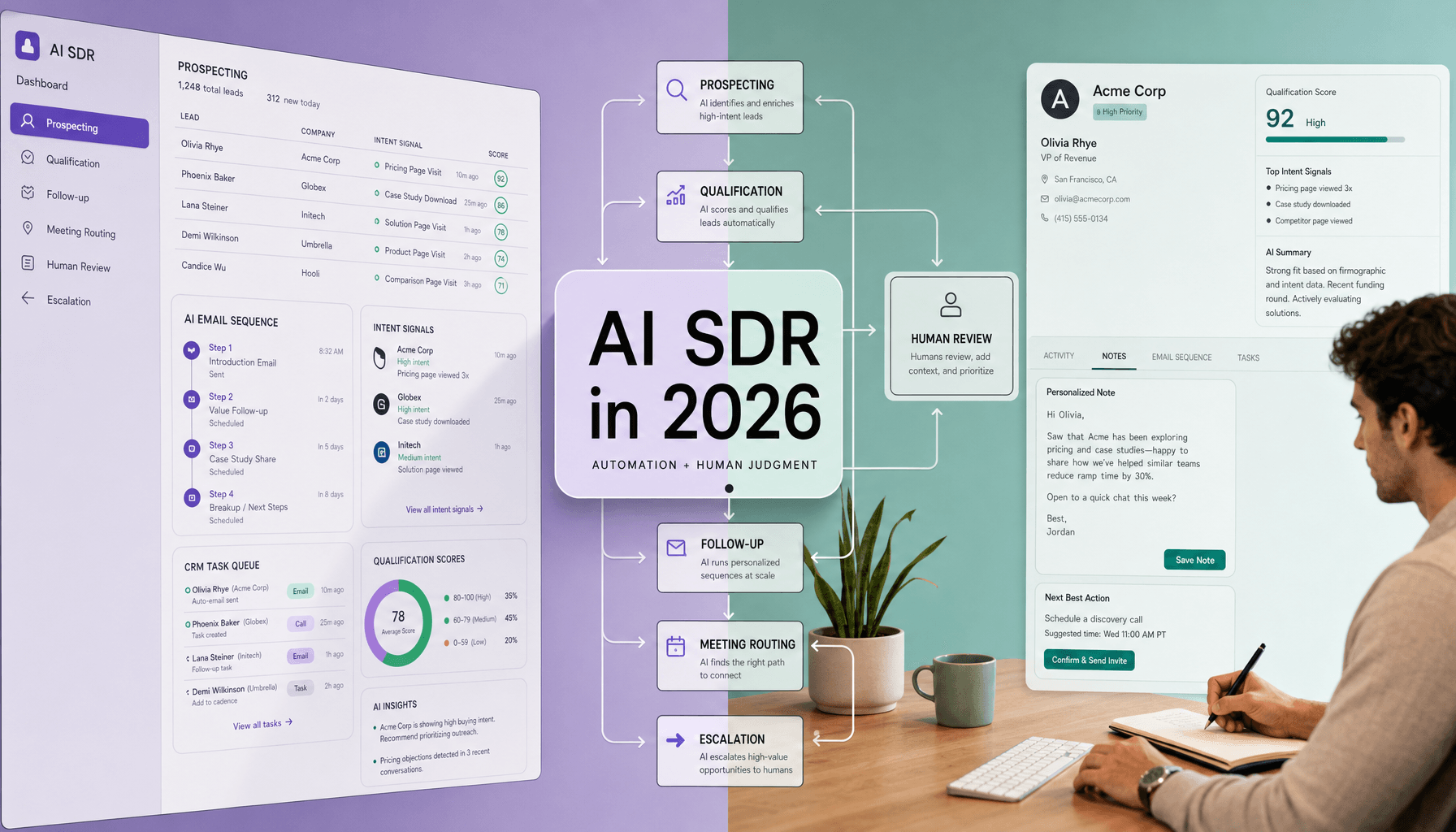
AI can make a sales or marketing team look busier fast. More outreach goes out, campaigns launch sooner, dashboards light up with activity. The harder question is whether any of that improves pipeline, revenue, or cost efficiency. To measure AI ROI, compare the business value created by AI sales automation, AI marketing automation, and GTM automation against total program cost. Use a pre-AI baseline, clear attribution logic, and revenue or efficiency KPIs such as lead-to-opportunity rate, MQL-to-SQL conversion, CAC, pipeline influenced, revenue per rep, sales cycle length, and admin hours saved.
AI ROI Key Takeaways
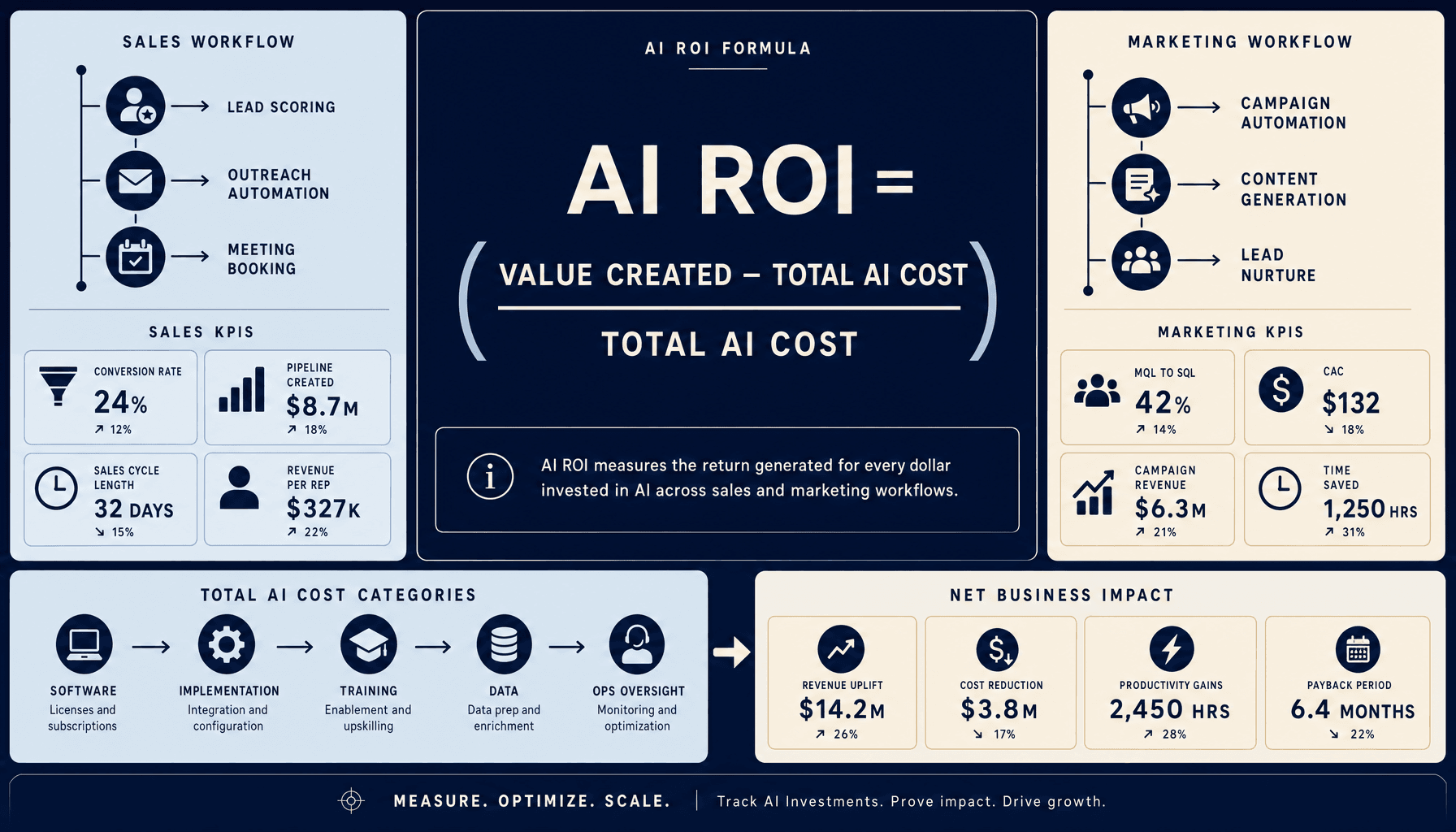
- Use a simple formula: AI ROI = (value created - total AI cost) / total AI cost x 100. Only trust it if total cost includes licenses, integrations, training, data cleanup, internal time, and ongoing optimization.
- Measure AI sales automation and AI marketing automation against a pre-AI baseline first. Without baseline metrics like lead-to-opportunity rate, CAC, sales cycle length, or admin hours saved, teams confuse activity with impact.
- Separate cost savings from revenue lift. Saved rep hours, faster campaign launches, and lower manual effort matter -- but pipeline influenced, conversion gains, and revenue per rep are stronger proof of AI business ROI.
- Keep attribution disciplined across CRM, marketing automation, and BI dashboards. Use clear 30/60/90-day windows, or GTM automation results get overstated.
- Optimize continuously. At Imversion Technologies Pvt Ltd, we see clean measurement frameworks improve long-term productivity because they expose what to scale, fix, or stop.
What Counts as AI ROI for Sales, Marketing, and GTM Automation
A jump in tool usage is easy to mistake for progress. It is not. Count AI ROI only when AI changes business performance, not when it merely increases tool usage. For sales, marketing, and GTM automation, a practical formula is: AI business ROI = (value created - total AI cost) / total AI cost x 100. The common mistake is counting activity, speed, or generated content as value before proving those changes improved pipeline, revenue, or cost efficiency.
That is why cost discipline matters first. On the cost side, include the full program cost, not just software licenses. That usually means setup, data cleanup, CRM and marketing automation integrations, workflow redesign, internal admin time, training, monitoring, prompt tuning, governance, and adoption support. If a team excludes these inputs, the ROI number will look better than the business reality.
Value needs the same discipline. On the value side, separate outcomes into three buckets so usage does not get mistaken for impact:
- Efficiency outcomes: admin hours saved, faster campaign launches, quicker follow-up
- Pipeline outcomes: lead-to-opportunity rate, MQL-to-SQL conversion, pipeline influenced, shorter sales cycle
- Revenue outcomes: win rate, revenue per rep, CAC reduction, attributed revenue
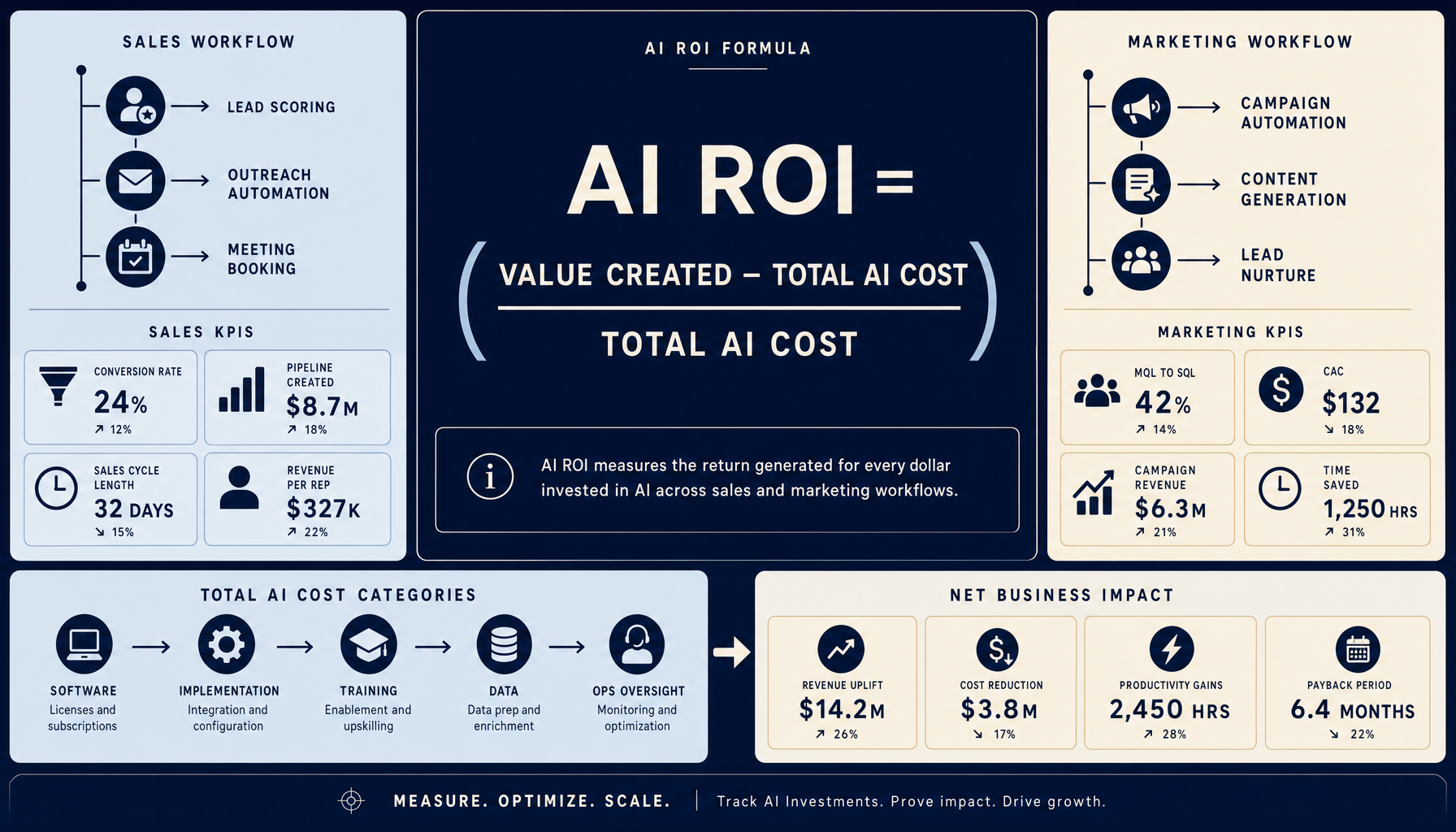
A grounded recommendation: start with one workflow where baseline performance already exists in Salesforce, HubSpot, or BI dashboards. Then compare pre-AI and post-AI performance over 30/60/90 days. There is a real tradeoff here. Soft metrics like time saved appear first, but harder metrics like conversion lift and revenue impact usually take longer to validate. If adoption is weak or attribution is unclear, treat early gains as directional, not proven ROI.
Key AI ROI Metrics to Track Across AI Sales Automation and AI Marketing Automation
Teams get into trouble when they measure everything and prove nothing. Track a small KPI set per workflow, then connect it to revenue. If you measure everything, you defend nothing -- noise hides real AI ROI.
AI sales automation metrics
For AI sales automation, separate early efficiency gains from later commercial impact. Weekly, watch follow-up speed, meetings booked, admin time reduced, and lead-to-opportunity conversion. These show whether reps are acting faster and whether automation is improving workflow execution inside the CRM.
Then zoom out. Monthly, shift to win rate, sales cycle length, and revenue per rep. Those are lagging indicators, but they show whether faster outreach and cleaner prioritization are turning into AI business ROI instead of just more activity. In practice, sales dashboards in Salesforce or a BI layer should compare AI-assisted cohorts against a pre-AI baseline.
AI marketing automation metrics
Marketing sees early movement sooner, but that does not make the case complete. For AI marketing automation, weekly metrics should include campaign velocity, CPL, landing-page conversion, and MQL-to-SQL movement. Early gains often show up here first -- faster launch cycles, lower manual effort, and better response to intent signals.
After that, look at outcomes leadership will care about. Monthly, monitor CAC, pipeline sourced, pipeline influenced, and closed revenue from AI-assisted programs. Attribution needs discipline. Use consistent campaign tagging, CRM-to-marketing automation sync, and fixed lookback rules.
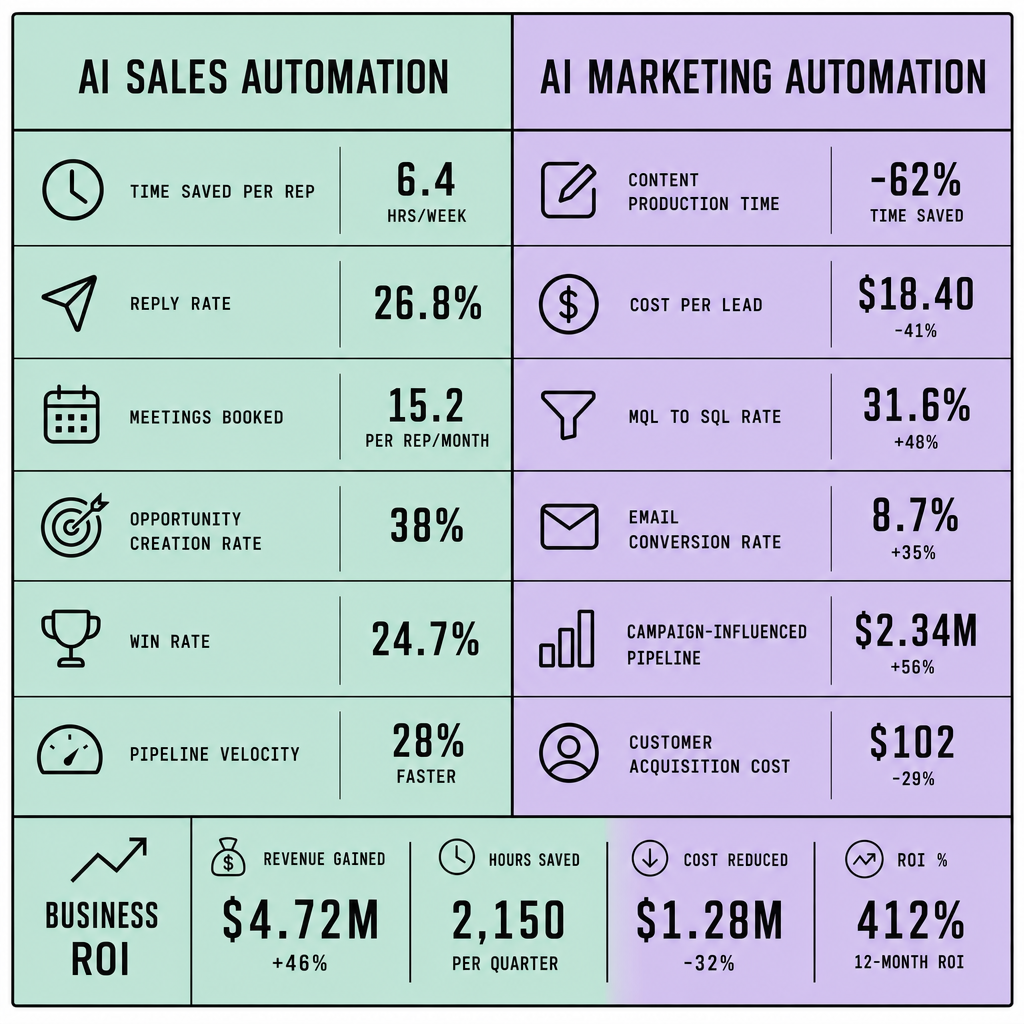
Shared executive metrics
Executives need one KPI map across GTM automation: total AI cost, pipeline created, revenue influenced, CAC movement, and hours saved. We recommend this structure because a simple dashboard is easier to trust, maintain, and optimize.
Attribution Methods and Cost-vs-Value Analysis for AI ROI
This is where many AI ROI claims start to wobble. To measure AI ROI fairly, teams have to separate AI impact from normal GTM motion. Activity lift alone is weak evidence.
Attribute AI impact with baselines and controlled comparisons
Start with a baseline: pre-AI lead-to-opportunity rate, MQL-to-SQL conversion, sales cycle length, CAC, revenue per rep, and admin hours. Then compare the same workflow over a defined 30/60/90-day window after rollout. Better yet, use a pilot or control group -- for example, one sales pod using AI sales automation while another keeps the prior process, or one campaign set using AI marketing automation while another does not.
That comparison gives the numbers context. Multi-touch attribution helps, but teams should separate sourced pipeline from influenced pipeline. If AI created the meeting, routed the lead, or triggered the sequence, count that as sourced only if your CRM logic supports it. If AI improved follow-up speed, content relevance, or campaign timing, that is influenced pipeline. Useful, yes. But not fully caused by AI unless the experimental design is strong.
Compare outcomes against total cost of ownership
Once attribution is clear enough, compare outcomes against the full cost base. For AI business ROI, use total cost of ownership:
- licenses and usage fees
- CRM and marketing automation integrations
- data cleanup and workflow redesign
- training and change management
- internal admin or RevOps time
- ongoing prompt, model, and dashboard optimization
We prefer measurement setups that are simple enough to maintain in Salesforce, HubSpot, or a BI layer. Complex attribution models often look precise -- then break under real GTM automation change.
A 5-Step Implementation Framework to Measure AI ROI Consistently
Most teams do not fail because they lack dashboards. They fail because the measurement process changes every month. If teams want to measure AI ROI reliably, they need one repeatable process -- not a one-time dashboard review.
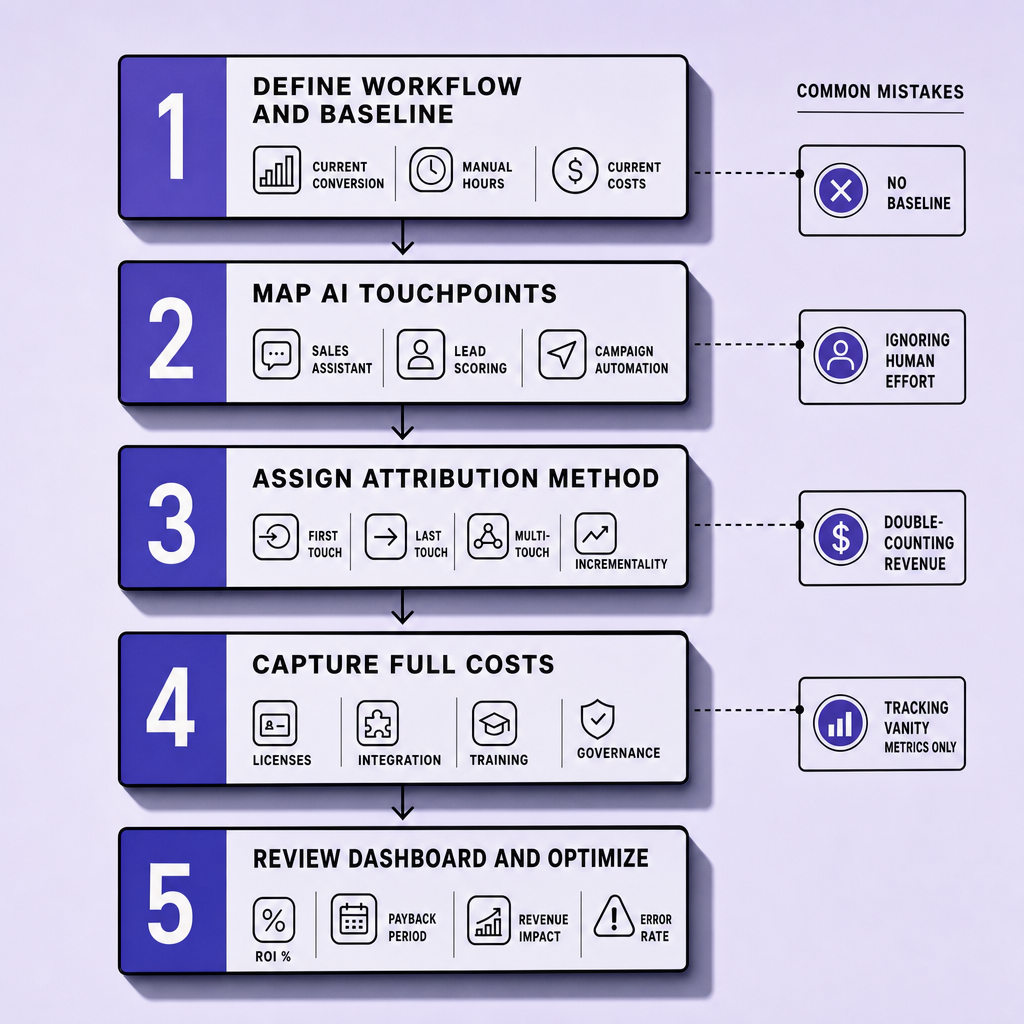
1. Define the workflow and success event
Start with one workflow, not every AI use case at once. Pick a narrow motion like SDR outreach, lead scoring, or campaign ops. Then define success criteria in business terms: lead-to-opportunity rate, MQL-to-SQL conversion, sales cycle length, pipeline influenced, or admin hours saved. For AI sales automation and AI marketing automation, vague goals like “better productivity” create weak reporting.
2. Capture the pre-AI baseline
Before rollout, pull 30 to 90 days of baseline data from the CRM and marketing automation platform. Use the same metrics, same segments, same owners. If the baseline shifts, your AI ROI claim shifts with it. This is also the foundation teams use to measure AI ROI consistently over time.
3. Map total costs
Now account for what the program really costs. Include licenses, integration work, prompt design, training, change management, monitoring, and internal time from sales, marketing, RevOps, and finance. Teams often miss labor cost. That distorts AI business ROI fast.
4. Choose an attribution model
Use first-touch, last-touch, or influenced-pipeline rules based on the workflow. Keep it consistent. Clean measurement logic makes decision-making easier and the resulting ROI story much harder to argue with.
5. Review on a fixed cadence
Set owner accountability upfront: marketing owns campaign inputs, sales owns adoption, RevOps owns data quality, finance validates value. Review results at 30/60/90-day checkpoints, then monthly. Use a Salesforce, HubSpot, or BI dashboard to compare baseline, cost, adoption, and outcome trends -- that is how teams measure AI ROI without confusing activity with impact.
Common AI ROI Measurement Mistakes, KPI Dashboards, and Optimization Tips
Most AI ROI reporting breaks in familiar ways. Teams track activity instead of business impact, then declare success before costs, attribution, and adoption are clear.
Common mistakes that distort ROI
The most common errors are predictable: no pre-AI baseline, vanity metrics like prompt volume or emails sent, partial cost accounting, and weak attribution. If an AI sales automation workflow increases outreach but does not improve lead-to-opportunity rate, sales cycle length, or pipeline per rep, the lift may be noise. If AI marketing automation speeds campaign production but the dashboard ignores review time, integration work, or data cleanup, ROI gets overstated. Adoption quality matters too: a workflow people bypass rarely produces durable returns.
What a useful dashboard should show
A useful dashboard should connect workflow health to financial outcomes:
- Usage and completion rates by workflow
- Cost by tool, internal time, and support effort
- Conversion-rate changes across funnel stages
- CAC, pipeline influenced, revenue per rep, and sales-cycle trends
- 30/60/90-day KPI review windows in Salesforce, HubSpot, or a BI dashboard
Strong dashboards do not just report results; they help teams decide whether to expand, retrain, reconfigure, or stop an AI workflow.
Optimization tips and realistic outcomes
Do not tune five workflows at once. Review one workflow at a time and compare it with the baseline. Then tune prompts, routing rules, CRM fields, and handoff steps. AI can support shorter sales cycles, lower CAC, faster campaign execution, and more pipeline per headcount, but only when teams remove process friction and keep attribution honest.
FAQs
What is the biggest AI ROI measurement mistake?
Skipping the pre-AI baseline and claiming impact from raw activity lift.
Which dashboard KPIs matter most for AI sales automation?
Lead-to-opportunity rate, sales cycle, pipeline per rep, revenue per rep, and admin time saved.
How should teams measure AI marketing automation ROI?
Track campaign speed, MQL-to-SQL conversion, CAC, pipeline influenced, and full program cost.
Measure AI ROI With a Baseline, Clear Attribution, and Full-Cost Visibility
If the numbers cannot survive a baseline check and a cost review, the ROI is not credible. Credible AI ROI links workflow changes to business outcomes and compares them against full cost. Anything less tends to overstate impact.
Start with a pre-AI baseline, keep attribution rules consistent, and count every cost: licenses, CRM or marketing automation integrations, data cleanup, training, internal ops time, and ongoing tuning. Because AI sales automation and AI marketing automation often improve speed before revenue, track both leading and lagging KPIs across 30/60/90-day windows. Useful examples include lead-to-opportunity rate, MQL-to-SQL conversion, pipeline influenced, CAC, revenue per rep, sales cycle length, and admin hours saved.
A KPI dashboard in Salesforce, HubSpot, or a BI tool should map one workflow to one business outcome.
Start where data quality is strongest; cleaner inputs make AI ROI easier to measure and defend.
Run a workflow audit, choose one GTM automation use case, define the baseline, and publish a first-pass dashboard.
FAQs
1. What is the simplest way to measure AI ROI?
Pick one workflow, set a baseline, track outcome KPIs, and compare value created against full cost.
2. Which KPIs matter most for AI sales automation?
Lead-to-opportunity rate, sales cycle length, revenue per rep, follow-up speed, and admin time saved.
3. How do we measure AI marketing automation ROI?
Track MQL-to-SQL conversion, CPL, pipeline influenced, campaign velocity, CAC, and revenue impact.
Frequently Asked Questions
What is a good AI ROI benchmark for sales and marketing teams?
A good AI ROI benchmark depends on the workflow, but most teams should expect early gains in time savings before seeing revenue lift. A realistic benchmark is positive efficiency impact within 30 to 60 days and measurable pipeline or CAC improvement within one to two quarters, assuming adoption, data quality, and attribution are stable.
How long does it usually take to prove AI ROI?
It usually takes longer to prove AI ROI than to launch the tool. Efficiency metrics can move within weeks, but reliable pipeline and revenue outcomes often take one full sales cycle or campaign cycle to validate. Teams should avoid declaring success before they have enough time for downstream conversion and closed-won impact to appear.
How does AI ROI differ between AI sales automation and AI marketing automation?
AI sales automation usually shows ROI through rep productivity, follow-up speed, meeting volume, and pipeline progression, while AI marketing automation often shows ROI through campaign velocity, content throughput, lead conversion, and CAC improvement. The measurement model should match the workflow because sales and marketing create value at different points in the funnel.
Why should finance be involved in AI ROI measurement?
Finance should be involved because AI ROI is not just a performance report; it is an investment decision. Finance helps validate cost assumptions, confirm whether time savings translate into actual business value, and prevent inflated ROI claims based on soft benefits that never affect budget, margin, or revenue outcomes.
What should an executive AI ROI dashboard include for decision-making?
An executive AI ROI dashboard should show baseline versus current performance, total program cost, adoption rate, conversion changes, pipeline impact, and revenue impact in one view. It should also separate leading indicators from lagging outcomes so leaders can tell whether a workflow is improving, stalled, or creating activity without business value.
Make Imversion a preferred source on Google
Like this kind of AI and software analysis? Add Imversion as a preferred source so Google can highlight our articles for you in Search, AI Overviews, and AI Mode.