Guide to Scalable Web Application Architecture for High Traffic Succes
Unlock the secrets to building scalable web applications. Discover architecture strategies, system design, and more for high traffic success!

Introduction to Scalable Web Application Architecture
In the digital age, a business's success and sustainability are increasingly reliant on its online presence. As competition escalates, organizations are compelled to develop web applications that not only captivate users but also scale effectively to meet rising demands. This necessity brings us to the concept of scalable web application architecture—a modern imperative for businesses aiming to thrive and establish a significant presence in the expansive digital landscape.
Scalable web application architecture is a design methodology that ensures a web application can seamlessly manage an increased workload and evolve over time to support growth. Web application scalability is no longer a peripheral consideration; rather, it has become a fundamental requirement in contemporary web application development. Whether you are embarking on the creation of a scalable web app from the ground up or seeking to enhance the scalability of an existing application, familiarizing yourself with scalable architecture design is essential to guide your strategy.
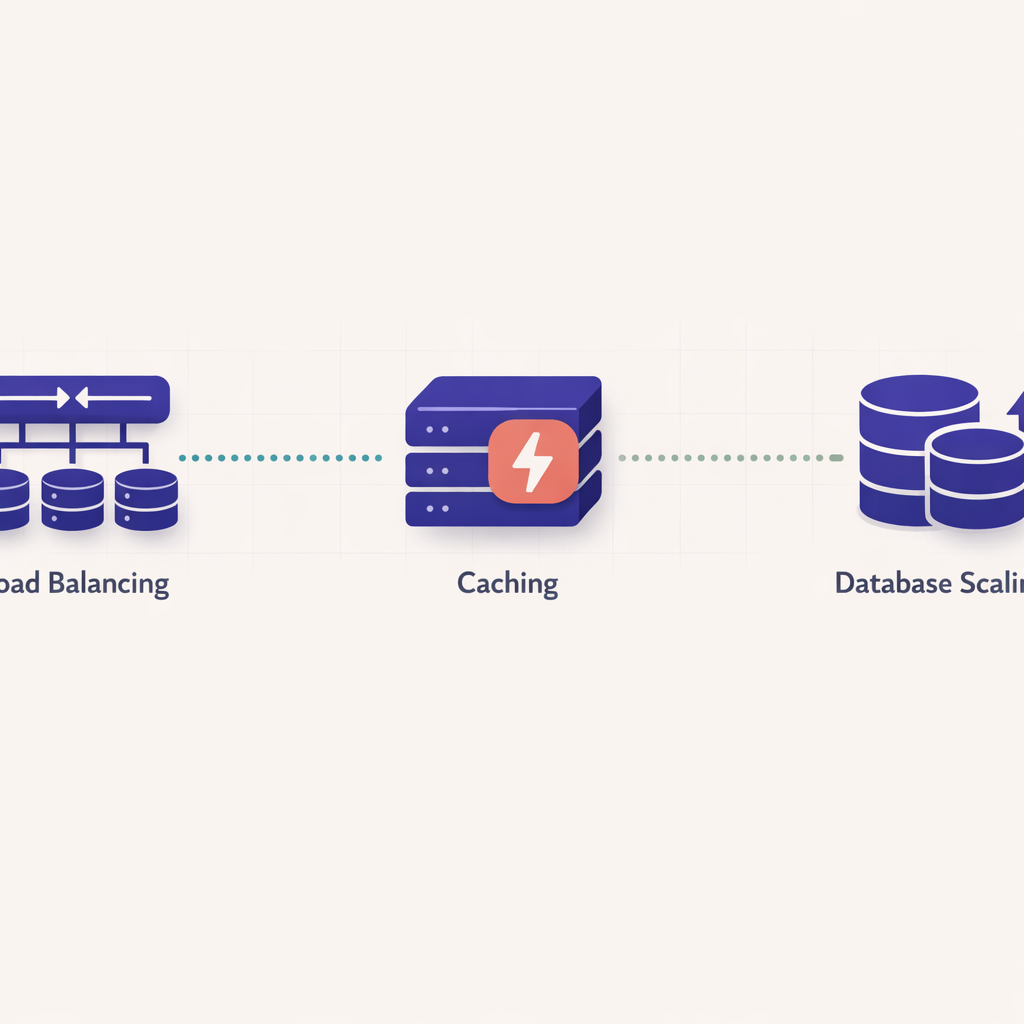
The foundation of scalability consists of several key structural elements, including:
| Structural Elements | Description |
|---|---|
| Load Balancing | Load balancing plays a crucial role in managing high-traffic web applications. It ensures the equitable distribution of incoming web traffic across multiple servers, optimizing resource utilization and maximizing throughput. A well-implemented load balancing strategy prevents server overload, maintaining high performance levels for your application even under significant strain. |
| Caching | Caching works in tandem with load balancing by temporarily storing frequently accessed data, which significantly reduces resource consumption and enhances overall application performance. |
| Database Scaling | As user traffic increases, the load on your database correspondingly rises. Database scaling—whether vertical (adding capacity to a single server) or horizontal (adding more servers)—can enhance efficiency, ensuring smooth operation as user numbers expand. |
| Architectural Style | The scalability of a web application is significantly influenced by its architectural style. The choice between a monolithic and microservices architecture is a strategic decision that directly impacts both scalability and maintainability. |
Important Tip: Scalable web application architecture is not merely about managing high traffic; it encompasses growth, sustainability, and long-term success.
In the following sections, we will explore each of these elements in greater detail, examine cloud infrastructure options, discuss monitoring and failure handling techniques, provide practical examples, and address frequently asked questions. Our aim is to equip you with the knowledge and tools necessary to design scalable web applications, ensuring that your application maintains peak performance regardless of the demands placed upon it.
Understanding Scalability in Web Apps
When building a scalable web application, the design must prioritize efficient handling of increasing workloads as the application expands. Understanding the concept of scalability within web applications is crucial. Web application scalability refers to an application's capacity to adapt and manage rising volumes of work while maintaining optimal performance.
Today, creating a scalable web app is not just an option; it is essential. Effective scalability ensures that an application maintains its performance and speed as it grows, enhances resilience against potential service failures, and optimizes adaptability to changing environments.
System Design
A well-structured and scalable architectural design enables applications to handle an increasing number of requests per minute (RPM) as traffic scales. Various factors contribute to designing a scalable system, with significant ones including:
| Factor | Description |
|---|---|
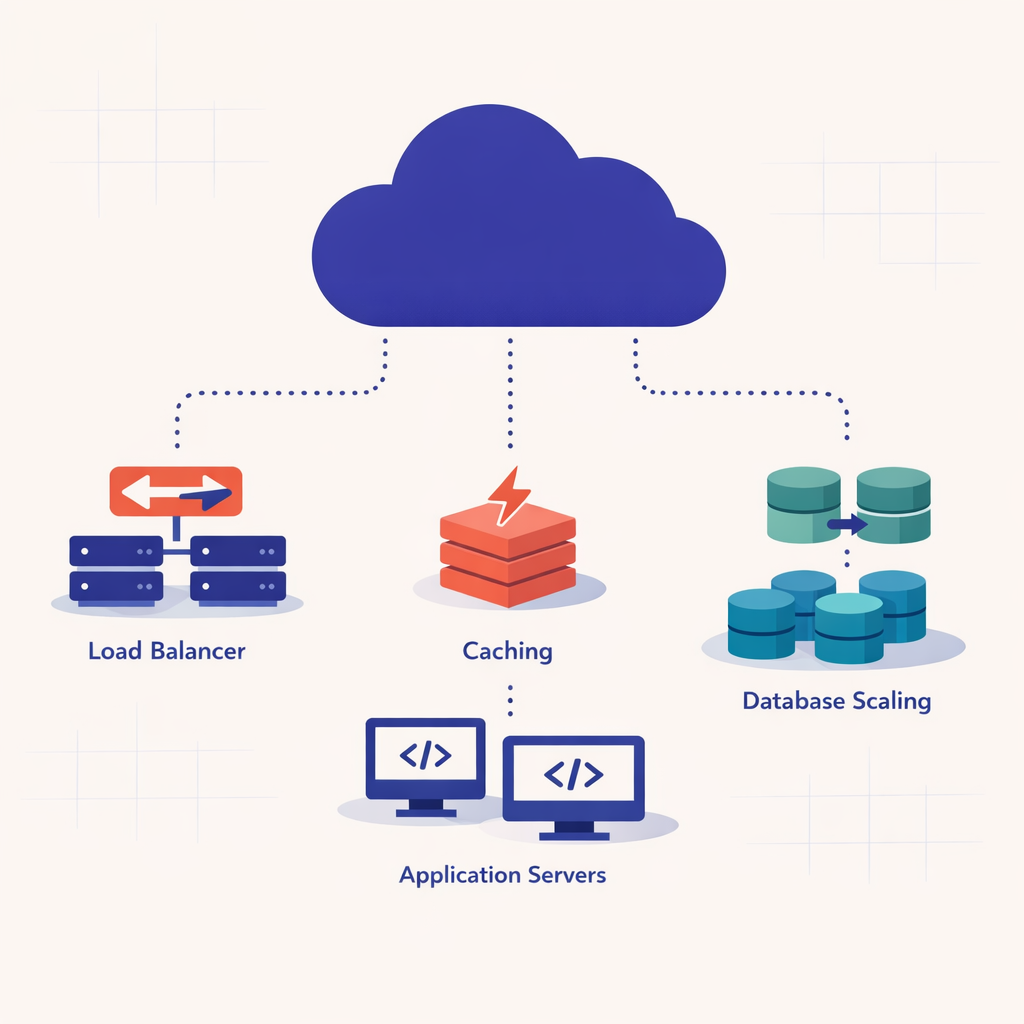
| Load Balancing | A critical component of high-traffic web applications, load balancing efficiently distributes network traffic across multiple servers. This ensures optimal resource utilization, maximizes throughput, and prevents server overload. |
| Caching | Caching enhances overall application performance by temporarily storing frequently accessed data. This approach conserves computational resources and effectively manages heavy traffic. |
| Database Scaling | As user traffic increases, the load on your database also rises. Database scaling—whether vertical (adding capacity to a single server) or horizontal (adding more servers)—improves your web app's efficiency, allowing it to operate smoothly during user surges. |
Microservices vs Monolith
The discussion of Microservices versus Monolith architectures is common when contemplating scalable design. Both approaches have distinct advantages and are suited for different scenarios.
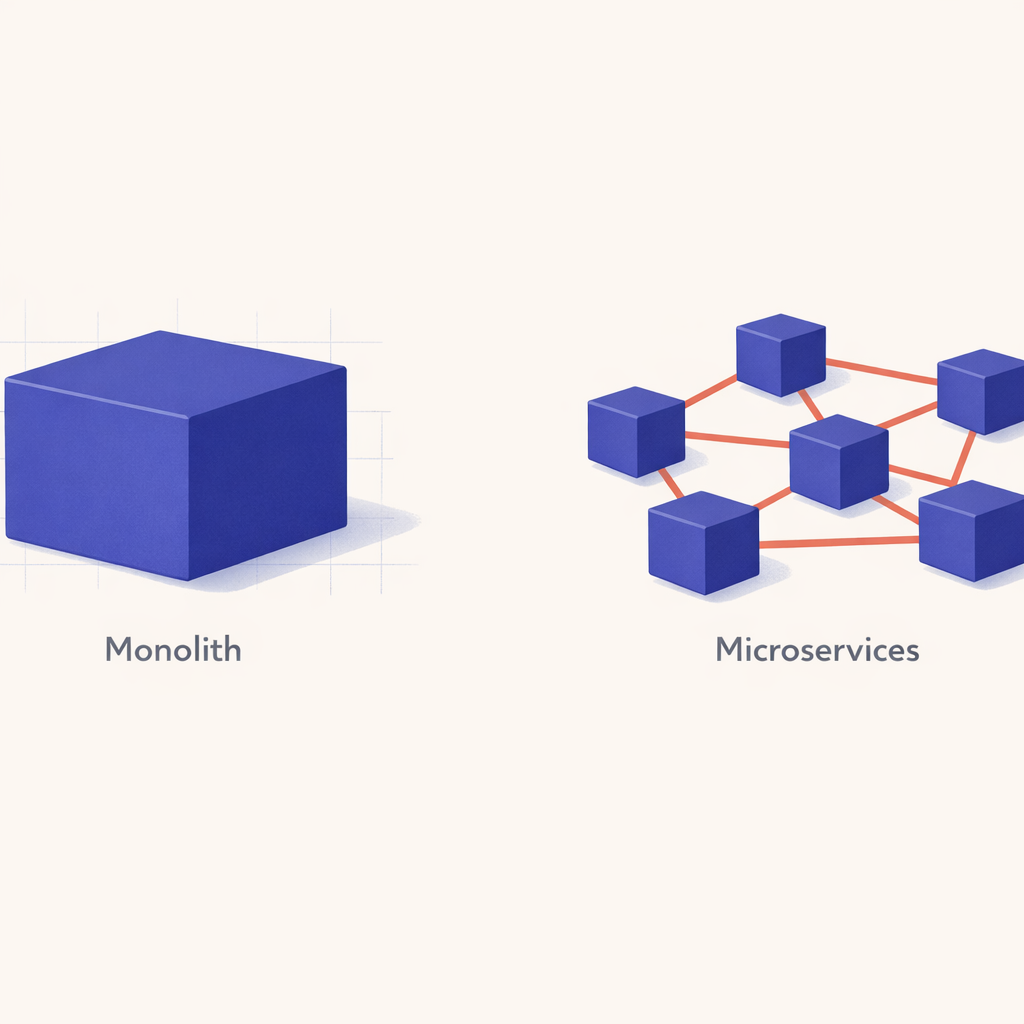
Microservices architecture involves designing an application as independent services, with each service performing a specific function. This design allows the application to scale in a targeted manner by focusing on the services that require attention. In contrast, monolithic architecture is more appropriate for less complex applications where all modules operate within the same process. The choice between the two ultimately depends on your project's unique requirements.
Conclusion
In conclusion, developing a scalable web app is essential to accommodate the rapidly evolving complexity of applications and increasing traffic. Prioritizing scalability in your web application’s design from the outset helps create a future-proof solution that can grow alongside your business.
Tip: Although scalability may appear technically challenging, integrating it effectively into your system design not only enhances your application's ability to manage growing user traffic but also bolsters its resilience, ensuring a seamless user experience under all circumstances.
The key is to select the appropriate strategies, from load balancing and caching to choosing between microservices and monolith, based on your web application's specific needs and challenges. Regardless of your decision, always remain mindful of future expansion and operational considerations.
: The Comprehensive Guide to Building Scalable Web Applications
Designing Scalable Architecture for High Traffic Web Apps
Designing a scalable architecture for high-traffic web applications requires thoughtful consideration of several key elements. A well-planned architecture ensures your application remains robust, secure, and efficient in response to evolving trends and increasing traffic. Here are the main aspects to focus on:
Load Balancing
Load balancing is a critical component of scalable architecture design. Load balancers distribute incoming internet traffic efficiently across multiple servers, preventing any single server from becoming a bottleneck. This minimizes the risk of outages while maximizing throughput.
Caching
Caching is a technique employed to accelerate data retrieval, a necessity for any high-traffic web application. By temporarily storing frequently accessed data closer to its point of use, caching reduces the demand for computational resources and enhances overall system performance. Data may be stored in memory (RAM), on disk, or in a separate caching system such as Memcached or Redis.
Database Scaling
As your application's user base expands, the load on your database increases. Therefore, your scalable architecture should incorporate database scaling strategies. There are two primary methods to achieve this:
| Method | Description |
|---|---|
| Vertical Scaling | Enhancing the capacity of an existing server by upgrading CPU, memory, or storage space. |
| Horizontal Scaling | Adding more servers to accommodate increased requests. |
Each method has its advantages and disadvantages, and the appropriate choice depends on your application's nature, requirements, and budget. Consider database partitioning or sharding (dividing a database into smaller, more manageable parts) to further enhance performance.
Microservices vs. Monolith
Selecting the right backend architecture style is crucial when building a scalable web application. Monolithic architecture is generally easier to deploy and test but may lack the flexibility to scale individual components. In contrast, microservices architecture allows for independent scaling and deployment of each service.
The optimal choice hinges on the application's requirements, the expertise of your team, and operational constraints.
Monitoring and Failure Handling
Continuous monitoring is vital for understanding how your application performs under varying loads and for identifying potential issues before they escalate. Implementing effective failure handling strategies, such as redundant systems and rollback processes, ensures your web application remains functional during crises.
Designing an architecture for scalability is not a one-time endeavor; it is an ongoing process. Regular optimization based on insights gathered and changes in user behavior is essential. By incorporating these key elements when developing your high-traffic web application, you lay a solid foundation that can accommodate growth and adapt over time.
"Designing a scalable web application is akin to constructing a building that can seamlessly add more floors as demand increases, without disrupting the life inside."
Ensuring that scalability begins at the design stage and continues throughout the application's lifecycle is crucial for maintaining competitiveness and efficiency in today's digital landscape.
Microservices vs Monolith: Choosing the Right Approach
Building scalable web applications requires careful consideration of architecture design: Microservices or Monolithic. This decision significantly impacts the application’s ability to grow seamlessly and maintain service continuity under varying workloads. Therefore, understanding the characteristics, advantages, and disadvantages of each architecture is essential.
Monolithic Architecture
Monolithic architecture refers to a model where the application's user interface and data access code are integrated into a single program running on a unified platform. This traditional approach features tightly coupled processes that operate as one cohesive unit.
| Pros | Cons |
|---|---|
| Simplified development, testing, and deployment due to the single-tiered structure | Limited agility and scalability; any modification necessitates rebuilding and redeploying the entire application |
| Suitable for small-scale applications with minimal complexity | A failure in any component can lead to a complete system crash |
Microservices Architecture
In contrast, microservices architecture divides an application into numerous smaller, independent services, each executing distinct processes and communicating via APIs. This approach promotes the development of a software system as a collection of loosely coupled services.
| Pros | Cons |
|---|---|
| Enhances scalability by allowing individual services to scale independently as needed | Higher initial setup costs and complexity stemming from the distributed nature of the system |
| The failure of one service does not directly affect the overall application operation | Requires meticulous management of services and databases |
| Facilitates agile and parallel development, enabling different teams to work on separate services simultaneously |
For simplistic applications or projects with smaller teams, a monolithic approach provides a quick, easy, and reliable solution. However, if the goal is to create a scalable web application designed to handle high traffic and ensure seamless service, microservices architecture offers greater flexibility, scalability, and reliability. Regardless of the chosen approach, it is crucial to design a robust architecture that can adapt to evolving market trends and unpredictable spikes in web traffic.
"Choose the right architecture, not the trendy one. The efficiency of a decoupled architecture like microservices may be enticing, but remember, they come with their own set of complexities"
Leveraging Cloud Infrastructure for Scalability
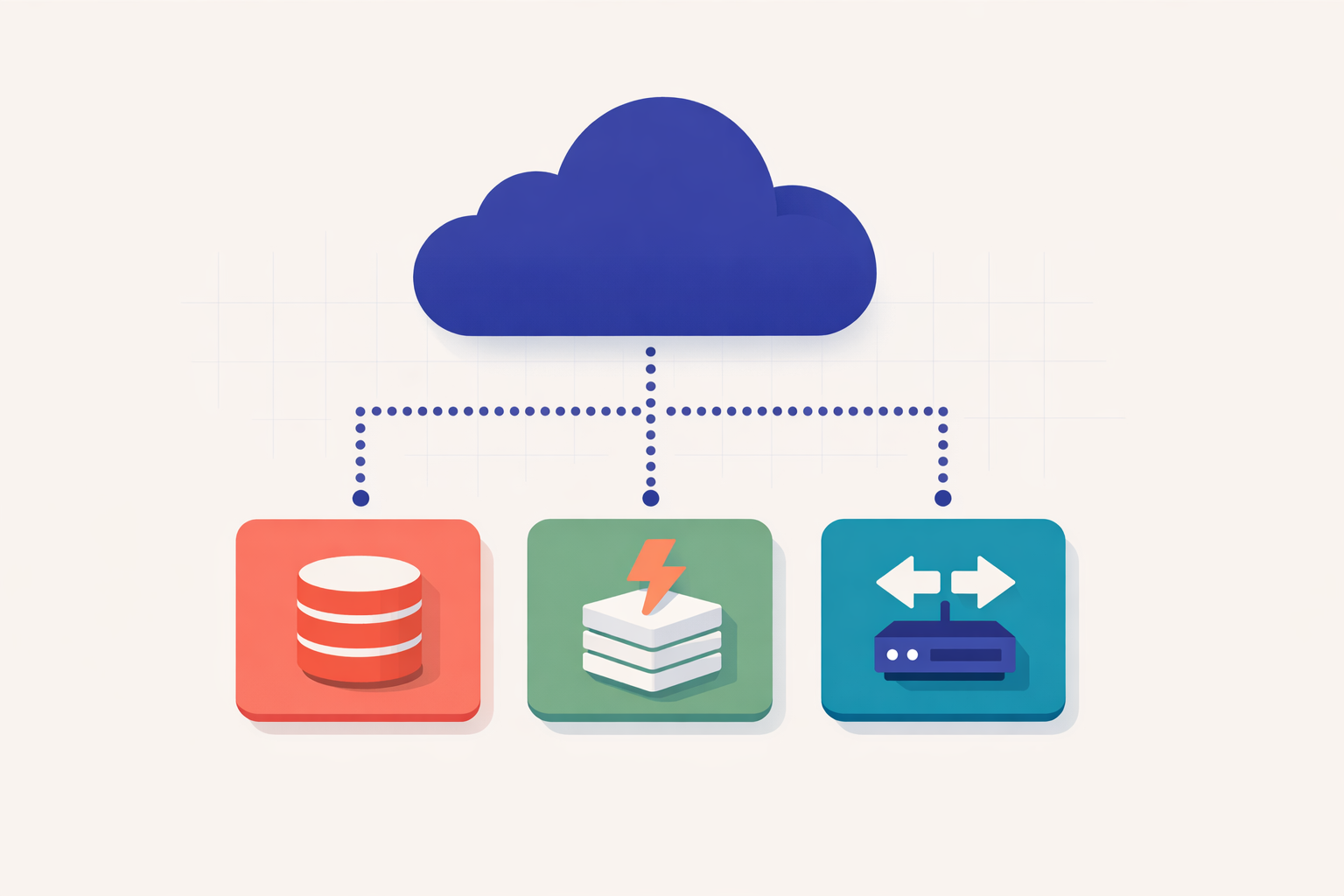
Cloud infrastructure plays a crucial role in the scalability of web applications and in the development of a scalable web app. Its importance is particularly pronounced when an application's architecture is designed for scalability from the outset, creating a seamless synergy that significantly enhances performance and growth potential.
Cloud services provide the capability to scale resources flexibly and grant ready access to a variety of services that can assist in building and optimizing scalable web application architecture. Below are key ways in which cloud services can be instrumental:
| Feature | Benefits |
|---|---|
| Scalability on Demand | Cloud services offer a cost-effective solution for scaling resources up or down according to demand. This allows businesses to pay only for the resources they actually consume, supporting web application scalability even during unexpected traffic surges. |
| Managed Services | Cloud providers offer managed services such as databases, AI, and machine learning that facilitate the development of scalable solutions, while also reducing operational burdens and complexity. |
| Serverless Architecture | Cloud infrastructure enables the implementation of serverless architectures—an essential aspect of scalable application design. With serverless architectures, the cloud provider fully manages the server, allowing developers to concentrate exclusively on application code. |
| Load Balancing and Caching | Cloud services come equipped with built-in load balancing and caching features, both of which are critical components of web application scalability. |
By strategically leveraging cloud services in conjunction with a well-designed scalable web application architecture, businesses can create robust applications that withstand high loads and deliver exceptional performance. This approach also lays a strong foundation for reliable growth and success.
Remember, the effectiveness of utilizing cloud infrastructure hinges on its thoughtful integration with scalable architecture design to construct a truly scalable web app.
Addressing Failure: It's Part of the Process in Scalable Web Application Architecture
In the journey to build a scalable web application, anticipating failure scenarios and preparing for them is just as essential as designing for success. Effective failure handling strategies play a pivotal role in fortifying a scalable web application architecture against potential downtime.
Common Causes of Failure
Failures can arise from various sources, including sudden traffic surges, hardware malfunctions, software misconfigurations, or unanticipated resource exhaustion.
| Cause of Failure | Description |
|---|---|
| Traffic Surges | Scalable web applications often face challenges posed by unexpected traffic spikes. An excessive load can lead to service disruptions, negatively impacting user experience. |
| Misconfigured Software | Common malfunctions can occur due to incorrect settings or software updates. |
| Resource Exhaustion | Effective resource management is crucial for web application scalability. Poorly managed resources can quickly lead to application failures. |
Understanding these potential failure points can guide you toward designing a more resilient and scalable architecture.
Plan Your Remediation Strategy
To build resilience against these challenges, consider the following strategies:
- Handle Failures Gracefully: Design with failure in mind by implementing redundancy and fallback mechanisms. This involves creating backup pathways across different nodes or data centers to reroute traffic in the event of specific node failures.
- Load Testing: Conducting regular load tests allows you to evaluate the limits of your application and predict its ability to handle traffic spikes.
- Monitoring: Utilize robust monitoring tools to identify potential issues well in advance.
- Regularly Update and Fine-Tune Your Application: Stay informed about software updates and consistently refine your application based on insights gained from testing and monitoring.
“Failure is not the opposite of success; it’s part of success” – Anonymous
In this context, planning for failure must go hand in hand with designing for web application scalability. This approach ensures that growth does not compromise stability, and that failure events contribute to the system's evolution rather than destabilization. Remember, resilience is not an afterthought; it is a fundamental component of scalable architecture design.
Addressing failure effectively is a crucial aspect of building scalable web applications. A robust and resilient scalable web application architecture can handle high traffic loads while maintaining efficient functionality, forming an integral part of mastering scalable architecture design and creating high-capacity web applications.
Real-world Examples of Scalable Web Application Architectures
Designing a scalable web application architecture involves both theoretical concepts and practical applications. The true scalability of a platform is rigorously tested when it faces genuine growth under real-world conditions. Below are two prime examples illustrating how effective scalable architecture design has been implemented.
Twitter: Monolith to Microservices
Twitter, initially developed as a monolithic application, faced significant challenges in accommodating its rapid growth. The application often crashed under high user volumes, highlighting its inability to scale effectively. In response, Twitter undertook a comprehensive overhaul of its architecture, transitioning to a more scalable microservices model. This redesign segmented the application into smaller, independent components that could scale autonomously based on demand. As a result, Twitter has been able to manage its high-traffic status with greater ease.
Netflix: Leveraging Cloud Infrastructure
Another exemplary case is Netflix's shift to a cloud-based scalable web application architecture. Initially, Netflix relied on traditional data centers. However, as its user base expanded rapidly, the company decided to develop a scalable web application on the cloud. By utilizing Amazon Web Services (AWS) cloud infrastructure, Netflix significantly enhanced its web application scalability and now manages over a billion viewing hours per week.
Key Insight: Understanding how to construct scalable web applications is essential for managing growth and sustaining high user traffic. The efficiency of your load balancing, caching, and database scaling strategies, combined with your architectural design (whether monolithic or microservices), can greatly influence your application's scalability. These critical decisions ultimately affect your ability to deliver a consistent, high-performing user experience, regardless of user growth.
Frequently Asked Questions About Scalable Web Application Architecture
Scalable web application architecture is a critical component of modern web development. Below are some common questions along with actionable insights for designing a scalable architecture:
1. How do I get started with building a scalable web app?
Begin with a scalable architecture design by focusing on key system design elements such as horizontal and vertical scaling, load balancing, and caching to optimize the application's performance during high traffic periods.
2. What’s the most important factor to consider when designing for web application scalability?
While all elements hold importance, load balancing is particularly crucial. It prevents server overload by evenly distributing traffic, thereby maintaining high performance during peak usage.
3. Monolith or microservices - which is better?
There is no definitive answer. Although a monolith can be simpler and faster to deploy, microservices provide improved scalability and better failure isolation. The best option depends on your specific requirements and available resources.
4. How does cloud infrastructure support scalability?
Cloud infrastructure facilitates rapid resource allocation, allowing adjustments based on demand. This results in effective cost management and optimal performance under varying loads.
5. What avenues should I explore for further learning?
Consider exploring online courses, blogs, and technical literature that offer valuable insights. Enrolling in a course specifically focused on building scalable web applications or undertaking an in-depth study of the subject can significantly enhance your understanding.
Tip: Remember that building a scalable web application involves more than simply accommodating increased traffic; it also requires efficient failure management to ensure continuous performance under all circumstances.
Wrapping Up: The Road to a Scalable Web Application
Building a scalable web application may appear complex initially, but as you explore scalable architecture design in greater depth, you begin to appreciate its true potential and the value it delivers.
The cornerstone of a scalable web application is its architecture. A well-structured architecture enables effective management of increased traffic. Designing this resilient and scalable web application architecture is a multifaceted endeavor that includes:
- Load balancing
- Caching
- Database scaling
- Other critical components
Cultivating a scalable architecture equips your application to grow alongside user demands while maintaining optimal performance.
Scalability transcends mere technical requirements; in today's digital landscape, it has evolved into a fundamental business necessity. A scalable architecture facilitates expansion to accommodate growing workloads, transforming scalability into a significant competitive advantage.
The future, without a doubt, lies in scalable web applications. Let us collectively aim to understand, implement, and leverage scalable architecture for a prosperous future in application development.
Remember: Refining your scalable architecture design is an ongoing journey, one that will enhance both the longevity and performance of your application. Begin your journey today!
What's Next?
Are you ready to transform your web applications with scalable architecture design? Utilize the guide provided, conduct further research, and begin planning your next steps. You have the capability to succeed! Embrace the challenge, and let’s collaboratively build scalable web applications!
Tip: Integrating scalability into the design process from the outset will yield significant benefits over time.
Make Imversion a preferred source on Google
Like this kind of AI and software analysis? Add Imversion as a preferred source so Google can highlight our articles for you in Search, AI Overviews, and AI Mode.