Serverless vs Containers: Choosing the Right Architecture for Your App
Dive into the serverless vs containers debate! Uncover insights on architecture, scalability, cost, and when to use each approach. Let's choose the right path together!


Introduction to Serverless vs Containers
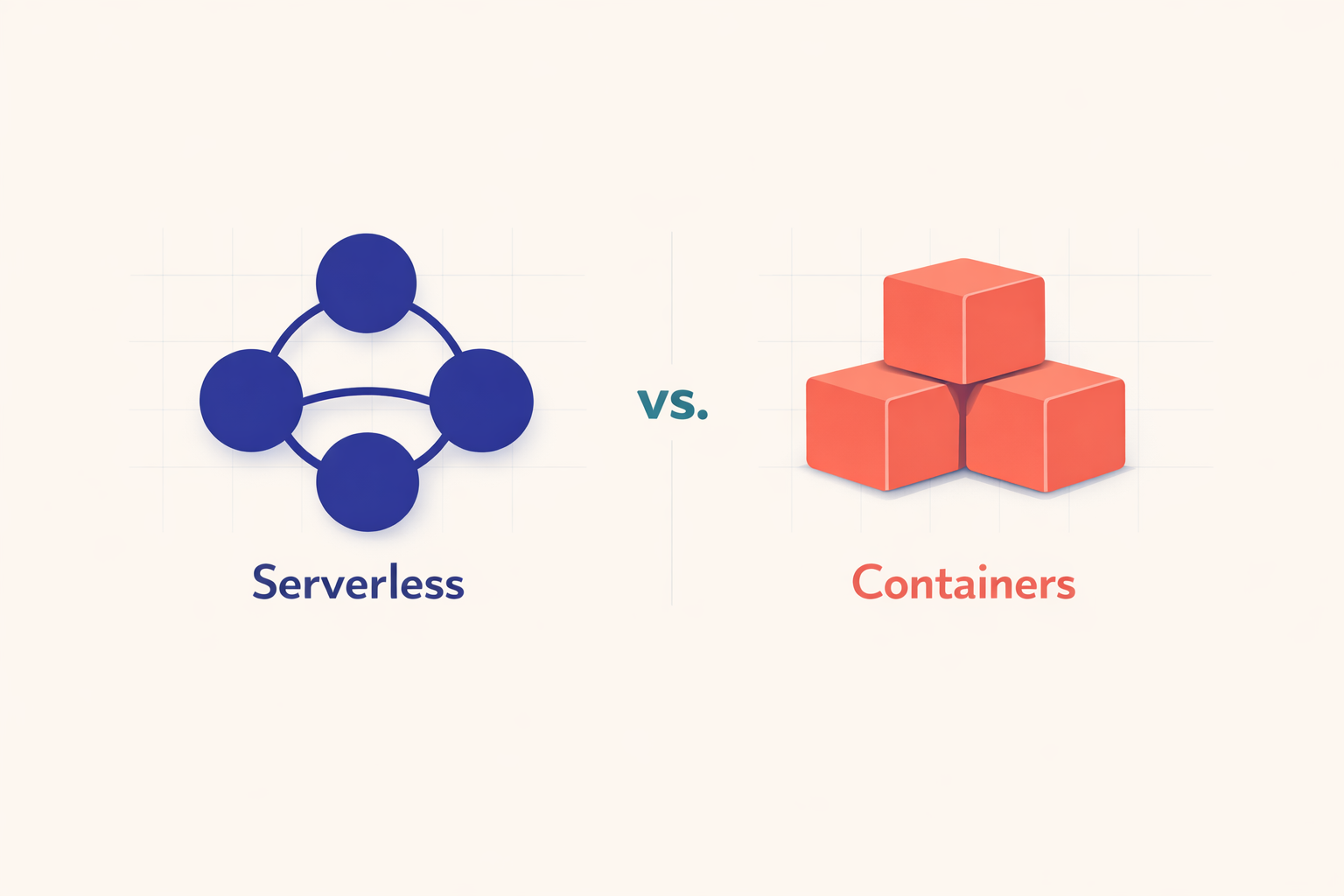
As the tech industry rapidly evolves, selecting the appropriate framework for your application can be a challenging endeavor. This challenge is particularly pronounced when navigating the landscape of serverless and container technologies. Both compete fiercely as scalable solutions, offering transformative features while necessitating a thorough understanding of their respective strengths and weaknesses1.
At the center of the serverless versus container discourse lies the fundamental difference in their application deployment approaches. Serverless architectures provide developers with an environment where server management complexities are entrusted to the cloud provider, as seen in services like AWS Lambda2. This model emphasizes writing and deploying code while abstracting the intricacies of the underlying infrastructure and dynamically managing computing resource allocation based on real-time demand.
In contrast, container architectures, such as those built on Docker and Amazon ECS, adopt a different methodology. They encapsulate applications and their dependencies into standalone, executable units called containers2. This encapsulation guarantees consistent software performance across various computing environments.
A crucial aspect of the "Serverless vs Containers" conversation is understanding the cost model inherent to each technology. Serverless architectures operate on a pay-per-use model, alleviating the burdens of server management and scaling concerns3. Conversely, container technology requires management resources but affords greater control over resource utilization.
Recognizing these distinct operational features is vital for understanding the trade-offs involved in choosing between serverless and container architectures. From a performance perspective, containers generally benefit from faster cold-start times, whereas serverless platforms may introduce delays during function initialization4.
In the subsequent sections, we will explore key considerations such as scalability, operational complexity, security, vendor lock-in, use cases, and provide a decision framework to aid you in "Choosing the Right Architecture" for your application.
Important Tip: This discussion on "Serverless vs Docker," "Lambda vs ECS," and "Containers vs Functions" is not intended to declare one approach superior to the other; rather, it aims to illuminate their unique strengths and trade-offs to help you select the best fit for your specific use case.
Ultimately, our goal is to empower you to make informed decisions that cater to your application's needs5. Should you ever feel overwhelmed or require expert assistance, please do not hesitate to reach out through our contact page.
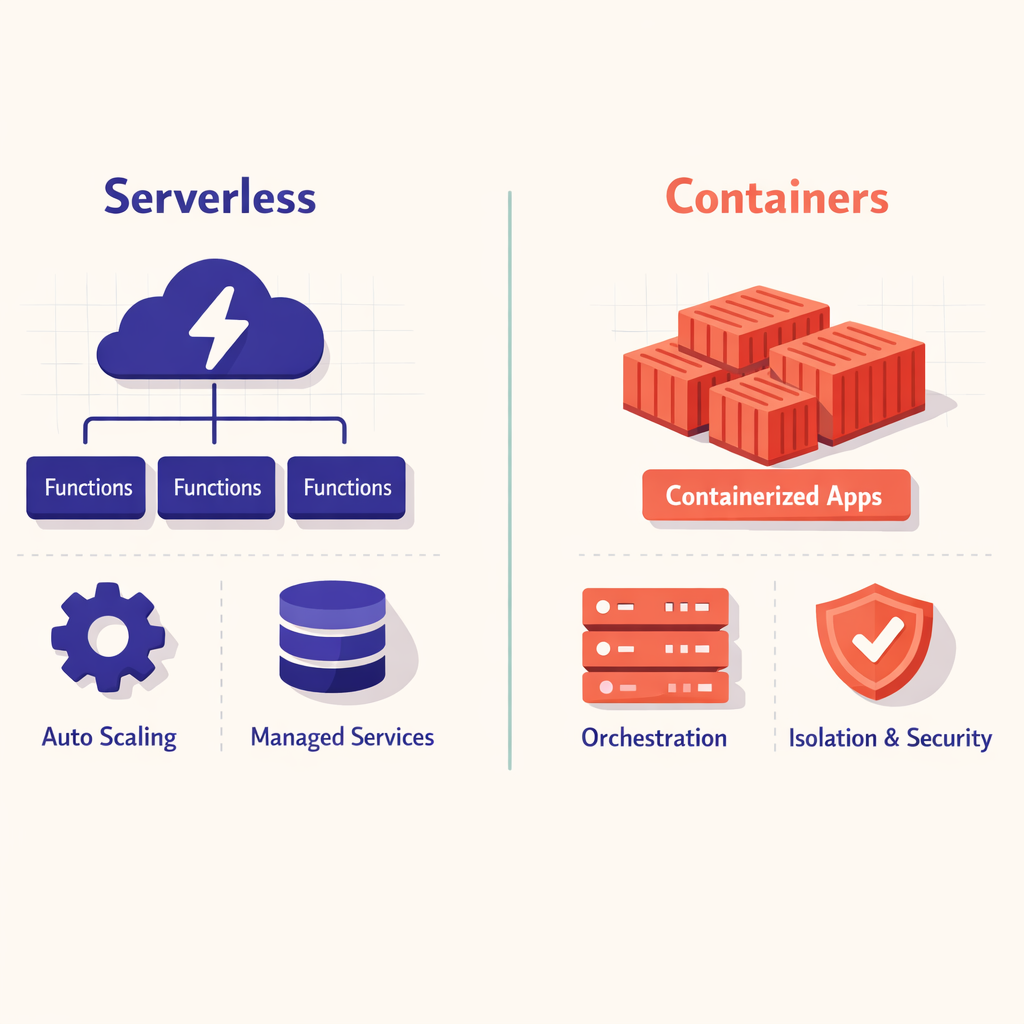
Core Concepts of Serverless and Containers
The comparison between serverless and container technologies continues to be a significant topic as both have become foundational in application deployment methods. A thorough exploration of their core concepts is essential for making informed decisions regarding their implementation.
Serverless Architecture
Serverless architecture, exemplified by AWS Lambda1, eliminates the necessity for server management. This allows developers to concentrate exclusively on writing and deploying code without the burden of infrastructure concerns. A key feature of serverless technology is its dynamic management and allocation of computing resources based on real-time usage, enabling automatic scaling. In contrast to container solutions like Docker, serverless stands out for its streamlined environment and cost-effectiveness. However, one notable trade-off is performance, particularly concerning cold start times.
Note: A "cold start" in serverless functions occurs when a function is invoked after being idle, resulting in an initial delay in function execution2.
Container Architecture
Conversely, containerization, commonly represented by Docker and Amazon ECS3, encapsulates an application and its dependencies into a standalone, executable unit known as a container. This encapsulation ensures consistent application behavior across diverse environments, providing enhanced control over resource allocation. When comparing Lambda and ECS, it is important to note that while the latter requires resource management, it offers superior performance with reduced cold start times due to the readily available, reusable environment.
Note: Containers can operate across various settings, including on-premises, in public clouds, or within hybrid cloud environments, thereby delivering portability and consistency throughout the application lifecycle4.
Containers vs Functions
When evaluating containers against functions, it is crucial to recognize how their fundamental structures influence their use:
- Function (Serverless): Is designed for executing specific, discrete tasks.
- Container: Encompasses a complete application, providing a versatile computing environment for a range of services.
In summary, serverless and container architectures each present distinct methodologies with unique advantages and complexities. While serverless prioritizes simplicity and cost efficiency, containers deliver performance benefits and finer control. Gaining a comprehensive understanding of these core concepts is instrumental in guiding decision-making and application design strategies.
Cost and Scalability: Serverless vs Containers
When selecting the appropriate architecture, it is crucial to evaluate cost models and assess scalability under varying workloads. This comparison is particularly important when considering Serverless versus Docker or Lambda versus ECS. The cost and scaling capabilities can differ significantly between these approaches, depending on the specific requirements of your project.
Cost Model Comparison
In the comparison of serverless and containerized solutions, the cost models diverge.
Serverless
With a serverless architecture, you adopt a pay-per-use model, meaning you only pay for the actual compute time your application consumes1. For example, AWS Lambda charges based on function execution duration, rounding up to the nearest 100 milliseconds2. This granular pricing structure makes serverless a cost-effective solution for sporadic, event-driven workloads3.
Containers
In contrast, a container-based approach, such as Docker or Amazon ECS, necessitates payment for the underlying server resources, irrespective of actual application usage4. Generally, for long-running, steady-state applications, utilizing containers may prove to be more cost-effective than serverless platforms5.
Scalability: Containers vs Functions
The potential for scalability is a critical factor when comparing serverless and containerized applications.
Serverless
In a serverless architecture, the cloud provider is responsible for managing scaling, dynamically allocating computing resources in response to demand6. This feature can be a significant advantage for high-traffic applications or during sudden demand spikes, ensuring seamless application performance with minimal developer intervention7.
Containers
Although containers may not scale as automatically as serverless solutions, they can still achieve efficient scaling with the appropriate orchestration platform, such as Kubernetes or Amazon ECS8. However, this approach often requires more hands-on management and fine-tuning of scaling logic9.
Tip: The decision between serverless and containers largely depends on the nature of your workload and specific project requirements. It is essential to carefully consider both cost models and scalability when architecting your next application.
Choosing the right architecture—whether it be serverless solutions like Lambda or container technologies such as Docker or ECS—requires a thorough understanding of your application needs and anticipated workloads. This decision can significantly impact not only costs but also the performance and scalability of your application.
If you're interested in further exploring this topic or are ready to start your new project, consider visiting our Custom Software Development page. For additional insights, check out Post 33 and Post 24, which delve deeper into this subject matter.
Have further questions? Connect with us on our contact page.
Performance of Serverless and Containers
Understanding the performance differences between Serverless and Containers is essential in the decision-making process for selecting the appropriate architecture. This consideration is crucial, as performance can directly influence user experience, delivery times, and operational costs10.
Speed and Efficiency
In terms of deployment speed for application code, Containers generally outperform Serverless in initialization speed and cold-start times, particularly when comparing Serverless solutions with Docker11. Serverless platforms, such as AWS Lambda, often introduce delays during function initiation11. This delay occurs because functions in a Serverless environment typically require bootstrapping before they can execute, leading to potential latency issues10.
Conversely, containers—especially those managed by Docker and Amazon ECS—exhibit faster cold-start times and are frequently recognized for their quick initialization speed11. In a direct comparison of Lambda vs ECS, ECS containers typically initiate much more rapidly.
Important Note: While containers indeed have an advantage in initialization speed, the difference may not be significant for numerous applications. The rapid growth and widespread adoption of Serverless architecture demonstrate that latency is not a critical concern for many use cases10.
However, this factor could be essential for applications with stringent performance requirements, making it a trade-off that should not be taken lightly.
Ongoing Performance
The ongoing performance of Containers vs Functions becomes a vital factor when evaluating longer-running operations. Serverless architecture is largely optimized for short, stateless functions10, which can render it less suitable for long-running processes or applications that depend heavily on state management.
In contrast, Containers provide enhanced flexibility for managing long-running and stateful applications, which can be critical when selecting the right technology for your needs.
For Serverless applications, ongoing performance is often dictated by configuration parameters, such as memory allocation in AWS Lambda11. Adhering to precise guidelines is essential for maintaining a balance between performance and cost.
In conclusion, while containers present performance advantages in boot-up time and support for long-running operations, Serverless computing adds value by simplifying infrastructure management for developers, thereby speeding up application deployment. The nature of the application, its specific requirements, and use cases are key determinants in the choice between Serverless and Containers.
Choose the right architecture that aligns with your business needs [ /services/custom-software-development]. We are always available to assist you with your questions. Feel free to reach out to us at any time [ /contact].
Operational Complexity and Security: A Comparison
When discussing Serverless vs Docker or Lambda vs ECS, operational complexity and security are crucial considerations in the decision-making process. Let's explore these aspects and clarify how serverless and container solutions compare.
Operational Complexity
In the context of operational complexity, the Serverless vs Docker debate highlights critical factors in selecting the appropriate architecture.
With serverless architectures such as AWS Lambda, the burden of server management is largely handled by your cloud provider11. This arrangement allows developers to concentrate on coding and deploying applications without worrying about the intricate details of the underlying infrastructure, thus simplifying operational complexity. Additionally, scaling is automated based on usage, freeing you from the need for manual capacity management.
Conversely, containerization with Docker or Amazon ECS requires more active management of resources, but it offers greater control over resource allocation and usage10. The operational complexity of managing containers can be alleviated by using orchestration platforms like Kubernetes or Amazon ECS. However, this approach necessitates a significant level of proficiency with the orchestration system.
Security Considerations
The security posture in this technological comparison significantly influences the decision between Serverless and Docker.
Serverless architectures provide robust security, as infrastructure security is predominantly managed by the service provider. Nonetheless, this does not relieve you of the responsibility for your code and application logic10. Potential vulnerabilities can arise at the function level, making it crucial to prioritize their protection.
Important Tip: Regardless of the architecture you select, it is essential to conduct regular security audits and implement best security practices, such as adhering to least-privilege principles and employing effective secret management strategies.
When comparing Containers vs Functions, containers create isolated environments that mitigate the risk of external interference. However, the increased control afforded by containerization also places the onus of security on you10. Misconfigurations or outdated dependencies could expose your applications to security breaches.
In summary, while serverless architectures relieve developers of infrastructure management and provide simplicity, containers give granular control over resources, albeit with increased complexity. Each option carries distinct security implications that require careful attention.
Before making your decision, consider these factors in relation to your team's capabilities and the specific requirements of your project. If you seek guidance on evaluating these trade-offs and selecting an appropriate architecture, feel free to contact our team /contact, who are experienced in custom software development.
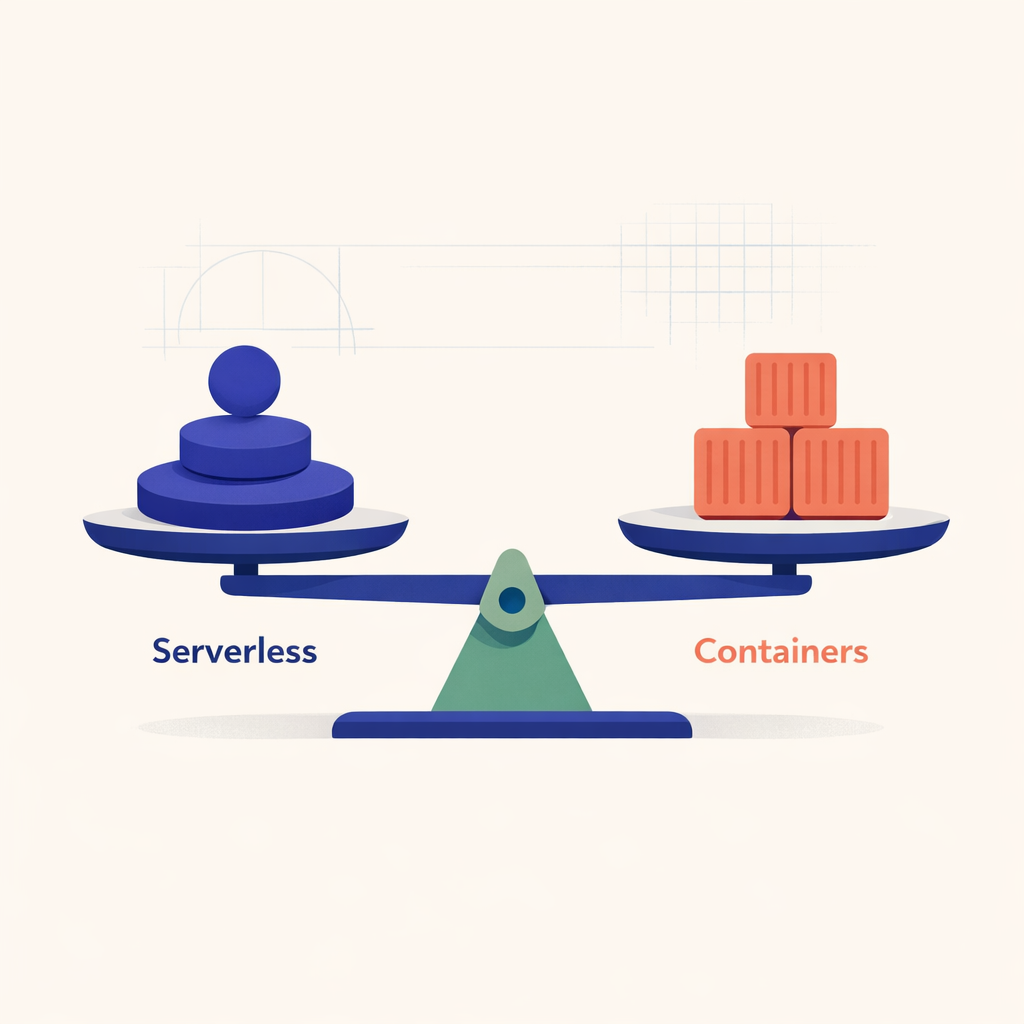
Avoiding Vendor Lock-In: Serverless vs. Containers
Avoiding vendor lock-in is a critical consideration when selecting an application deployment framework. This strategy is essential for ensuring long-term flexibility, adaptability, and cost-effectiveness. However, achieving this balance can be challenging, particularly when evaluating serverless architectures versus containerization.
Vendor Lock-In in Serverless and Containers
Vendor lock-in refers to a scenario in which a customer becomes reliant on a specific vendor for products and services, making it difficult to transition to another vendor without incurring significant costs or facing considerable inconvenience11. When comparing serverless solutions with Docker (a widely used containerization platform) or AWS Lambda versus AWS ECS (Elastic Container Service), the concept of vendor lock-in remains relevant.
The degree of vendor lock-in associated with serverless versus containerization depends on the specific offerings provided by cloud vendors and the extent to which your application is integrated with these services.
For example, AWS Lambda allows developers to deploy functions in various programming languages, including Node.js, Python, Go, and Java. However, this reliance ties the deployment and operation of these functions closely to the AWS ecosystem. Transitioning these functions to a different serverless provider necessitates significant adaptation to the new provider's interfaces and tools10.
In contrast, containers encapsulate an application along with its dependencies, offering a greater level of portability across different cloud vendors.
Strategies to Avoid Vendor Lock-In
To mitigate or reduce vendor lock-in when deciding between serverless and containers, consider the following key strategies:
-
Utilize abstraction layers: Designing applications with abstraction layers promotes platform agnosticism, facilitating easier migration between different platforms11. This is particularly pertinent when evaluating serverless or containerization deployments.
-
Adopt multi-cloud strategies: By deploying applications across multiple cloud service providers, you can enhance flexibility and diminish dependency on any single vendor. While this approach may introduce additional complexity, it offers greater resilience and protection against vendor lock-in11.
-
Explore open-source options: Leveraging open-source technologies can foster flexibility and control, thereby reducing reliance on specific vendor solutions.
Tip: Evaluating these strategies alongside the unique trade-offs associated with serverless and container architectures will help you make an informed decision tailored to your specific use case.
To discuss the specifics of your project, contact us here.
References:
Use Cases and Trade-Offs: A Detailed Analysis
As we navigate the complexities of the Serverless versus Docker debate, understanding the use cases of each and analyzing their trade-offs is crucial in selecting the architecture that best aligns with your specific project requirements.
Serverless Use Cases
The flexibility of serverless architecture, particularly AWS Lambda, excels in the following scenarios:
- Real-Time File Processing: Tasks like file uploads, image processing, and video encoding greatly benefit from a serverless approach. Automated responses to file uploads and immediate processing enhance operational efficiency and speed10.
- Real-Time Stream Processing: The capability to manage large volumes of data in real time makes serverless ideal for services such as data cleansing, log filtering, and indexing11.
Important Tip: It's important to note that highly resource-intensive tasks that require extensive initialization or prolonged execution times may not perform optimally in a serverless environment, potentially resulting in increased costs or delays.
Docker and ECS Use Cases
While Docker and ECS require more resource management, the granular control they provide offers significant advantages in:
- Microservices Architecture: Containers create an optimal environment for deploying and managing microservices, ensuring independent scalability and flexibility for each service10.
- CI/CD Systems: Docker promotes consistent and repeatable environments, making it an excellent choice for Continuous Integration and Continuous Deployment pipelines11.
Important Tip: Containers typically demonstrate superior performance with faster cold-start times, which is beneficial in use cases where high responsiveness and minimal delays are essential.
Trade-Offs: Containers vs Functions
When exploring the Containers versus Functions debate, consider the following key trade-offs:
| Aspect | Serverless | Containers |
|---|---|---|
| Management Responsibility | Alleviates the need for server management, but at the cost of precise control over resources. | Requires more oversight but provides detailed control. |
| Scalability vs Control | Automatically scales with demand, optimizing costs, though unpredictable scale-outs may incur unexpected expenses. | Delivers control over scaling, but may introduce additional overhead. |
| Performance | May encounter challenges with cold-start times. | Generally has an advantage for applications sensitive to cold-start issues10. |
| Vendor Lock-In | Higher risk of vendor lock-in due to reliance on specific cloud services. | Typically less susceptible to vendor lock-in, depending on the architecture. |
Ultimately, the decision between Serverless and Docker (or, more broadly, serverless and containers) hinges on your project's specific needs, scope, and available resources. Are performance and control your top priorities? Or is your focus on ease of management and cost efficiency? Clarifying these factors will help in selecting the right architecture.
Connect with our dedicated team today for a personalized consultation regarding your project's requirements[^contact]. For further information, please refer to our frequently asked questions.
Framework for Deciding between Serverless and Containers
Choosing the appropriate architecture—Serverless vs Docker, Lambda vs ECS, or Containers vs Functions—requires a thorough understanding of your project's specific needs and constraints. The following framework serves as a guide to help you determine the best option for your tech stack:
Analyze Your Project Requirements
Begin by identifying and documenting your project requirements. Key factors to consider1 include:
| Factor | Serverless | Containers |
|---|---|---|
| Compute Needs | Cost-effective for lightweight applications and simpler data processing tasks. | Provides granular control for more complex, resource-intensive applications. |
| Scaling Needs | Dynamic scalability is ideal for applications with unpredictable traffic. | Offers controlled scaling, but requires manual resource management. |
| Operational Complexity | Simplifies operations through managed server provisioning, maintenance, and scaling. | Grants deep control, though it increases operational complexity. |
Determine Your Cost Model
Serverless architecture thrives on a pay-per-use model, enabling flexible spending aligned with application usage. Conversely, containers typically necessitate an upfront investment in resources, coupled with ongoing operational and management costs2.
Assess Security Needs
Both serverless and containerized architectures come with their respective security strengths and vulnerabilities. It is essential to align your choice with your application's specific security requirements. As with all dimensions of this decision, there is no one-size-fits-all answer here3.
Consider the Learning Curve
Before committing to any new technology or architecture, consider the associated learning curve and your team's familiarity with it. Implementing a container strategy may require a deeper understanding of infrastructure, while serverless solutions may demand a novel approach to coding and application design4.
Important Tip: Remember, selecting the right architecture is not about declaring a winner in the Serverless vs Docker or Lambda vs ECS debate. It involves understanding the strengths, weaknesses, and suitability of each option in relation to your project's needs.
Explore our custom software development services for expert advice and tailored solutions. Want to discuss your project's specifics? Contact us now!
Frequently Asked Questions on Serverless and Containers
In our exploration of the architectures—Serverless versus Containers—we frequently encounter several relevant questions. Below are the answers to some of the most commonly asked queries.
1. What are the notable differences between Serverless and Docker?
| Feature | Serverless (e.g., AWS Lambda) | Docker |
|---|---|---|
| Management | Offloads server infrastructure management to the cloud provider | Packages the application with its dependencies into a self-contained unit |
| Focus | Developers focus on writing code | Ensures consistency across environments |
2. How does AWS Lambda compare to Amazon ECS in terms of cost-effectiveness?
While AWS Lambda and Amazon ECS both provide robust solutions, their cost models differ significantly. AWS Lambda, as a serverless option, operates on a pay-per-use model, charging only for the exact computation time utilized10. In contrast, Amazon ECS, a container orchestration service, mandates the allocation of resources for managing containers, resulting in a distinct cost structure.
3. How does security compare between serverless functions and containers?
Security is a critical consideration in both serverless and container environments. In the serverless framework, the cloud provider manages much of the security at the infrastructure level; however, developers retain responsibility for application-level security11. Containers, on the other hand, offer more granular control over security configurations but require a greater commitment to maintaining and updating security protocols11.
Tip: The decision between Serverless and Containers largely depends on factors such as cost efficiency, security requirements, level of control needed, and the specific use case.
Ultimately, regardless of the chosen architecture, a thorough understanding of its operational, scalability, and performance intricacies can lead to successful implementation. For detailed guidance on selecting the most suitable architecture for your unique needs, please feel free to reach out to us through our contact page.
Conclusion: Choosing the Right Architecture - Serverless or Containers
The decision between Serverless and Containers largely depends on a comprehensive understanding of your application's specific requirements and the trade-offs you are willing to accept.
- Serverless, exemplified by AWS Lambda, eliminates the need for server management and features a usage-based cost model10.
- Containers, represented by Docker and Amazon ECS, require resource management but provide greater control over resource allocation11.
A thorough comparison of Lambda vs ECS shows that while containers may have an advantage in performance due to quicker cold-start times, serverless platforms excel in dynamic resource allocation, ensuring efficient utilization. Consequently, the choice between Containers vs Functions cannot be categorized as a one-size-fits-all solution.
In summary, finding the right balance between your team's operational capabilities and your application's technical requirements is essential. Regardless of your choice, both serverless and containerized solutions are invaluable tools in the realm of modern application development.
Next Steps
Identifying the optimal architecture for your project begins with a clear understanding of your requirements and culminates in an informed decision. If you seek further insights or tailored advice for your specific context, please feel free to contact us.
Tip: Carefully evaluate your application's performance needs and operational capabilities before making a decision between serverless and containers.
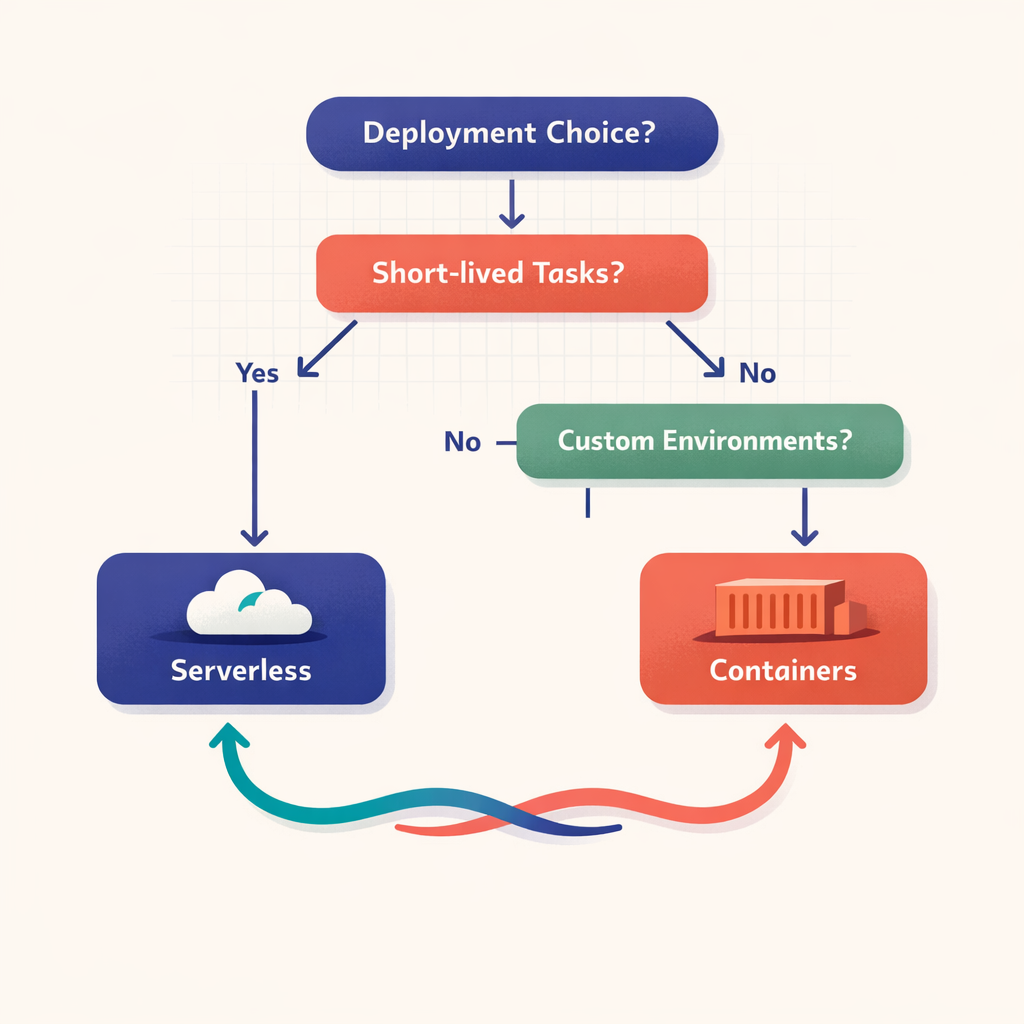
Take the Next Step in Choosing Your Architecture
The transition from Serverless vs. Docker to Lambda vs. ECS, and ultimately to Containers vs. Functions, can be complex but is essential for the success of your application.
Tip: If you need personalized guidance to navigate this process, please visit our contact page to discuss the architecture that will best meet your needs.
Footnotes
-
Serverless vs Containers: Choosing the Right Architecture, Post 24, Post 33 ↩ ↩2 ↩3 ↩4
-
Custom Software Development Services, /services/custom-software-development ↩ ↩2 ↩3 ↩4 ↩5
-
Cold-start times in serverless, FreeCodeCamp, Post 33 ↩ ↩2 ↩3 ↩4
-
Source 6 ↩
-
Source 7 ↩
-
Source 8 ↩
-
Source 9 ↩
-
Post33 (to be defined later) ↩ ↩2 ↩3 ↩4 ↩5 ↩6 ↩7 ↩8 ↩9 ↩10 ↩11 ↩12 ↩13
-
Post24 (to be defined later) ↩ ↩2 ↩3 ↩4 ↩5 ↩6 ↩7 ↩8 ↩9 ↩10 ↩11 ↩12 ↩13
Make Imversion a preferred source on Google
Like this kind of AI and software analysis? Add Imversion as a preferred source so Google can highlight our articles for you in Search, AI Overviews, and AI Mode.