Master REST API Design Practices: Best Tips & Common Errors
Unlock the secrets of effective REST API design with our guide to best practices and common mistakes. Enhance your API strategy today!

Introduction to REST API Design Practices
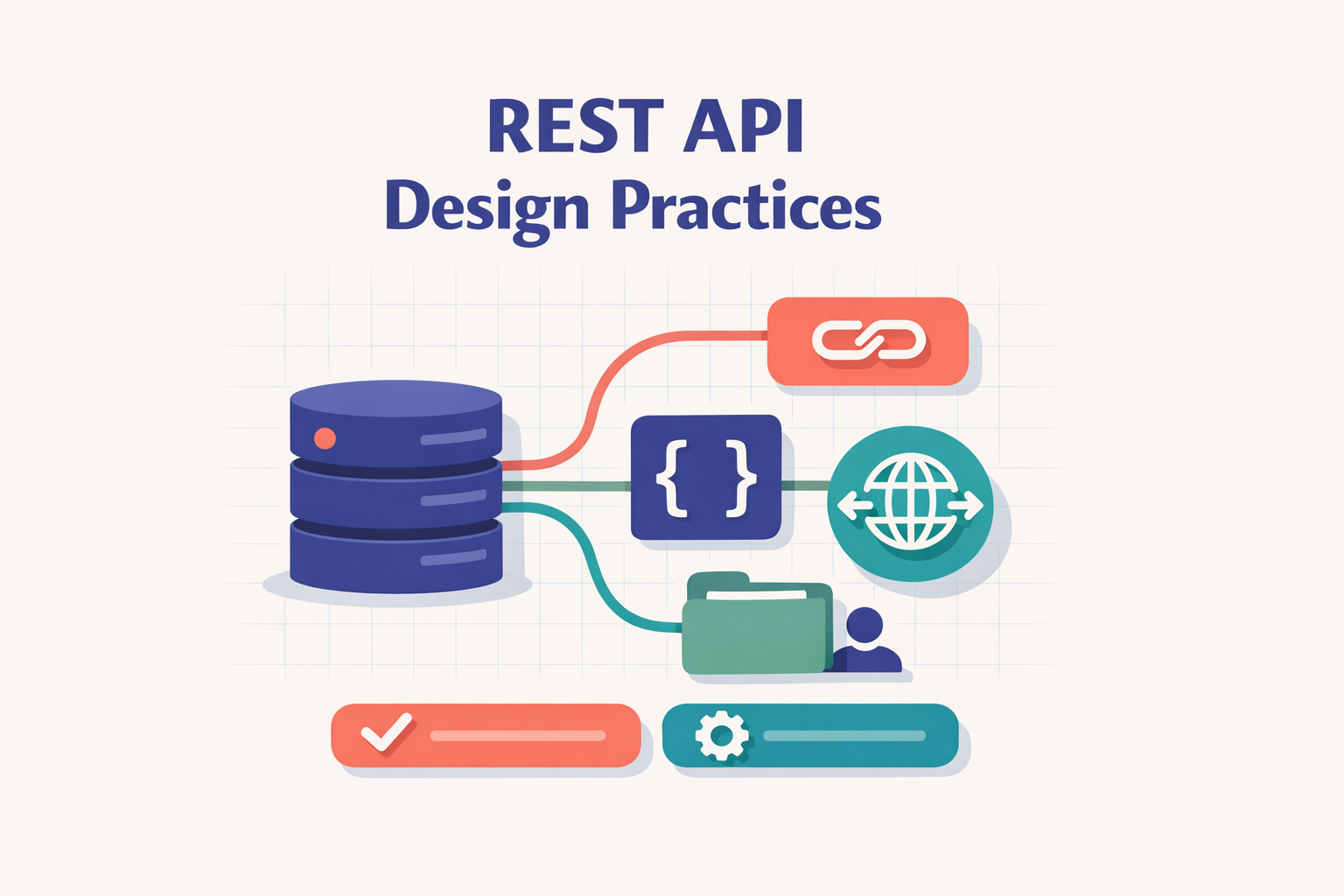
Designing a well-structured and intuitive API can be a complex endeavor; however, understanding key REST API Design Practices can significantly streamline and enhance the development process. APIs, or Application Programming Interfaces, enable different software systems to communicate, exchange data, and interact with one another. Their importance in web development cannot be overstated, as they facilitate collaboration among a diverse array of applications, services, and platforms.
REST (Representational State Transfer) is an architectural style for designing networked applications. REST APIs utilize standard HTTP methods and status codes, making interactions between clients and servers both straightforward and intuitive. This architectural style is essential in today's digitally interconnected ecosystem, rendering it a vital focus for every developer.
Tip: By adopting the right approach and utilizing an API Design Guide alongside REST API Guidelines, developers can create robust, user-friendly APIs that conform to industry standards and best practices.
These guides offer clear recommendations on various facets of API design, including:
- Resource modeling
- Effective implementation of HTTP methods and status codes
- Versioning
- Error management and pagination
- API documentation and testing.
In this blog post, we will examine the fundamental REST principles and delve into resource modeling techniques. We aim to provide insights into best practices regarding naming conventions, the use of standard HTTP methods, and the handling of status codes. By incorporating insights from various API Design Patterns, we will establish a clear roadmap for effective API development.
Additionally, we will explore the complexities of versioning to ensure both forward and backward compatibility. We will discuss authentication methods to secure APIs and examine pagination strategies for optimizing performance. Furthermore, we will address the best practices for gracefully handling errors while providing meaningful feedback for users and developers alike. We will conclude with a discussion on the importance of thorough documentation and comprehensive API testing.
Our objective is to help you avoid common pitfalls that can complicate the API design process or, worse, jeopardize the functionality, security, or usability of your API.
We will also address three frequently asked questions related to API design, offering concise and informative answers.
Whether you are just beginning your journey into API design or seeking to enhance your existing skills, this blog post will serve as a valuable API Design Guide. If you’re ready to delve deeper or require specialized assistance, we invite you to explore our services in custom software development.
Understanding REST API Design Practices
Designing a REST API necessitates an understanding of best practices, guidelines, and common pitfalls. This encompasses grasping REST principles, adopting appropriate resource modeling and naming conventions, and effectively utilizing HTTP methods and status codes.
REST Principles
A core tenet of the REST API guidelines is the idea that APIs should be structured around resources. These resources—whether they be objects, data, or services—are accessed by clients utilizing standard HTTP methods instead of custom protocols.
Resource Modeling
According to the API design guide, effective API design hinges on the logical selection and organization of resources. Recommendations include:
- Naming resources with plural nouns.
- Structuring URLs to reflect the hierarchical and relational nature of resources, rather than the actions performed on them.
HTTP Methods
REST API design patterns endorse the use of standard HTTP methods for distinct purposes. The following table outlines these methods:
| HTTP Method | Purpose |
|---|---|
| GET | Retrieve a resource |
| POST | Create a new resource |
| PUT | Update a resource |
| DELETE | Remove a resource |
Each method has a specific role and should be employed accordingly.
Status Codes
HTTP Status Codes serve to inform the client of the outcome of a request. Therefore, utilizing status codes correctly is a fundamental aspect of a well-constructed REST API.
Versioning, Authentication, and Pagination
As a REST API evolves, implementing versioning is often crucial for maintaining backward compatibility. Authentication is essential for securing your API, while pagination assists in managing large datasets by breaking the data into manageable segments.
Handling Errors and Documentation
Effectively managing errors and providing clear, meaningful error messages significantly enhances API usability. Additionally, comprehensive documentation is a vital element of the API design process, guiding consumers in their interactions with your API.
Testing
A rigorous testing regimen for your API is essential for identifying potential issues and ensuring it operates as intended.
Common Mistakes
Frequent mistakes in REST API design include:
- Including unnecessary data in responses
- Inconsistent naming conventions
- Insufficient input validation
- Inadequate error handling.
Ultimately, regardless of how well a REST API is designed, it requires continuous improvement to maintain efficiency. API design is not a one-time task but rather an iterative cycle demanding regular optimization. For expert assistance with your REST API design, explore our custom software development services.
FAQs
-
What is resource modeling in REST API design?
- Resource modeling involves the logical selection and organization of resources, which are fundamental to the structure of a REST API.
-
Why are status codes important in REST API design?
- Status codes provide a mechanism for the server to communicate the success or failure of a client's request.
-
What are some common mistakes in REST API design?
- Common pitfalls include inconsistent naming conventions, insufficient input validation, poor error handling, and the inclusion of unnecessary data in responses.
Remember to sidestep common pitfalls and consistently reference the REST API guidelines as you craft your APIs. If you require expert guidance, our team is prepared to assist you at our custom software development services.
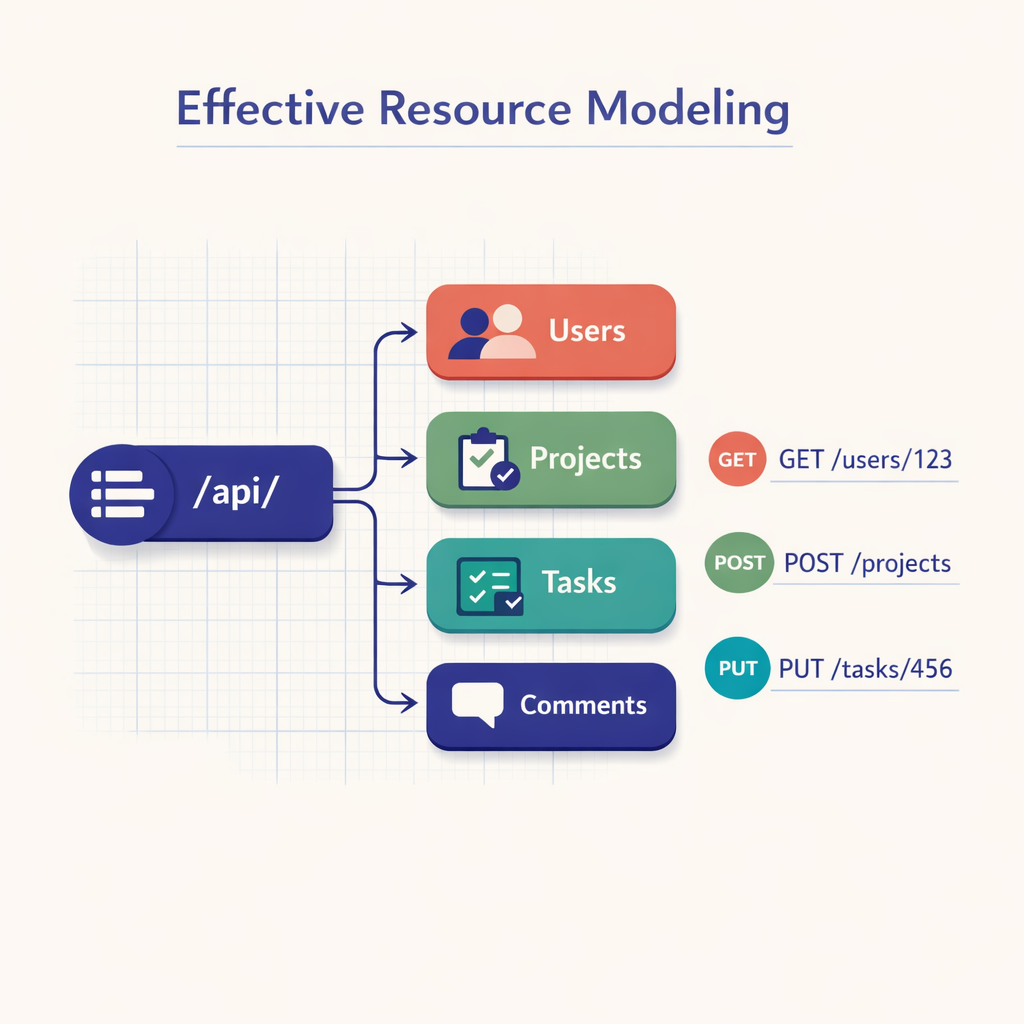
Effective Resource Modeling in REST API
Effective resource modeling is a cornerstone of adhering to REST API Design Practices. It revolves around the accurate selection and strategic organization of resources. These resources can represent any object, data, or service that can be accessed by the client. This section provides guidelines for resource selection, organization, and designing URLs that effectively convey relationships among resources.
Selection and Organization of Resources
The fundamental principles of API design emphasize the importance of wisely choosing and structuring resources, as outlined below:
| Principle | Description |
|---|---|
| Relevant Selection | The selected resources should be coherent and directly related to the functionality that the API is intended to provide. Irrelevant resources can complicate the API and hinder usability. |
| Logical Organization | Resources should be organized logically, typically represented as collections of items. |
Note: Resources should be named logically, generally using plural nouns.
Designing URLs to Convey Relationships
Proper URL design, following best REST API guidelines, is crucial for illustrating relationships between resources. According to REST API design patterns, URLs should reflect the hierarchical and relational nature of resources rather than the actions performed on them. Here are some best practices:
- Avoid Including Verbs: Since HTTP methods already define the actions on resources, including verbs in the URL is unnecessary. For instance, use
GET /pizzasinstead ofGET /getAllPizzas. - Use Nouns to Represent Resources: As resources represent entities, they should be denoted by nouns.
Note: Use 'resource-id' when fetching a specific resource, e.g.,
GET /pizzas/{pizza-id}.
Resource modeling is not just about selection and organization; it is an art that creates a self-explanatory system. By applying these principles, we adhere to the core tenets of REST API guidelines, resulting in an intuitive, scalable, and user-friendly API.
You can explore more about designing, organizing, and naming resources in our custom software development services. As part of our Custom Software Development offerings, we provide comprehensive API design and development services that ensure your APIs are built in accordance with REST API best practices.
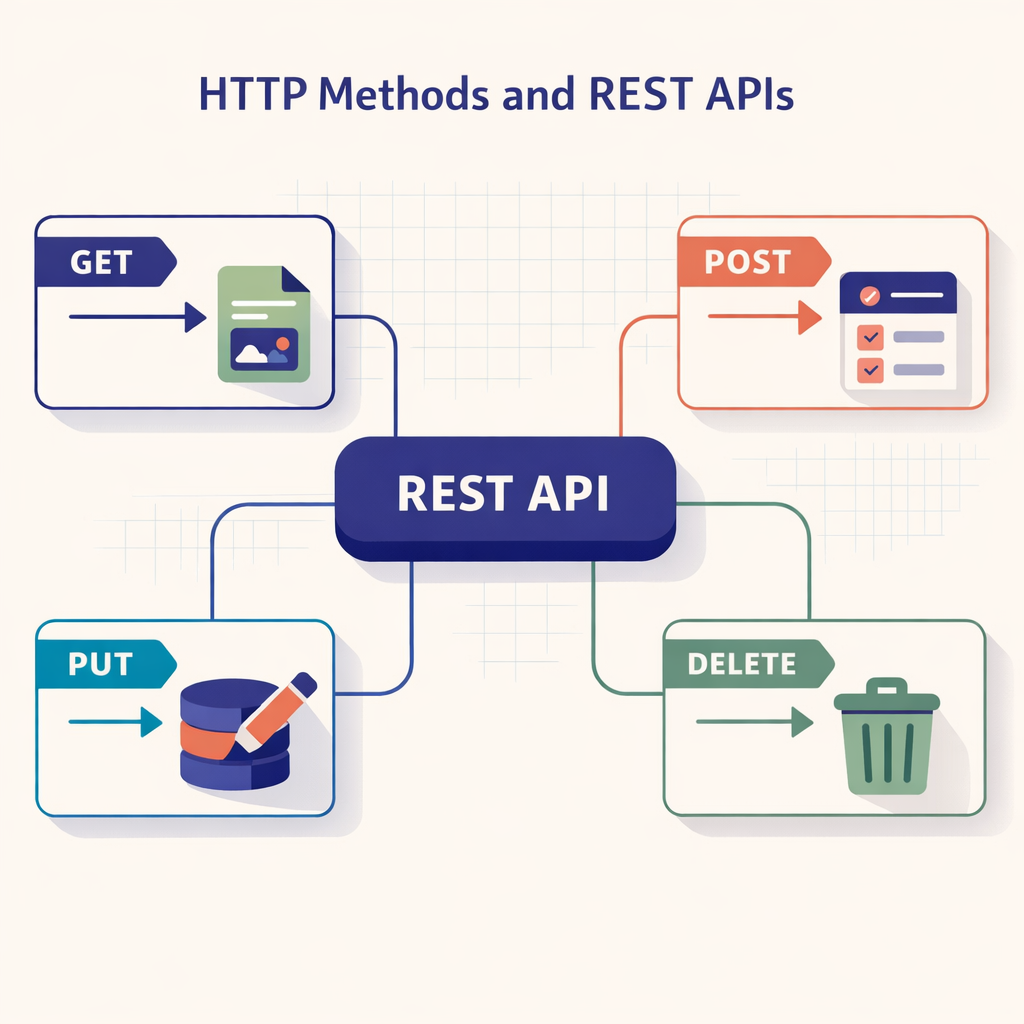
HTTP Methods and REST APIs
The core of API design is fundamentally rooted in the selection of resources and the strategic use of HTTP methods. Each HTTP method represents a specific operation on a resource, necessitating careful implementation to ensure an efficient REST API. The four primary HTTP methods are: GET, POST, PUT, and DELETE.
| HTTP Method | Purpose | Safe | Idempotent |
|---|---|---|---|
| GET | Fetch a specific resource | Yes | Yes |
| POST | Create a new resource | No | No |
| PUT | Update an existing resource | No | Yes |
| DELETE | Remove a specific resource | No | Yes |
GET Method
The GET method is employed to retrieve a specific resource. This operation is both safe and idempotent, meaning it can be executed multiple times without altering the state of the resource. For example, an HTTP GET request to /books/:id retrieves the details of a book, where :id represents the book's unique identifier.
POST Method
The POST method is utilized to create a new resource. It is neither safe nor idempotent, as it fundamentally alters the state of the resource by adding new data. A typical example of this is a POST request to /books, accompanied by a payload containing the details of the new book to be added to the collection.
PUT Method
The PUT method is designed for updating an existing resource. It is idempotent but not safe, meaning that making multiple identical PUT requests will yield the same outcome as making a single request. An example of this is an HTTP PUT request to /books/:id, where updated book information is sent in the request body.
DELETE Method
The DELETE method, as its name suggests, removes a specific resource. This operation is idempotent but not safe. For instance, a DELETE request to /books/:id will delete the book identified by :id.
Tip: The API Design Guide recommends that developers use HTTP methods in accordance with their distinct semantic meanings to maintain an efficient and predictable REST API. Misusing methods can often lead to common API mistakes that result in unexpected behaviors and performance issues. Therefore, adhering to these REST API Guidelines and the appropriate HTTP methods is a crucial aspect of API Design Patterns.
Note: It's important to recognize that while HTTP methods have well-defined semantic meanings, the server's implementation of each method can vary, introducing an added layer of complexity to API design.
In conclusion, the relationship between REST APIs and HTTP methods is fundamental to their operation. When utilized correctly, these methods provide a consistent interface between the client and the server.
For more insights into creating effective APIs, stay updated on the latest concepts and industry trends at our software development services page - /services/custom-software-development.
Understanding Status Codes in REST API
REST APIs rely heavily on HTTP status codes to communicate the outcome of a client's request to the server. Status codes indicate whether a specific HTTP request has been successfully completed. A thorough understanding and correct implementation of these status codes are critical components of REST API Design Practices.
Importance of Status Codes in REST API
Status codes enable a server to relay the result of a request to the client in a standardized format, offering several key benefits:
- Error Debugging: A proper status code helps developers precisely identify where an issue has occurred.
- Consistency: Uniform usage of status codes across REST APIs ensures a consistent experience for developers.
- Understanding Request Outcome: Status codes provide immediate clarity about the result of the request, eliminating the need to parse a detailed response.
Tip: Utilizing status codes correctly contributes to a REST API that aligns with sound API Design Patterns.
Common HTTP Status Codes in REST APIs
While there is a wide range of status codes available within the HTTP protocol, the following statuses are the most commonly used in REST APIs:
| Status Code | Description |
|---|---|
200 OK | Indicates that the request was successful. |
201 Created | Confirms successful resource creation following a POST request. |
204 No Content | Signifies that the request was successful, but there is no representation to return (i.e., the response is intentionally left blank). |
400 Bad Request | Indicates that the server could not understand the request due to invalid syntax. |
401 Unauthorized | Denotes that the client must authenticate itself to receive the requested response. |
403 Forbidden | Indicates that the client does not have access rights to the content. |
404 Not Found | Confirms that the server cannot find the requested resource. |
500 Internal Server Error | Signifies that the server has encountered a situation it cannot handle. |
Keep in mind that these codes only represent a starting point. Various other status codes may be relevant depending on your API's requirements.
In summary, HTTP status codes are essential for effective and transparent communication between a client and a server in REST APIs. They serve as vital tools for understanding request outcomes, identifying errors, and ensuring consistency across APIs. Therefore, they should be a fundamental aspect of your REST API design process.
Begin your journey toward professional-grade REST API design by visiting our custom software development services.
Common Mistakes in REST API Design Practices
Designing a REST API involves more than just fulfilling functional requirements; it requires careful selection of design patterns and strict adherence to REST API guidelines to ensure scalability, maintainability, and usability. Unfortunately, many developers fall prey to common API design mistakes, resulting in inefficient and frustrating APIs.
Here are some prevalent API design pitfalls to watch out for, along with strategies to avoid them:
1. Poor Resource Naming
A frequent error among developers is the inadequate naming of resources, often resulting in names that are either too generic or ambiguous . Adhere to the principle that resource names should be logically constructed, typically using plural nouns. Your resource names should intuitively convey the nature of the resource.
Key Takeaway: A poorly named resource can lead to confusion and render APIs difficult to comprehend.
2. Improper Use of HTTP Methods
Some developers misuse HTTP methods, such as employing a GET method where a POST method is appropriate, or vice versa . Each HTTP method serves a specific purpose. Misapplications can lead to unexpected results and data corruption.
Action Point: Consult the API design guide to understand and utilize HTTP methods correctly, ensuring an efficient REST API.
3. Not Leveraging HTTP Status Codes Correctly
Another common mistake involves omitting important HTTP status codes or using them incorrectly . These codes offer a straightforward and standardized method of communicating the server's state and the outcome of client requests. Failure to utilize them means missing out on a vital aspect of REST API Design Best Practices .
4. Overlooking Versioning
Not incorporating versioning from the outset is a common oversight in API design . As APIs evolve, it is essential to ensure that existing clients remain functional. API versioning enables the introduction of non-breaking changes, facilitating smooth upgrades while maintaining compatibility with legacy clients.
5. Inadequate Documentation and Testing
A lack of comprehensive documentation and thorough testing represents significant shortcomings in API design. Detailed documentation is crucial for translating the technical capabilities of your API into accessible language, while rigorous testing ensures optimal functionality.
Reminder: Always keep your documentation up to date to align with the current version of your API.
Evading these common mistakes may require practice, but it is essential for creating reliable, efficient, and consistent APIs. The next time you are designing a REST API, remember these guidelines and prioritize best practices at every stage.
For additional improvement opportunities, consider exploring our software development services, which include advanced training and hands-on experience in designing robust APIs [/services/custom-software-development].
Frequently Asked Questions about REST API Design
Designing robust and efficient REST APIs can often be a challenging endeavor. Having covered the foundational concepts and principles of REST API design in the previous sections, we will now address some of the most commonly asked questions regarding REST API design practices.
Q1. How important are HTTP status codes in REST API Design?
HTTP status codes play a pivotal role in REST API design. They serve as the communication channel between the client and the server, indicating the result of a client’s request. Correctly employing HTTP status codes contributes significantly to the efficiency of a REST API. Therefore, it is essential to understand and accurately implement these status codes.
Q2. What are the common mistakes to avoid in REST API design?
Designing a reliable REST API is not merely about fulfilling functional requirements; it involves embracing the right API design patterns and adhering firmly to REST API guidelines. Some common mistakes that developers often make include:
- Poor resource naming: Resource names should be logical, typically using plural nouns that convey a hierarchical and relational context among the resources.
- Ignoring HTTP methods: The HTTP methods—GET, POST, PUT, and DELETE—each have specific functions. Using these methods appropriately ensures an efficient REST API.
- Misusing status codes: Incorrect use of HTTP status codes can lead to miscommunication between the server and client, resulting in potential errors and inefficiencies.
Tip: It is crucial to avoid these common API mistakes to create an efficient and user-friendly REST API.
Q3. What are the best practices for REST API design?
The cornerstones of robust REST API design involve the selection and categorization of resources, the use of appropriate HTTP methods, and the correct implementation of HTTP status codes. Here are some best practices:
- Resource modeling: Resources or URL paths should be named logically.
- HTTP methods: Standard HTTP methods—GET, POST, PUT, and DELETE—should be employed for fetching, updating, creating, and deleting resources, respectively.
- Use of status codes: HTTP status codes should be utilized to indicate the outcome of a request.
- Versioning: Consider implementing versioning to effectively manage changes in your API.
- Authentication: Proper authentication should be established to protect your API from unauthorized access.
- Error handling: Implement robust error handling mechanisms to address exceptions and errors within the API.
In conclusion, to design a comprehensive and user-friendly REST API, one should meticulously follow the API Design Guide, heed common API mistakes, and consistently adhere to REST principles. For further assistance on REST APIs and other software-related inquiries, feel free to explore our custom software development services.
FAQ1: What does the API Design Guide recommend for structuring a REST API?
In the realm of API design, meticulous structuring is critical for efficiency and clarity. Following the API Design Guide and REST API guidelines can assist developers in creating a well-structured REST API.
The guide encourages developers to:
- Use resource-based URLs: This design pattern dictates that URLs should represent the data that users are trying to access. For example,
GET /usersretrieves a list of users. - Be consistent with HTTP methods: The guide recommends using the standard GET, PUT, POST, and DELETE methods for fetching, updating, creating, and deleting resources.
- Implement meaningful HTTP status codes: Status codes should provide explicit information about the outcome of an HTTP request.
- Emphasize error handling: APIs should deliver useful error messages so users can understand and rectify their mistakes.
- Use versioning: This practice ensures backward compatibility as the API evolves.
Reminder: The guide serves as a roadmap, not a strict rulebook. Specific API design patterns and practices may adapt based on particular project requirements. For more details and professional assistance, visit our custom software development service page[^/services/custom-software-development].
FAQ2: What essential points does an API Design Guide emphasize for following REST API guidelines?
When crafting APIs according to REST API guidelines, an API Design Guide highlights several key points:
- Resource modeling: The selection and organization of resources are foundational in API design patterns. URLs should reflect the hierarchy and relationships among resources.
- HTTP methods: Ensure to use GET, PUT, POST, and DELETE appropriately to retrieve, update, create, and delete resources.
- Status codes: Use HTTP status codes to communicate the result of the request. Proper use of status codes facilitates effective error handling and communication.
Common Mistakes: Be wary of common pitfalls, such as:
- Neglecting to include versioning, which can complicate updates
- Skirting security measures like authentication
- Ignoring pagination, leading to slow API responses
- Overlooking proper error reporting
- Providing poor or insufficient documentation
- Failing to properly test the API
Each step plays a vital role in the creation of a robust, efficient, and user-friendly API. By adhering to these key points from the API Design Guide, developers can not only avoid common pitfalls but also create APIs that align well with REST API guidelines.
FAQ3: What are common mistakes in API design according to the API Design Guide and REST API guidelines?
When designing a REST API, developers may inadvertently overlook essential facets of API design patterns. Here are some typical errors as noted by the API Design Guide and REST API guidelines:
- Ignoring HTTP status codes: Improper use or omission of HTTP status codes can create confusion on the client's side, undermining user experience.
- Misuse of HTTP methods: Using POST to update a resource instead of PUT, or using GET to change the state of a resource, contradicts REST principles and can lead to inconsistencies in data state.
- Poor documentation: Inadequately documented APIs diminish usability and maintainability, which impairs developer productivity and system integration.
- Ignoring error handling: Proper error handling is essential for a robust API. A lack of adequate error messages or error codes complicates API testing and debugging.
To navigate these challenges, adhering to REST API guidelines and thoroughly understanding the fundamentals outlined in an API Design Guide can help mitigate common pitfalls. For further guidance and expertise in custom software development, please find more information here.
Leveraging Best Practices in REST API Design
Designing a well-structured REST (Representational State Transfer) API is essential for creating scalable web services. To build a robust API, it is crucial to adhere to the principles outlined in REST API Design Practices.
Exploring REST Principles
REST APIs are not merely about sending HTTP requests and receiving responses; they are built around resources, which serve as fundamental components of any system. These resources can take the form of objects, data, or services accessed by clients. RESTful APIs leverage standard HTTP methods, including:
- GET (retrieve a resource)
- POST (create a new resource)
- PUT (update a resource)
- DELETE (remove a resource)
By utilizing these methods, you ensure that your API aligns with well-established protocols rather than creating new, potentially confusing alternatives.
Resource Modeling & Naming Convention
In REST API design, proper resource modeling and organization are paramount. Resources should be named logically, typically using plural nouns, and URLs should accurately reflect the hierarchical and relational nature of the resources involved.
Tip: Remember: URLs should emphasize representing resources, not the actions performed on them.
HTTP Methods, Status Codes, and Versioning
The effective use of HTTP methods is critical in RESTful API design, adhering to the standard protocols of GET, POST, PUT, and DELETE for retrieving, creating, updating, and deleting resources respectively.
Equally important are status codes and API versioning:
- HTTP Status Codes: Deliver detailed server responses to client requests, ensuring users receive appropriate feedback.
- API Versioning: Adhering to best practices in versioning allows for seamless updates without causing disruptions for end-users.
Authorization, Pagination & Error Handling
Implementing robust authorization schemes is vital for protecting data and resources within a REST API. Additionally, pagination plays a crucial role in managing large data responses, improving both performance and usability.
Error handling is another significant aspect of API design. Errors should be conveyed through HTTP response codes, accompanied by comprehensive error messages in the response body to facilitate debugging.
Documentation & Testing
Quality documentation serves as the backbone of a developer-friendly API. A comprehensive API Design Guide should encompass all necessary details, including the API's endpoints, error responses, and HTTP methods.
Thorough testing is essential and should cover all potential scenarios, ensuring the smooth operation of the API while identifying any performance issues or bugs.
Common Mistakes to Avoid
When designing APIs, several common mistakes can lead to substantial issues down the line. These include:
- Misusing HTTP methods
- Ignoring status codes
Equipped with knowledge of the best REST API Design Practices, developers can design powerful, efficient, and user-friendly REST APIs. The primary goal remains to create APIs that are easily understood and used, fulfilling both business and technical needs.
For further insights into design principles and practices, an API Design Guide can be an invaluable resource. If you're eager to learn more about developing powerful, user-friendly APIs, explore our custom software development services.
Stay tuned for the next section, where we will address frequently asked questions about REST API Design.
Make Imversion a preferred source on Google
Like this kind of AI and software analysis? Add Imversion as a preferred source so Google can highlight our articles for you in Search, AI Overviews, and AI Mode.